 en
en English
 中文简体
中文简体 русский
 Español
 عربى
عربى

Insights / Blog
Home / Insights / Blog
News & Blog
-
 What is the lifespan of XLPE insulated cable?The design life of Cross-Linked Polyethylene (XLPE) insulated cables is typically 20 to 30 years. However, in actual operation, the physical service life of modern XLPE cables can reach 40 to 60 years, provided they are not subjected to long-term operation at maximum load limits and are protected from extreme environmental damage. At the rated operating temperature of 90°C, the insulation material maintains high dielectric strength. However, when the operating temperature rises to between 95°C and 105°C, the expected lifespan of the cable plummets to just 7 to 30 years. XLPE cables have become the core backbone of medium, high, and extra-high voltage power grids due to their superior electrical insulation properties, extremely low dielectric loss, excellent heat resistance, and high mechanical strength. A cable's lifespan is a dynamic degradation function jointly determined by temperature, electric field, humidity (water treeing effect), and mechanical stress. Core Lifespan Data and International Standards Design Baseline:International standards such as IEC 60502 strictly stipulate a maximum allowable continuous conductor operating temperature of 90°C for XLPE cables. This threshold is set based on the thermal oxidative degradation rate of high-molecular polymers. Temperature Limits:The permissible emergency overload temperature for XLPE cables ranges from 105°C to 130°C, while the instantaneous temperature they can withstand during a short circuit can reach up to 250°C (for a duration not exceeding 5 seconds). Actual Service Life: At the standard operating temperature of 90°C, the expected lifespan of XLPE material is between 40 and 60 years. If the cable consistently operates under partial load conditions in real-world applications (for example, with the conductor temperature maintained around 70°C), its actual lifespan can easily exceed the 50-year mark. Core Aging Mechanisms of XLPE Cables Cable insulation aging is an irreversible physical and chemical process that leads to a decline in dielectric strength. The primary mechanisms are driven by the following four stresses: Thermal Aging:Long-term exposure to high temperatures causes thermal oxidative degradation. Macroscopically, this manifests as embrittlement of the material, with significant drops in Elongation at Break (EAB) and tensile strength. In engineering assessments, when the EAB falls to 50% of its initial value, it is deemed the "end of physical life" for the material. Electrical Aging:Microscopic defects (such as voids or impurities) within the insulation layer cause electric field distortion, leading to Partial Discharge (PD). Over time, electrical corrosion forms "Electrical Treeing," which eventually penetrates the insulation layer, resulting in catastrophic breakdown. The accumulation of space charge in High Voltage Direct Current (HVDC) applications also exacerbates electric field distortion. Water Treeing:This is the "invisible killer" in moist environments. Under the action of an alternating electric field, moisture intrudes into microscopic defects within the insulator, forming a tree-like network of water-filled micro-voids. This significantly reduces the overall voltage-withstand capability of the insulator. Mechanical and Chemical Stress: Failure to adhere to minimum bending radius requirements during installation (mechanical fatigue) will expand microscopic voids, greatly promoting the initiation of partial discharge and water treeing. Furthermore, anions such as chloride ions in marine environments can trigger chemical degradation at high temperatures, causing a sharp decline in the volume resistivity of the XLPE. Lifespan Prediction and Advanced Diagnostic Methods To accurately estimate the Remaining Useful Life (RUL), the industry employs the following mathematical models and non-destructive testing technologies: Mathematical Models Thermal Life Prediction Model:Based on the Arrhenius equation. This model reveals an exponential relationship between temperature and lifespan: for every 10°C drop in temperature, the thermal aging lifespan doubles. Electrical Stress Life Model:Based on the Inverse Power Model (IPM). Its key parameter, the Voltage Endurance Coefficient (VEC), measures the material's resistance to electrical aging. High-quality XLPE materials typically have a VEC between 15 and 30. The Evolution of Diagnostic Methods DC Hipot (Direct Current High Potential Testing):This is now obsolete and highly destructive. High DC voltage accumulates "space charge" inside the XLPE insulation. When AC operation resumes, the superimposed electric fields can instantly break down the fragile insulation layer. VLF (Very Low Frequency) Testing:The industry's preferred alternative. It uses ultra-low frequency (0.1 Hz) AC power, which avoids the space charge effect while causing severely deteriorated defects to break down safely during controlled testing. Tan Delta (Dielectric Loss Angle Tangent) Diagnostics:The "gold standard" for assessing water tree aging and moisture ingress in XLPE cables. By measuring the non-linear increase in loss values as testing voltage rises (the "Tip-up" effect), it precisely quantifies the severity of the aging. Partial Discharge (PD) Monitoring: Used to accurately pinpoint microscopic defects within the insulation layer (e.g., air gaps in joints or damaged shielding layers). Engineering Practices and Quality Assurance for Extending XLPE Cable Lifespan Achieving a service life of over 50 years for XLPE cables requires comprehensive quality control from manufacturing to operation: Ultimate Control in Manufacturing and Premium Material Selection High-purity materials must be used and produced in an ultra-clean environment. Implementing a triple extrusion process ensures atomic-level bonding between the conductor shield, XLPE insulation layer, and insulation shield, completely eliminating interlayer air gaps that could trigger partial discharge. Utilizing Tree-Retardant XLPE (TR-XLPE) materials and comprehensive water-blocking designs (longitudinal water-blocking yarns/tapes, radial water-blocking sheaths) to absolutely isolate external moisture. Compliant Installation and Mechanical Protection The bending radius (no less than 10 to 15 times the outer diameter) and pulling tension must be strictly controlled to prevent micro-cracks in the insulation layer. Joints and terminations are the most vulnerable parts of a cable line. Their fabrication must be carried out in relatively dry, dust-free environments to avoid introducing impurities. Operational Environment Optimization and Thermal Management Maintain reasonable spacing between cables to facilitate heat dissipation and prevent heat accumulation. It is recommended to adopt derated operation, leaving an appropriate ampacity margin to avoid long-term full-load operation. Install reliable surge protectors (lightning arresters) to absorb high-frequency voltage spikes caused by switching overvoltages and lightning strikes. Frequently Asked Questions: Q1: Why do modern power systems widely use XLPE cables instead of traditional PVC cables? A: XLPE (Cross-Linked Polyethylene) features a three-dimensional networked thermosetting structure, allowing continuous operating temperatures up to 90°C, far exceeding PVC (maximum 70°C). Furthermore, XLPE boasts higher dielectric strength, lower dielectric loss, and does not release toxic halogen gases when burned. It comprehensively outperforms PVC cables in both lifespan and electrical performance. Q2: The maximum operating temperature of an XLPE cable is 90°C. Will occasionally exceeding this temperature cause the cable to burn out immediately? A: It will not burn out immediately, but it will accelerate thermal aging. International standards allow short-term emergency overloading up to 105°C or even 130°C. However, according to the Arrhenius aging model, for every 10°C the temperature exceeds the rated value, the degradation rate of the insulation layer doubles. Long-term over-temperature operation will drastically reduce the cable's total lifespan. Q3: What is "Water Treeing," and how can it be prevented? A: Water treeing is a tree-like network of micro-voids formed when moisture invades microscopic defects in the insulator and continuously extends under the combined action of an alternating electric field and a humid environment in XLPE cables. Prevention methods include: utilizing water-blocking designs (such as radial water-blocking sheaths and longitudinal water-blocking yarns), using Tree-Retardant materials (TR-XLPE), and ensuring the cable's outer sheath is not scratched during installation. Q4: I want to test the insulation status of cables that have been in service for many years. Can I use a standard DC Hipot tester? A: Absolutely not. Performing traditional high-voltage DC tests on XLPE cables is highly destructive. High DC voltage accumulates "space charge" within the insulation. Once AC power is restored after the test, the insulation layer—which might have otherwise continued operating normally—is highly susceptible to instant breakdown. Q5: If DC Hipot testing shouldn't be used, how should the aging degree of XLPE cables be scientifically evaluated? A: Industry standards recommend using Very Low Frequency (VLF, 0.1 Hz) AC withstand voltage testing combined with Tan Delta (Dielectric Loss Angle Tangent) diagnostics. VLF testing does not generate harmful space charges, while Tan Delta testing can accurately quantify the severity of water treeing inside the cable by measuring the non-linear increase characteristics (Tip-up) of leakage current at different voltages, thereby helping you plan preventive replacements. Looking for highly reliable XLPE cables for your next project? > Our engineering team at HUAPU CABLE is ready to help you select, customize, and deploy cables. Contact us today for a technical consultation or a custom quote.
 -
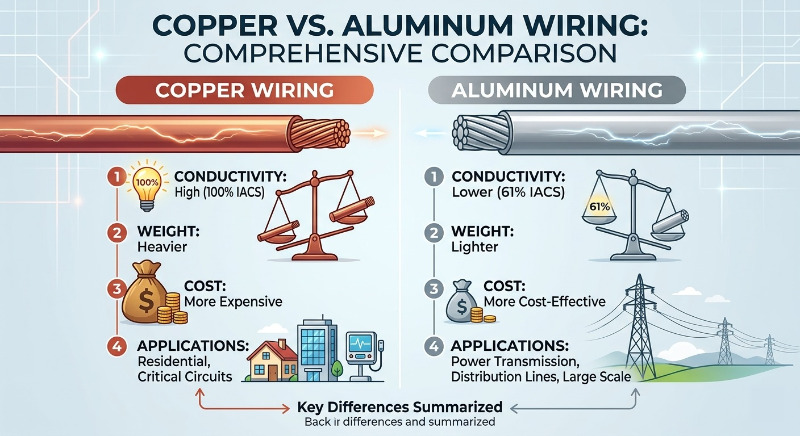 Copper vs. Aluminum Wiring: Pros, Cons, and Best UsesIntroduction Copper vs aluminum wiring is a common comparison in electrical design because both materials are widely used, but they serve different needs. Copper is known for higher conductivity and compact sizing, while aluminum is lighter and more cost-effective for many large-scale applications. This guide explains the pros and cons of copper wiring and aluminum wiring so readers can choose the right option based on performance, budget, and installation requirements. 1. Electrical Conductivity Conductivity is the most important technical difference between copper and aluminum wiring. It is commonly measured against the International Annealed Copper Standard (IACS), where copper is set at 100%. Copper: Copper has excellent conductivity and can carry more current in a smaller wire size. That makes it a strong choice for residential wiring, commercial buildings, motors, transformers, and other space-sensitive circuits. Aluminum: Aluminum conducts electricity well, but at about 61% of the conductivity of copper. To carry the same load, aluminum wiring must use a larger cross-sectional area, which can affect conduit fill and installation flexibility. 2. Weight and Installation Weight matters in transport, support structure design, and installation labor. In this category, aluminum has a major advantage. Copper: Copper is dense and significantly heavier than aluminum. That extra weight is usually manageable in short building runs, but it becomes a disadvantage in overhead transmission where stronger supports may be needed. Aluminum: Aluminum is about one-third the density of copper, making it the preferred choice for many overhead power transmission lines and long-span applications. Its lighter weight can reduce structural load and installation cost. 3. Cost Comparison Budget is often the deciding factor in copper vs aluminum wiring projects. Copper: Copper is typically more expensive because of raw material price and processing costs. In return, it offers excellent performance in a smaller package and is often preferred where long-term reliability is the priority. Aluminum: Aluminum is usually the lower-cost option and can create substantial savings in large installations. However, the total project cost should also include connector selection, termination quality, and installation practices designed for aluminum conductors. 4. Safety and Long-Term Performance Modern aluminum cables can be safe when it is properly designed, terminated, and maintained. The key is using the right devices, torque values, and connectors rated for aluminum. Copper: Copper is mechanically robust and less prone to connection issues caused by thermal expansion. It is widely used in critical circuits because it performs consistently over time. Aluminum: Aluminum expands and contracts more than copper as temperature changes, so loose or incompatible terminations can create heat buildup. Properly specified connectors and modern installation methods help reduce this risk. Quick Comparison Table Feature Copper Wiring Aluminum Wiring Conductivity Higher (100% IACS) Lower (about 61% IACS) Wire Size Smaller for the same current Larger for the same current Weight Heavier Lighter Cost Higher material cost Lower material cost Common Uses Residential wiring, commercial wiring, motors, transformers, critical circuits Overhead lines, distribution, long-span and cost-sensitive projects Which One Should You Choose? Copper remains the standard choice for most residential and commercial wiring applications because it offers strong conductivity, compact sizing, and dependable long-term performance. Aluminum is an excellent option when weight and cost are the main concerns, especially in transmission and distribution projects where larger conductor sizes are acceptable. For aluminum wiring, proper connectors, compatible devices, and correct installation practices are essential to prevent overheating, arcing, and premature failure. Frequently Asked Questions Is aluminum wiring safe? Yes, modern aluminum wiring can be safe when it is installed with the correct connectors, devices, and torque settings. Older branch-circuit aluminum wiring created problems mainly because of poor connections and incompatible components. Why is copper preferred in buildings? Copper is preferred because it carries more current in a smaller size and is easier to terminate in many building applications. It is also less sensitive to connection issues caused by thermal expansion. Where is aluminum wiring used most often? Aluminum is commonly used in overhead power lines, distribution systems, and some large-scale industrial or commercial applications where reduced weight and lower cost are important. Key Takeaways Copper is best when conductivity, compact size, and long-term reliability are the top priorities. Aluminum is best when lower cost and lighter weight matter more than conductor size. For aluminum wiring, safe performance depends on proper connectors, terminations, and code-compliant installation. Conclusion The copper vs aluminum wiring decision depends on your project goals. Choose copper when performance, compact size, and long-term reliability matter most. Choose aluminum when lower weight and lower material cost are the priority, and make sure the installation uses the correct connectors and code-compliant hardware.
 -
 Building Wires: Types, Selection Guide & Installation TipsWhat Are Building Wires and Why Do They Matter? Building wires are the insulated electrical conductors installed within walls, ceilings, conduits, and cable trays to distribute power throughout residential, commercial, and industrial structures. They form the backbone of any electrical system — without properly selected and installed building wires, lighting, HVAC, outlets, and critical equipment simply cannot function safely. According to the U.S. Fire Administration, electrical fires account for roughly 51,000 home fires each year, causing over $1.3 billion in property damage. A significant portion of these incidents trace back to improper wiring — undersized conductors, poor insulation, or materials that are not rated for the installation environment. Selecting the right building wire is not merely a technical detail; it is a critical safety decision. Common Types of Building Wires The market offers a wide variety of building wires, each engineered for specific voltage ratings, environmental conditions, and installation methods. Understanding the key types helps contractors, engineers, and facility managers make informed procurement decisions. THHN / THWN Wire THHN (Thermoplastic High Heat-resistant Nylon-coated) and THWN (Thermoplastic Heat and Water-resistant Nylon-coated) wires are the most widely used building wires in North America. THHN is rated for dry locations up to 90°C, while THWN extends coverage to wet environments. Most modern conductors carry dual THHN/THWN-2 ratings, making them highly versatile for conduit installations in commercial buildings. XHHW Wire XHHW wire uses cross-linked polyethylene (XLPE) insulation, offering superior performance in both dry (90°C) and wet (75°C) environments. Its moisture resistance and mechanical durability make it a preferred choice for industrial facilities, underground conduit runs, and locations exposed to chemicals or oils. NM-B Cable (Romex) Non-metallic sheathed cable, commonly known as NM-B or by the brand name Romex, is the standard wiring solution for residential construction. It bundles two or three insulated conductors and a ground wire within a PVC jacket, simplifying installation in dry, protected interior spaces. NM-B is rated at 60°C and is approved only for indoor residential use. USE-2 and RHH/RHW-2 Wire USE-2 (Underground Service Entrance) wire is designed for direct burial and photovoltaic systems, with cross-linked polyethylene insulation rated to 90°C in wet conditions. RHH/RHW-2 conductors feature thermoset rubber insulation and are commonly specified for switchboards, panel boards, and industrial power distribution. Wire Type Insulation Max Temp (Dry/Wet) Typical Application THHN/THWN-2 PVC + Nylon 90°C / 75°C Commercial conduit wiring XHHW-2 XLPE 90°C / 90°C Industrial & wet locations NM-B PVC sheath 60°C / N/A Residential interior USE-2 XLPE 90°C / 90°C Direct burial & solar PV Comparison of common building wire types, temperature ratings, and typical applications. How to Select the Right Building Wire Choosing the correct building wire involves evaluating several interdependent factors. Skipping any step can result in code violations, premature insulation failure, or fire hazards. 1. Conductor Material: Copper vs. Aluminum Copper remains the dominant conductor material for building wires due to its excellent conductivity, flexibility, and compatibility with most termination hardware. Aluminum wiring is lighter and less expensive, making it cost-effective for large-gauge feeders and service entrance cables (typically 1 AWG and larger). However, aluminum requires anti-oxidant compound at connections and aluminum-rated terminations to prevent resistance buildup over time. 2. Wire Gauge and Ampacity Wire gauge — expressed in AWG (American Wire Gauge) in North America — directly determines the current-carrying capacity, or ampacity. The NEC (National Electrical Code) Table 310.15(B)(16) provides ampacity values based on conductor size, insulation type, and ambient temperature. As a general reference: 14 AWG copper — 15A circuits (standard lighting) 12 AWG copper — 20A circuits (kitchen, bathroom outlets) 10 AWG copper — 30A circuits (dryers, water heaters) 6 AWG copper — 55A circuits (EV chargers, small subpanels) Always apply correction factors for conduit fill, elevated ambient temperatures, and continuous loads (loads operating for 3+ hours require the circuit to be sized at 125% of the continuous load). 3. Voltage Rating Most standard building wires are rated at 600V, which covers the vast majority of residential and light commercial applications. Medium-voltage building wires (5kV, 15kV, 35kV) are required for primary distribution in large commercial campuses, industrial plants, and utility substations. Mismatching voltage ratings with system voltage is a critical and dangerous error. 4. Installation Environment The installation environment dictates the insulation rating required. Key considerations include: Wet or damp locations — require W-rated insulation (e.g., THWN-2, XHHW-2) Direct burial — requires USE-2 or UF cable; standard THHN in conduit is not acceptable underground without conduit protection High temperature areas (near boilers, rooftop equipment) — specify 90°C-rated wire and confirm termination ratings match Plenum spaces — require CMP-rated cables with low-smoke, flame-retardant insulation per NEC Article 800/820 Key Standards and Certifications for Building Wires Reputable building wires are manufactured and tested in accordance with national and international standards. Verifying compliance before procurement protects against counterfeit or substandard products that may pass visual inspection but fail under load. UL 83 — Standard for thermoplastic-insulated wires and cables (covers THHN, THWN) UL 44 — Standard for thermoset-insulated wires and cables (covers XHHW, RHW) ASTM B3 / B8 — Specifications for soft annealed copper conductors NEC (NFPA 70) — National Electrical Code governs the installation and sizing of all building wires in the United States RoHS / REACH — European compliance directives restricting hazardous substances in insulation and jacket compounds Always source building wires from manufacturers whose products carry a recognized third-party listing mark — typically UL Listed, CSA Certified, or ETL Listed — to ensure independent verification of performance claims. Installation Best Practices to Extend Wire Service Life Even the highest-quality building wire will underperform if installed improperly. Following proven best practices reduces callbacks, warranty claims, and long-term failures. Respect minimum bend radius — Tight bends crack insulation over time. Most building wires require a minimum bend radius of 5× the cable's overall diameter. Do not exceed conduit fill limits — NEC Chapter 9, Table 1 limits conduit fill to 40% of the conduit's cross-sectional area for three or more conductors, preventing heat buildup and insulation damage. Use appropriate pulling lubricant — For long conduit runs, use a UL-approved wire pulling lubricant compatible with the wire's insulation type; petroleum-based lubricants can degrade PVC jackets. Torque terminations to specification — Over- or under-torquing terminals creates high-resistance connections that generate heat. Always use a calibrated torque screwdriver and follow the manufacturer's torque values. Label circuits clearly — Consistent circuit labeling at panels and junction boxes simplifies future maintenance and reduces the risk of accidental energization during service work. Emerging Trends in Building Wire Technology The building wire industry is evolving alongside broader trends in construction, sustainability, and electrification. Several developments are reshaping product specifications and procurement strategies. EV Charging Infrastructure Demand The rapid adoption of electric vehicles is driving significant demand for larger-gauge building wires capable of supporting Level 2 (240V, 40–80A) and DC fast-charging (Level 3) installations. Industry analysts project the U.S. EV charging infrastructure market to exceed $100 billion by 2030, creating sustained demand for 6 AWG through 250 kcmil copper conductors in commercial parking structures and multifamily buildings. Halogen-Free and Low-Smoke Insulation Growing fire safety awareness and stricter building codes in Europe and Asia are accelerating adoption of halogen-free, low-smoke zero-halogen (LSZH) building wires. When exposed to flame, LSZH insulation produces significantly less toxic smoke and corrosive gases compared to standard PVC, improving evacuation safety and reducing equipment damage in data centers, transit tunnels, and high-rise buildings. Copper Price Volatility and Aluminum Alternatives Copper prices have experienced significant volatility, reaching record highs above $5.00/lb in 2024. This has renewed interest in aluminum conductors with copper-clad aluminum (CCA) hybrids for specific feeder applications, offering a cost reduction of 30–50% per linear foot on large commercial projects where properly applied with AL-rated equipment.
 -
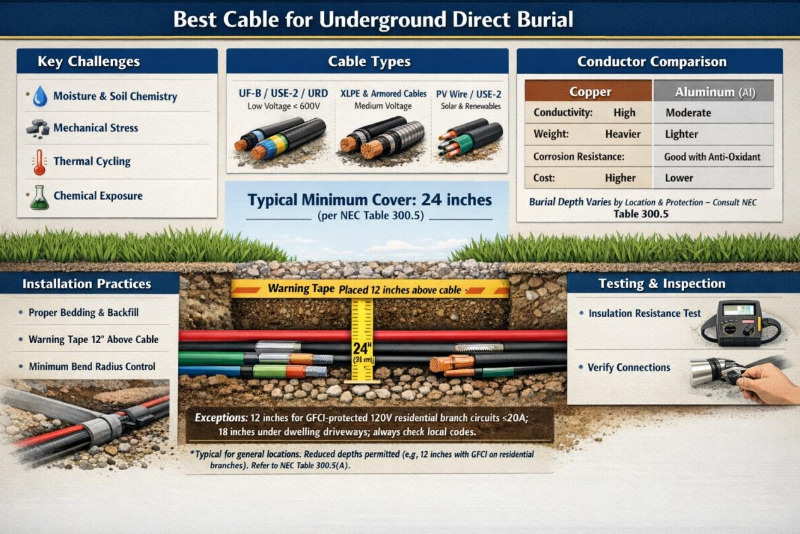 Best Cable for Underground Direct Burial---A Comprehensive Engineering GuideDocument Version: 1.0 Purpose: To provide electrical engineers, contractors, and project managers with objective guidance on selecting cables suitable for direct burial applications, ensuring long-term reliability and compliance with international standards. 1. Introduction When it comes to infrastructure longevity, selecting the right cable for Direct Burial (DB) is one of the most critical decisions in electrical design and installation. Unlike conduit-installed cables, direct-buried cables are continuously exposed to: Soil moisture and groundwater Variable soil chemistry and pH Mechanical stresses from rocks, backfill, and ground movement Thermal cycling during operation This guide defines key requirements, recommends cable types by application, compares conductor materials, and outlines essential installation practices to achieve a service life of 30+ years. 2. Direct Burial Cable Requirements A cable is considered suitable for direct burial only when its insulation and outer jacket are specifically engineered to resist: Moisture ingressand degradation phenomena such as water treeing Mechanical damagefrom sharp objects, soil settlement, or accidental excavation Chemical attackfrom soil contaminants, fertilizers, or groundwater Thermal and environmental stressunder normal and overload conditions Standard indoor-rated cables (e.g., THHN, ordinary PVC building wire) are not suitable for direct burial without additional mechanical protection. 3. Recommended Cable Types by Application Cable selection depends on voltage class, load requirements, environmental conditions, and prevailing regional/national standards (e.g., NEC, IEC 60502, or local equivalents). 3.1 Residential and Light Commercial (Low Voltage ≤ 600 V) UF-B (Underground Feeder)Tough thermoplastic jacket encasing all conductors; widely used for branch circuits in wet locations. USE-2 / RHW-2 / XHHW-2XLPE-insulated single conductors, 90°C wet/dry rated; common for service entrances and feeders. Many carry multiple ratings for versatility. URD (Underground Residential Distribution)Pre-assembled aluminum triplex/quadruplex cables with XLPE insulation; dominant choice for cost-effective residential underground services. 3.2 Commercial, Industrial, and Utility (Medium Voltage & High Load) XLPE-Insulated Cables Cross-Linked Polyethylene insulation provides excellent thermal stability (90–105°C continuous), resistance to environmental stress cracking, and long-term performance in moist environments. Common constructions: single-core or multi-core with PVC, PE, or LSOH sheath. Applicable standards: IEC 60502-1 (LV), IEC 60502-2 (MV), UL 44, UL 854, etc. Armored Cables(for enhanced mechanical protection) STA (Steel Tape Armor)— Effective against crushing and rodent damage. SWA (Steel Wire Armor) — Superior tensile strength; ideal for unstable soils or long pulls. 3.3 Renewables and Photovoltaic Installations USE-2or PV Wire (UL 4703) UV-resistant, high-temperature rated (90–150°C); suitable for exposed runs and buried segments. Dual-rated XLPE conductors (e.g., RHW-2/USE-2) are increasingly specified. 4. Conductor Material Comparison Feature Copper (Cu) Aluminum (Al / Alloy / ACSR) Electrical Conductivity High (≈100% IACS) Moderate (≈61% IACS for EC grade; alloys better) Weight Heavier Significantly lighter (easier handling/pulling) Corrosion Resistance Excellent Good when properly terminated with inhibitors Material Cost Higher Lower, especially in larger conductor sizes Typical Applications High-load circuits, tight spaces, critical terminations Long-distance feeders, utility distribution, cost-driven projects Important Note for Aluminum Conductors: Always use UL-listed or equivalent connectors, apply approved anti-oxidant compound, and follow manufacturer torque specifications to minimize oxidation-related connection failures. 5. Essential Installation Practices To maximize cable life and safety: 1. Minimum Burial DepthComply with local/national electrical codes. Typical values (example from NEC Table 300.5): Residential branch circuits (120/240 V with GFCI protection): 12–18 inches General direct burial (most locations): 24 inches Under vehicular traffic areas (driveways, roads): 24 inches or greater In conduit: reduced depths permitted (6–18 inches depending on conduit type) 2. Bedding and Backfill Place 4–6 inches of clean sand or fine, rock-free soil beneath and around the cable to protect against sharp objects. 3. Warning and Mechanical Protection Install detectable underground warning tape 12 inches above the cable. Use concrete slabs, protective boards, or sleeving in high-risk excavation zones. 4.Additional Best Practices Observe minimum bending radius per manufacturer specification. Control pulling tension to avoid jacket or insulation damage. Perform insulation resistance (megger) testing after installation and backfill. 6. Summary – Selection Guidelines Project Type Recommended Cable Types Key Advantages Standard residential / light commercial UF-B, USE-2/RHW-2/XHHW-2, URD aluminum Cost-effective, widely available Industrial / utility power distribution XLPE-insulated (armored STA/SWA when needed) Superior thermal & environmental performance Solar PV / renewable energy USE-2, PV Wire (UL 4703), dual-rated XLPE UV resistance, high temperature rating Always verify compliance with the latest edition of applicable standards (NEC, IEC 60502 series, or local regulations), review manufacturer data sheets, and conduct site-specific risk assessments. Let us support your project: Reach out to our technical experts for tailored specifications, standard compliance assistance, or detailed data sheets on XLPE armored cables, USE-2 equivalents, SWA variants, and more.
 -
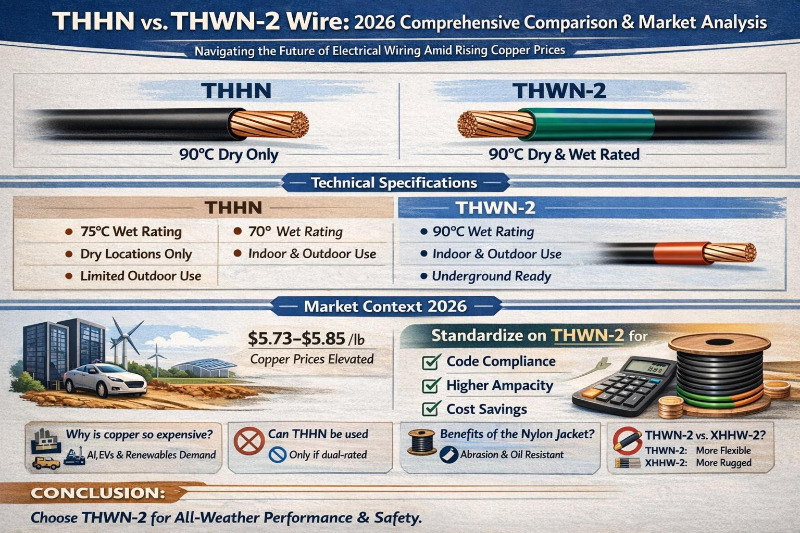 THHN vs. THWN-2 Wire: 2026 Comprehensive Comparison & Market AnalysisIntroduction In 2026, amid accelerating global electrification, AI-driven data center expansion, and renewable energy infrastructure growth, the selection of building wire transcends basic code compliance—it directly influences project reliability, thermal performance, and total installed cost. THHN and THWN-2 remain the predominant types for conduit installations in North America. Although structurally similar and frequently dual-rated in modern production, their environmental ratings differ significantly, particularly in wet locations. With copper prices remaining elevated (COMEX copper futures hovering around $5.73–$5.85 per pound as of mid-March 2026; LME 3-month copper approximately $12,700–$12,900 per metric ton), choosing the appropriate wire type is essential for optimizing material efficiency and avoiding costly rework or derating penalties. Technical Specifications Breakdown The designations follow National Electrical Code (NEC) conventions, describing insulation composition, thermal limits, and environmental suitability: - T — Thermoplastic (PVC-based primary insulation) - HH — High Heat-resistant (90°C continuous operating temperature in dry locations) - W — Wet-location rated (suitable for exposure to moisture or condensation) - N — Nylon outer jacket (provides abrasion resistance, oil/chemical protection, and low-friction surface for easier conduit pulls) - 2 — Dual-temperature upgrade: retains the full 90°C rating in both dry and wet conditions Primary Difference: Environmental and Thermal Performance Feature THHN (non-2 / legacy) THWN-2 (or modern THHN/THWN-2 dual-rated) Dry-Location Temperature Rating 90°C 90°C Wet-Location Temperature Rating 75°C (or prohibited without dual rating) 90°C (full rating maintained) Wet Locations Permitted (NEC) No (or requires 75°C derating) Yes Underground / Outdoor Conduit Not permitted unless dual-rated Preferred and fully compliant Ampacity Advantage in Wet Conditions Lower (use 75°C column) Higher (use 90°C column; often allows smaller conductor size) Nylon Jacket Yes Yes Market Availability (2026) Rare (pure THHN-only) Dominant (standard dual-rated product) Key Insight THHN is suitable for dry and damp indoor applications. THWN-2 is the preferred solution for wet, underground, or outdoor conduit runs. 2026 Market Context: Strategic Selection in a High-Cost Environment Copper remains in a tight market due to AI infrastructure, electrification trends, supply constraints, and geopolitical factors. Procurement Recommendation Standardize on dual-rated THHN/THWN-2 to reduce risk and optimize cost efficiency. Frequently Asked Questions (FAQ) Why do copper wire prices remain elevated in 2026? Demand from AI, EVs, and renewables exceeds supply growth. Can THHN be used in outdoor or underground conduit? No, unless marked THWN-2. What is the benefit of the nylon jacket? Improves pullability and durability. How does THWN-2 compare to XHHW-2? THWN-2 is lighter and easier to install; XHHW-2 offers better extreme resistance. Conclusion Specifying THWN-2 or dual-rated THHN/THWN-2 ensures compliance, performance, and cost efficiency.
Knowledge sharing
-
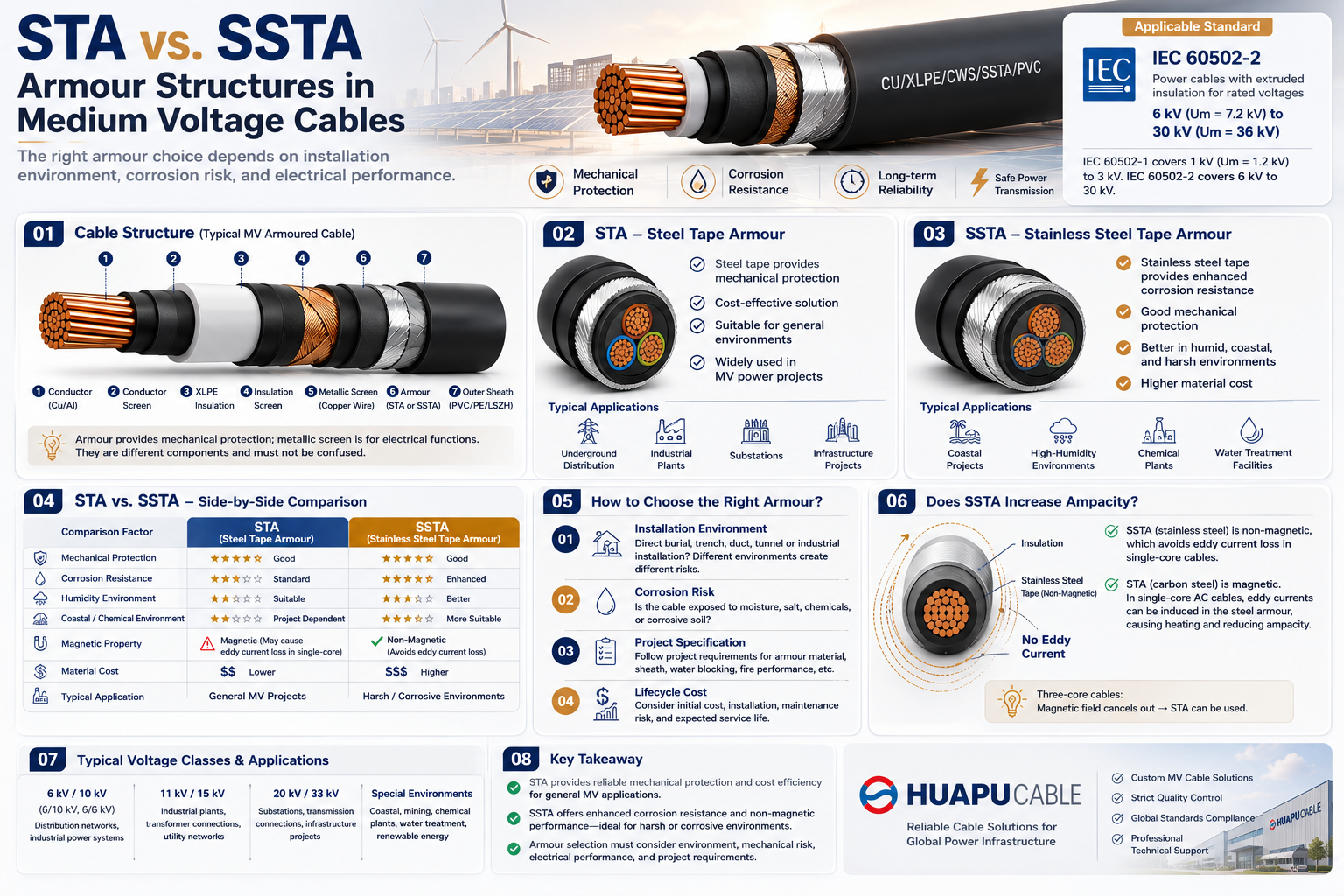 STA vs. SSTA Armour: Structure and Applications in Medium Voltage Cables
-
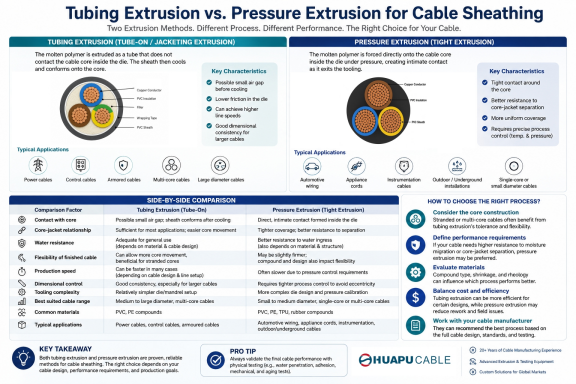 Tube Extrusion vs. Pressure Extrusion Cable Sheathing: A Practical Comparison Guide
-
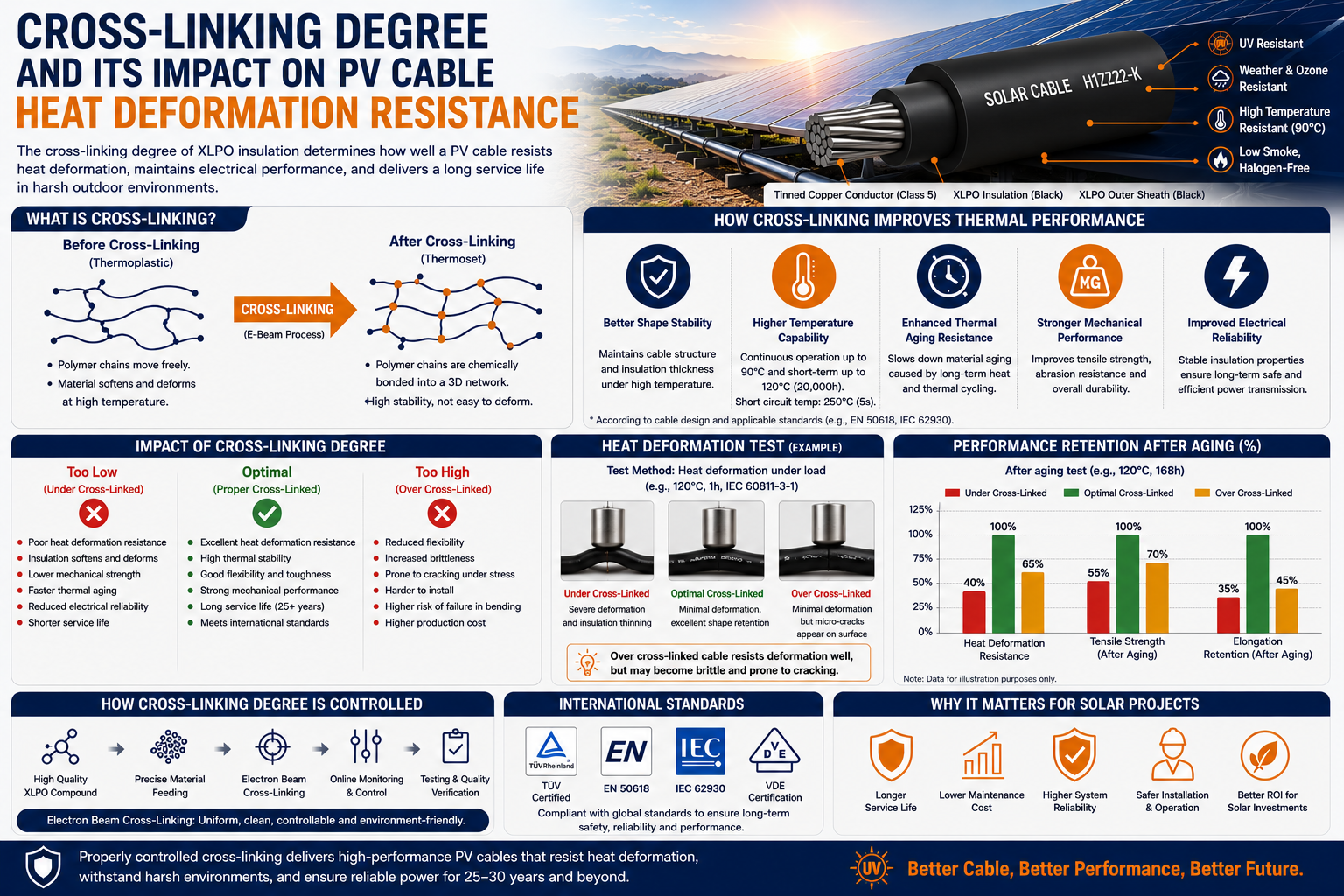 Cross-Linking Degree and Its Impact on PV Cable Heat Deformation Resistance
-
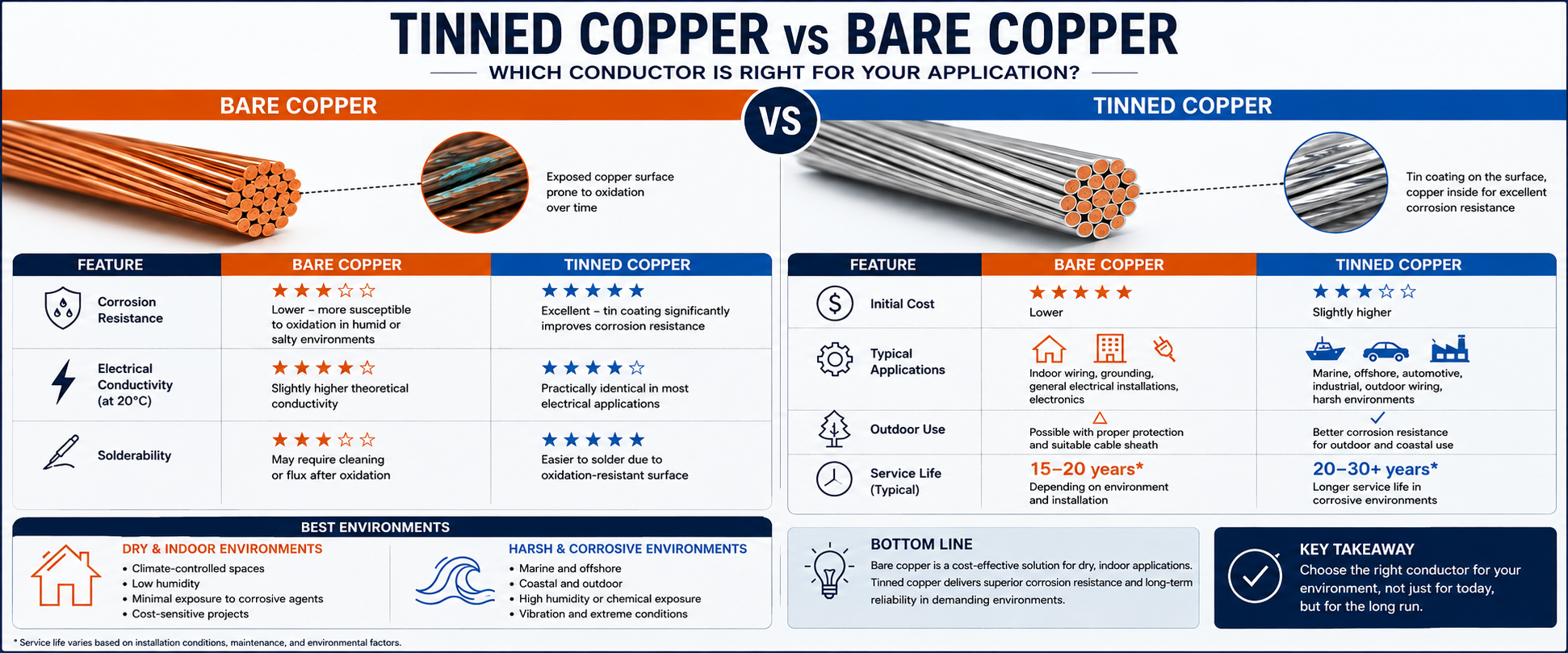 Tinned Copper vs Bare Copper Conductor Which Wire Is Right for Your Application?
-
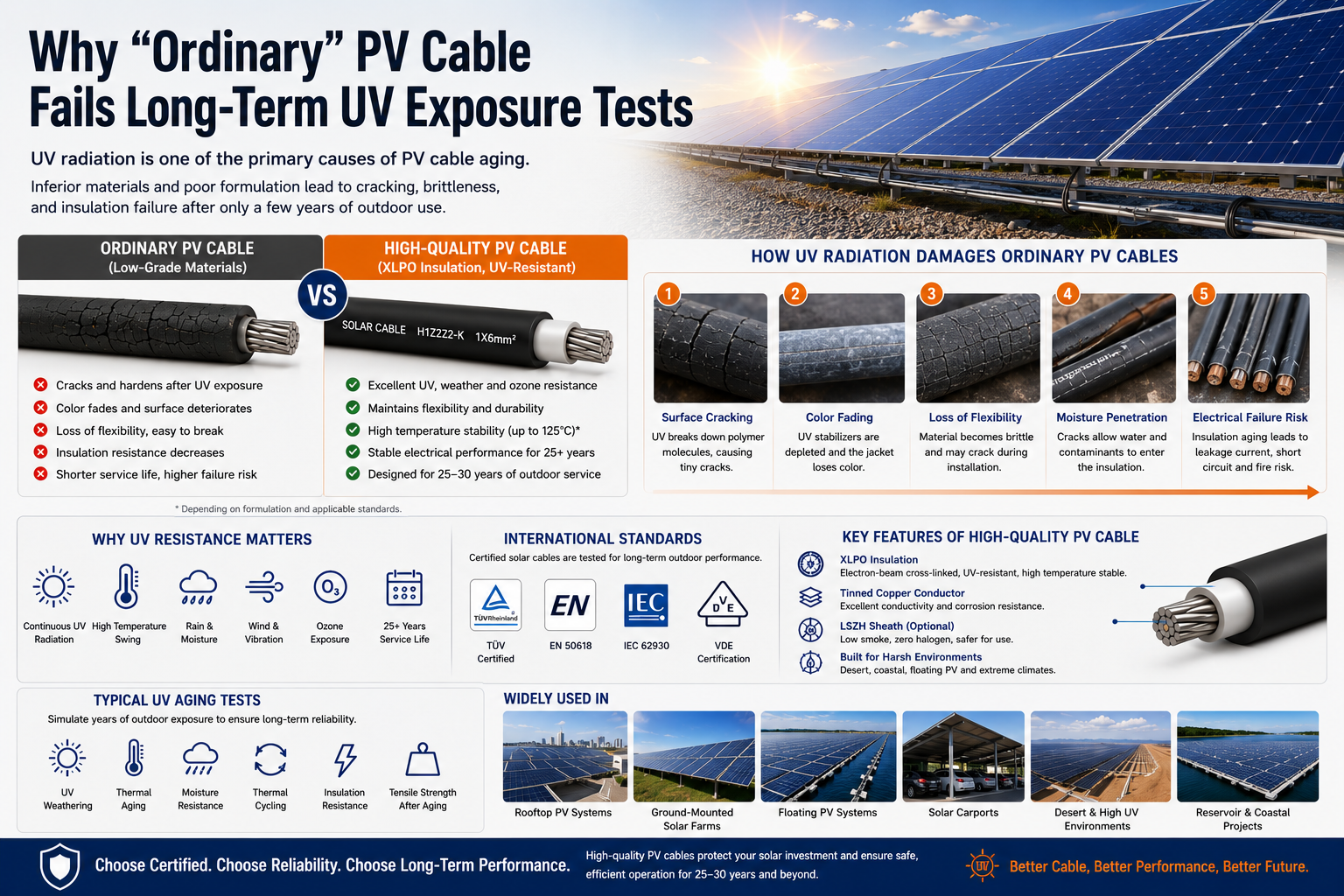 Why "Ordinary" PV Cable Fails Long-Term UV Exposure Tests

Our Email
Our Tel
- +86-13588204183
Our Address
- No. 39 Zhiyuan Road, Deqing Economic Development Zone, Huzhou City, Zhejiang Province
QR Code

Quick Links
Online Message
Copyright © Zhejiang Huapu Cable Co., Ltd. All Rights Reserved.
 ISO 9001 Cable Manufacturer