
 en
en English
 中文简体
中文简体 русский
 Español
 عربى
عربى
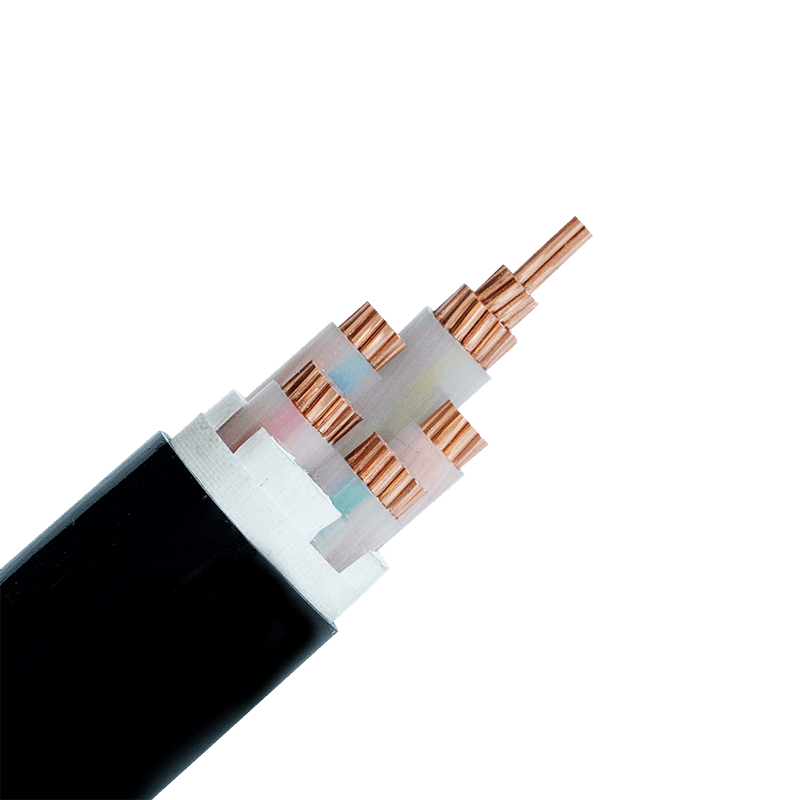
Structural Parameters
| Conductor | Cu / Bare Cu / TC / Al / CCA |
| Insulation | XLPE / PVC / FR-PVC / LSZH / EPR |
| Filler | FR PP Filler Rope / LSZH Filler / Glass Fiber / Ceramic Fiber |
| Taping | Halogen-Free FR Tape / Al-Polyester Tape / Glass Fiber Tape / Steel Tape Armor |
| Sheath | Rodent & Termite Resistant LSZH Polyolefin / FR-PVC / MDPE / HDPE / Nylon (PA) Jacket |
| Anti-Termite Method | Chemical Additive (e.g. Bitrex) / Physical Armor (SWA / STA) / Hard Polymer Jacket (Nylon/HDPE) |
| Max Conductor Temp. | 70–105°C (PVC: 70–90°C; XLPE/EPR: 90–105°C) |
| Bending Radius | 12–15D |
| Core Configuration | 1–5 Cores (multi-core up to 37C available) |
| Cross-Section Range | 1.5–400 mm² (AWG 16 – 1000 kcmil) |
| Conductor Flexibility | Class 1 / 2 / 5 |
Characteristic:
1. Special protective layer, resistant to termites and rodents;
2. Environmentally friendly and non-toxic, does not pollute the environment;
3. Excellent insulation performance, electrical safety;
4. Resistant to aging, long service life.
Application:
1. Underground cable installation (in termite-prone areas);
2. Outdoor wiring in residential areas;
3. Power lines in agricultural and forestry areas;
4. Warehouses, computer rooms, and other locations susceptible to rodent infestation.
Description:
Utilizing environmentally friendly cable sheath materials, these cables resist damage from insects, rodents, termites, and ants, making them suitable for demanding operating conditions.
Regarding performance characteristics, rated voltages (U₀/U) cover multiple product series, ranging from 300/300V to 26/35kV. Maximum long-term allowable operating temperature and bending radius comply with relevant wire and cable standards. Laying conditions are flexible; no preheating is required when the ambient temperature is not lower than 0℃, and laying is not limited by elevation differences. Core technical performance is categorized by protection type: termite-proof cables (FY) offer long-term protection against termite damage; rodent-proof cables (FSH) offer long-term protection against rodent damage; and termite- and rodent-proof cables (FSY) offer long-term protection against both termites and rodents.
A wide production range is available, including power cables with rated voltages of 26/35kV and below, wires with rated voltages of 450/750V and below, control cables, and instrument cables, meeting the requirements of different voltage levels and protection scenarios.
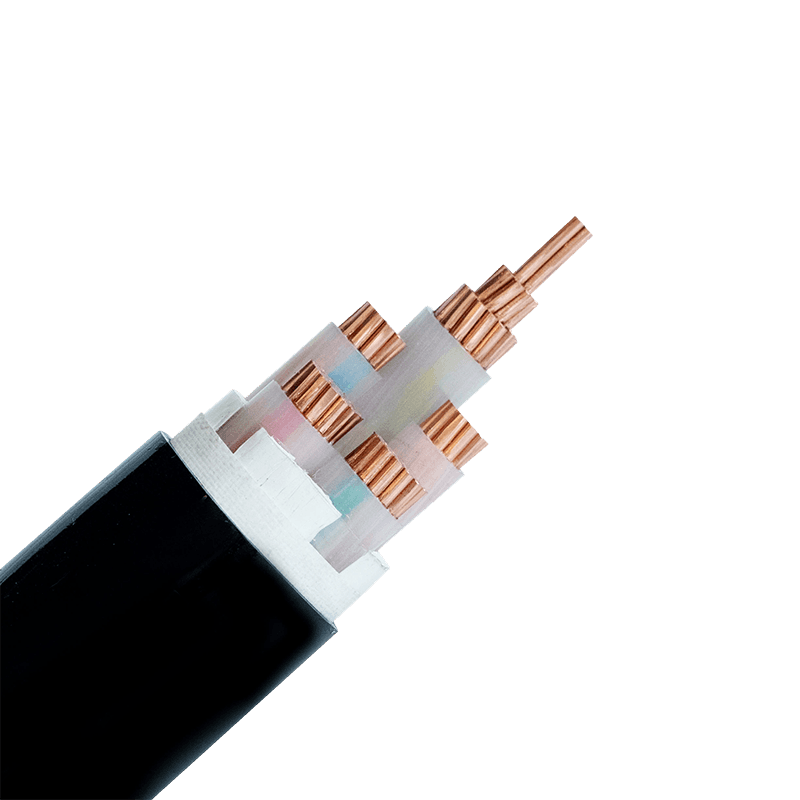
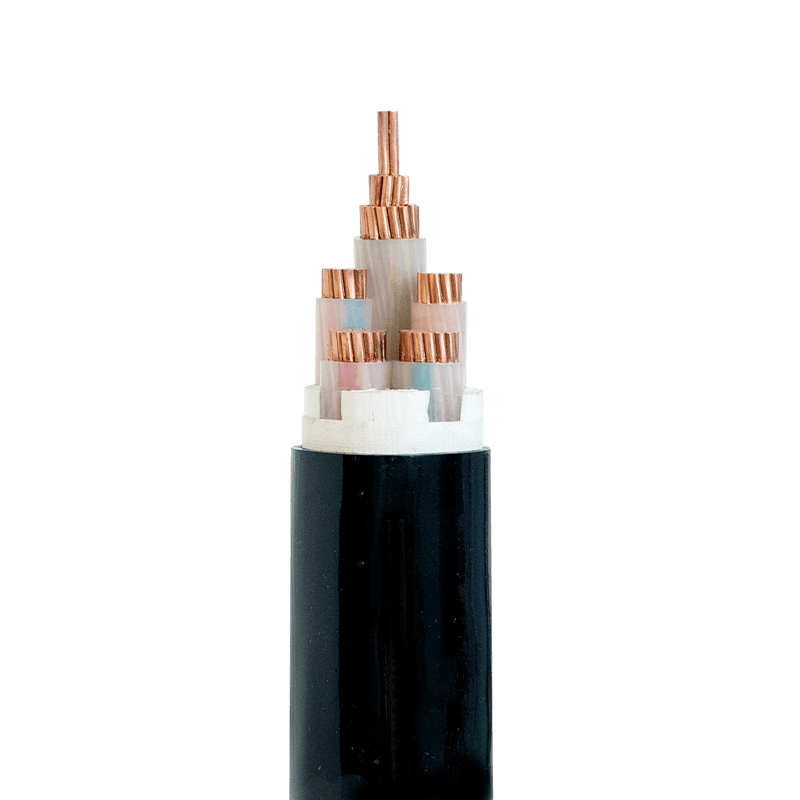
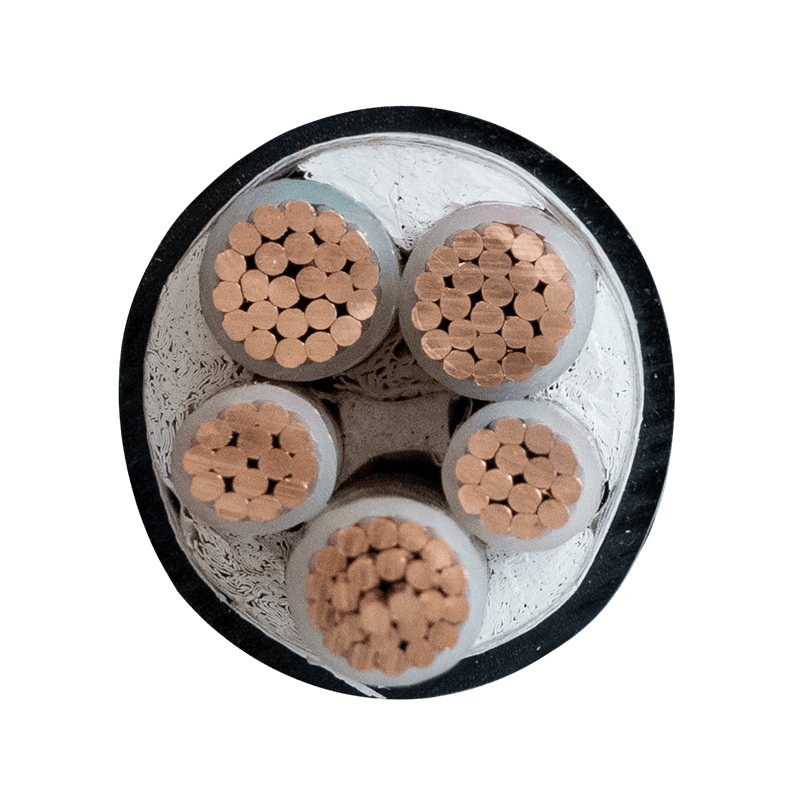
FSY-WDZ-YJY
Obtain Quotations
Termite-Resistant and Rodent-Resistant Electric Wires and Cables
| Conductor | Copper |
| Insulation | Cross-linked Polyethylene |
| Filling | Polypropylene Flame-retardant Filler Rope |
| Bag strap | Halogen-free Flame-retardant Packaging Tape |
| Sheath | Rodent and Ant-Resistant Halogen-Free, Low-Smoke, Flame-Retardant, Eco-Friendly Polyolefin Sheath |
| Highest temperature of conductor | 90 |
| Bending radius | 12-15D |
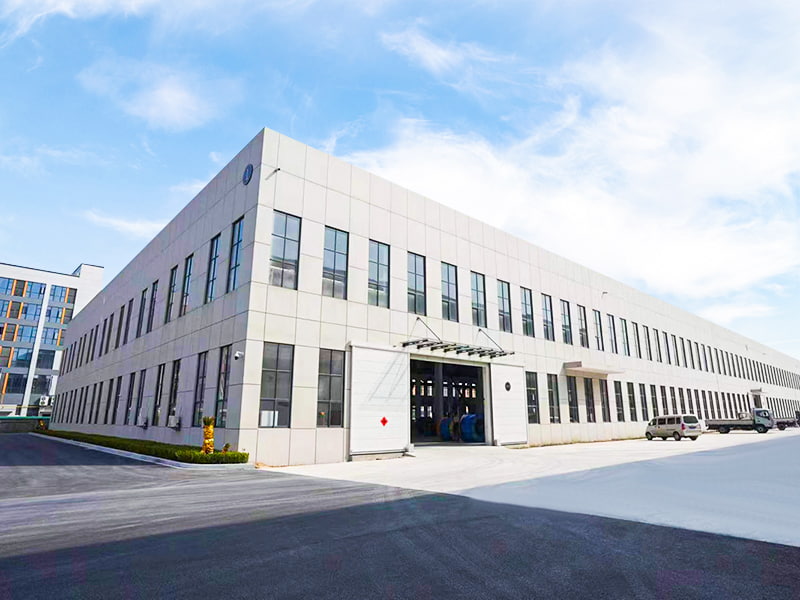
About us
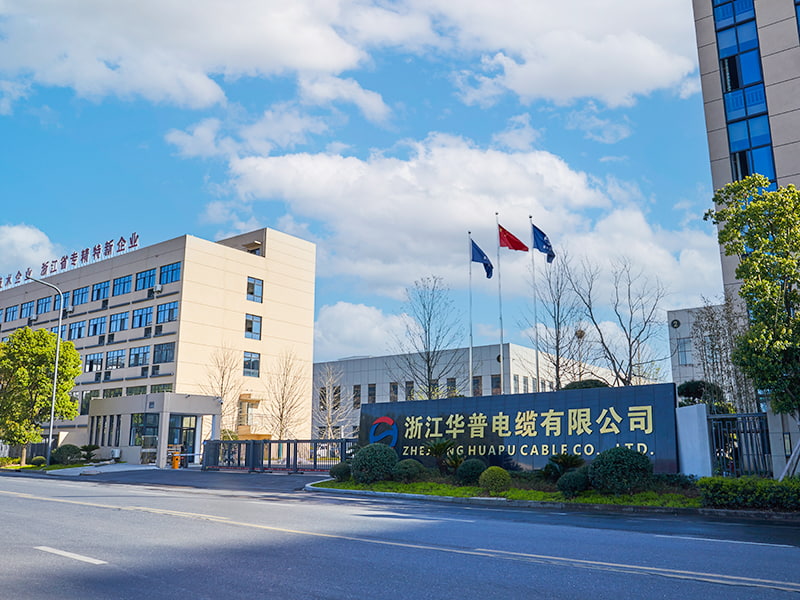
Zhejiang Huapu Cable Co., Ltd.
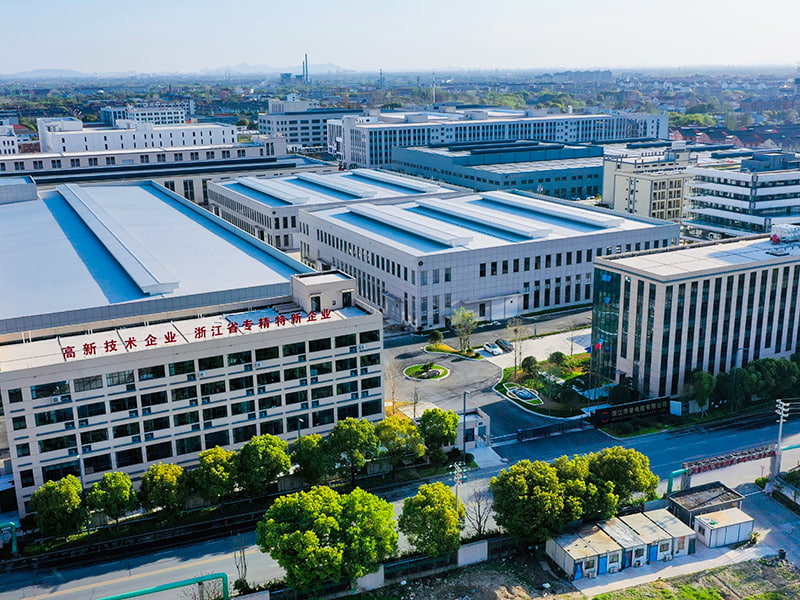
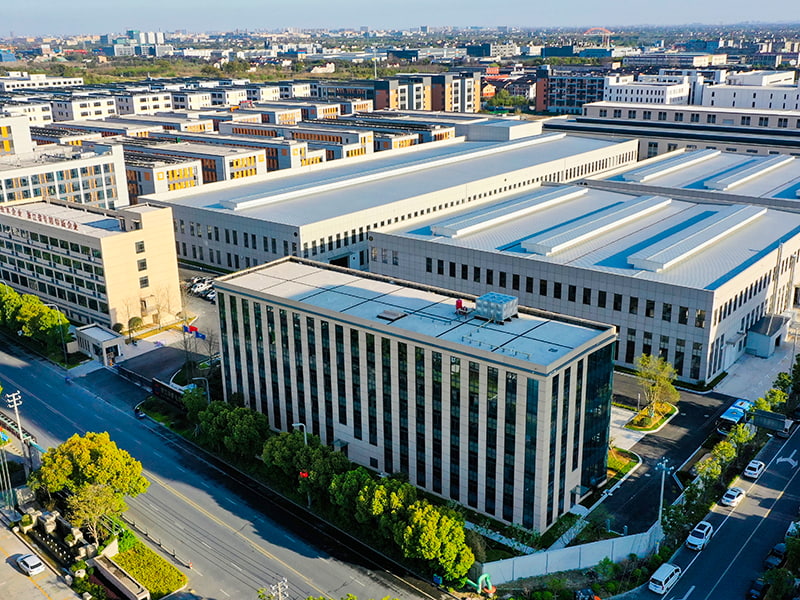
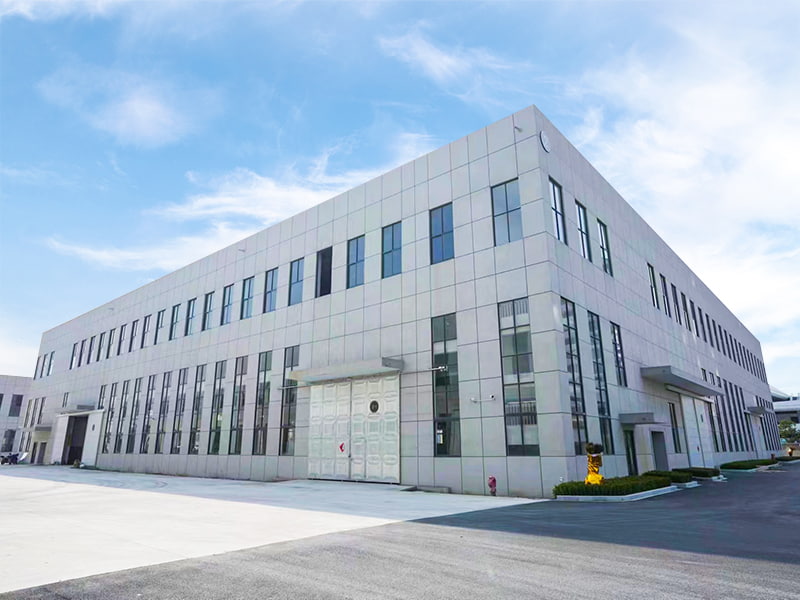
Zhejiang Huapu Cable Co., Ltd. is a professional wire and cable manufacturer integrating production, sales, R&D, and service. The company specializes in the production and development of a wide range of products, including cross-linked polyethylene and PVC insulated power cables, control cables, overhead cables, aluminum stranded wires, steel-cored aluminum stranded wires, building wires, general rubber-sheathed flexible cables, power plug cords, radio frequency cables, communication cables, computer cables, as well as special electrical equipment products such as low-smoke halogen-free, flame-retardant, fire-resistant, and fireproof cables.
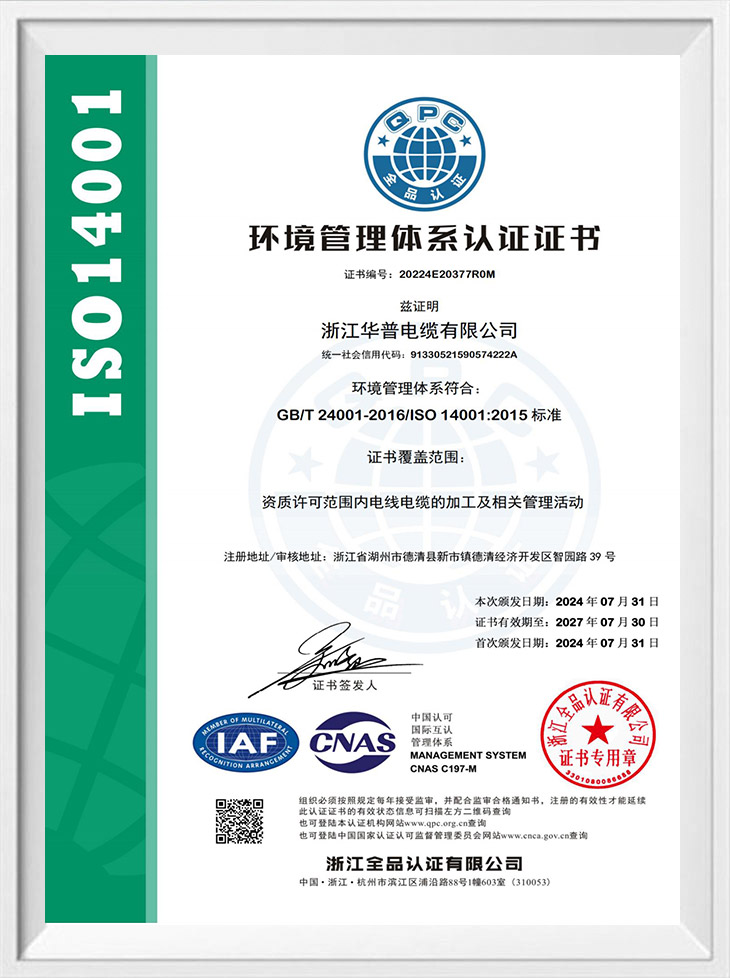
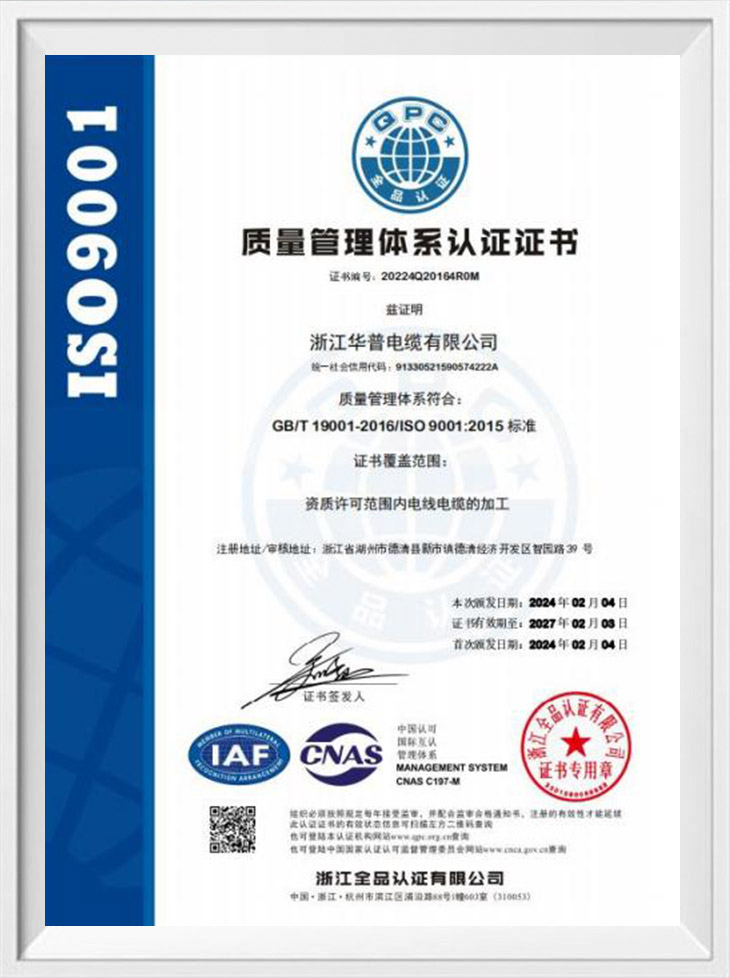
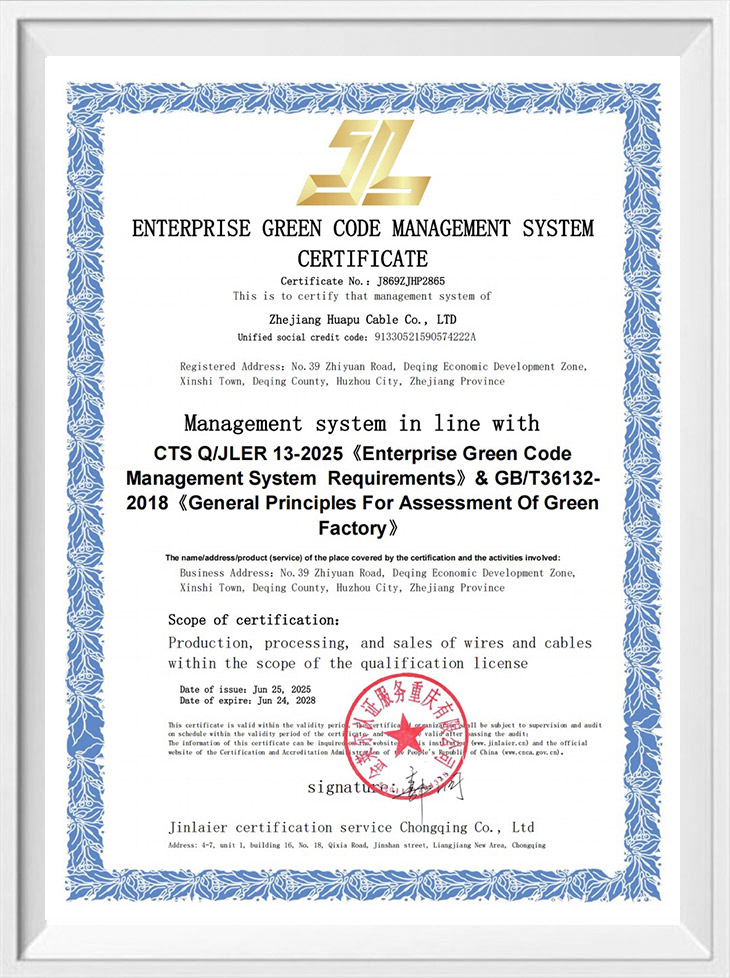
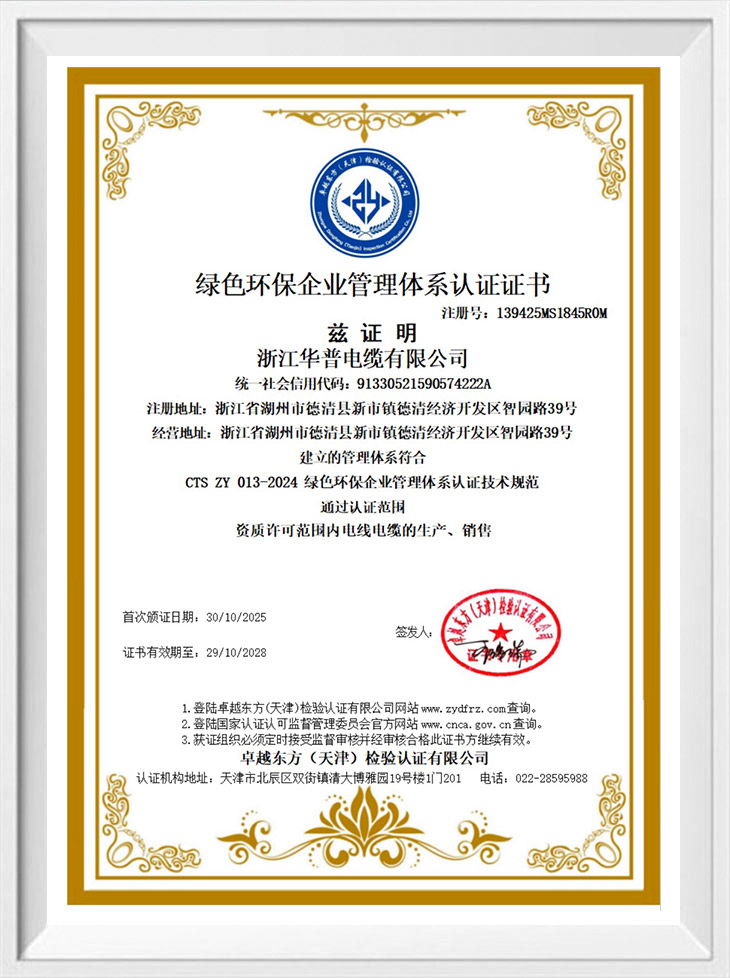
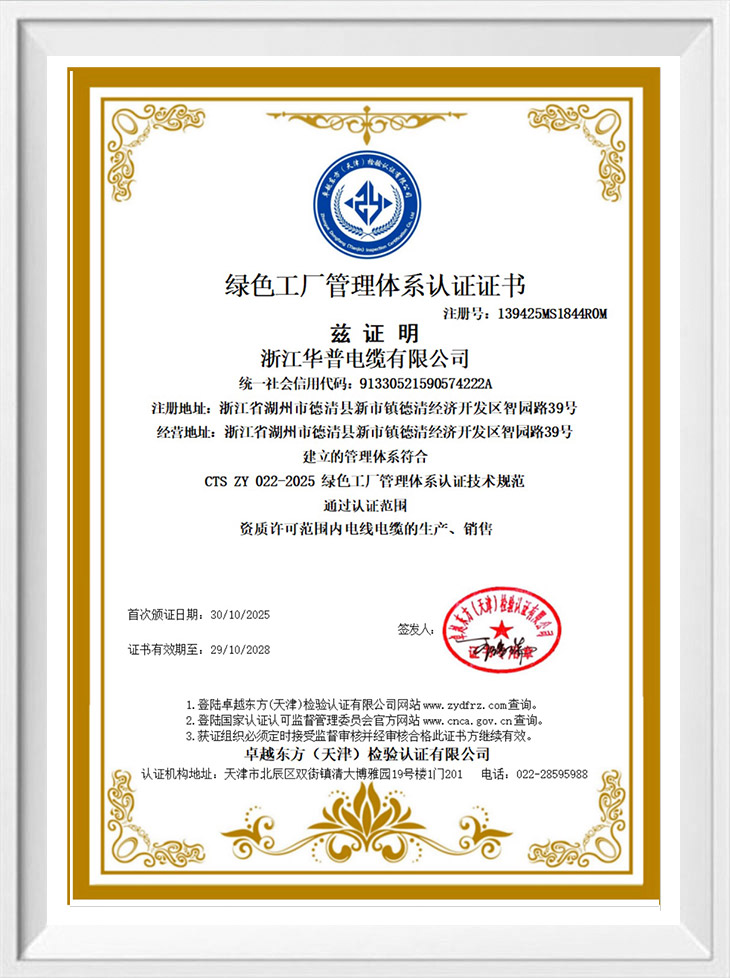
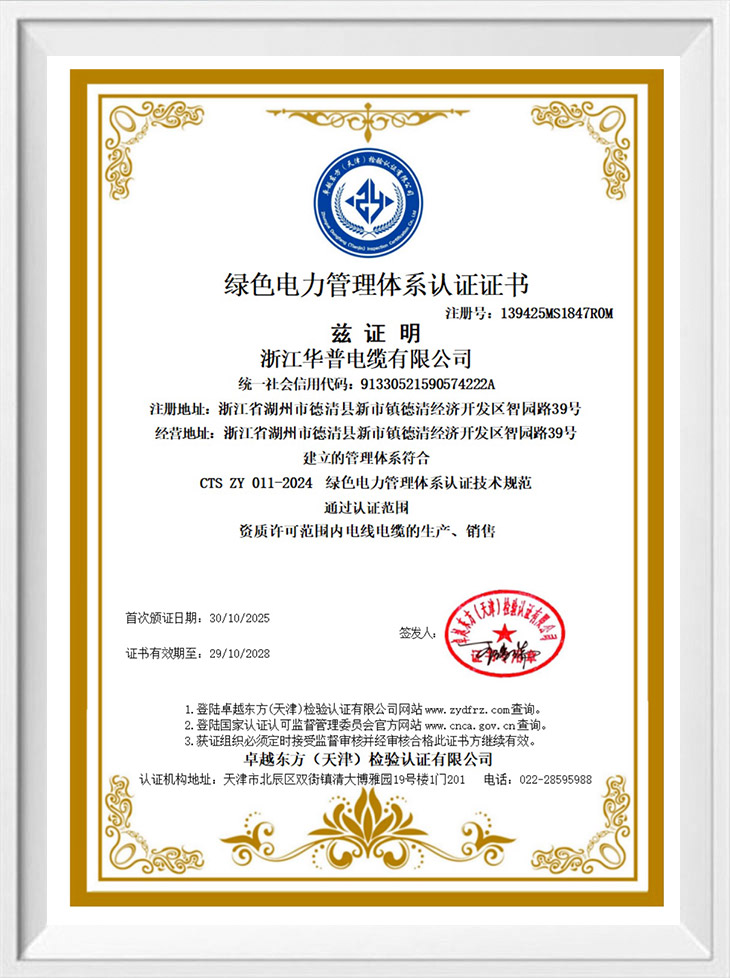
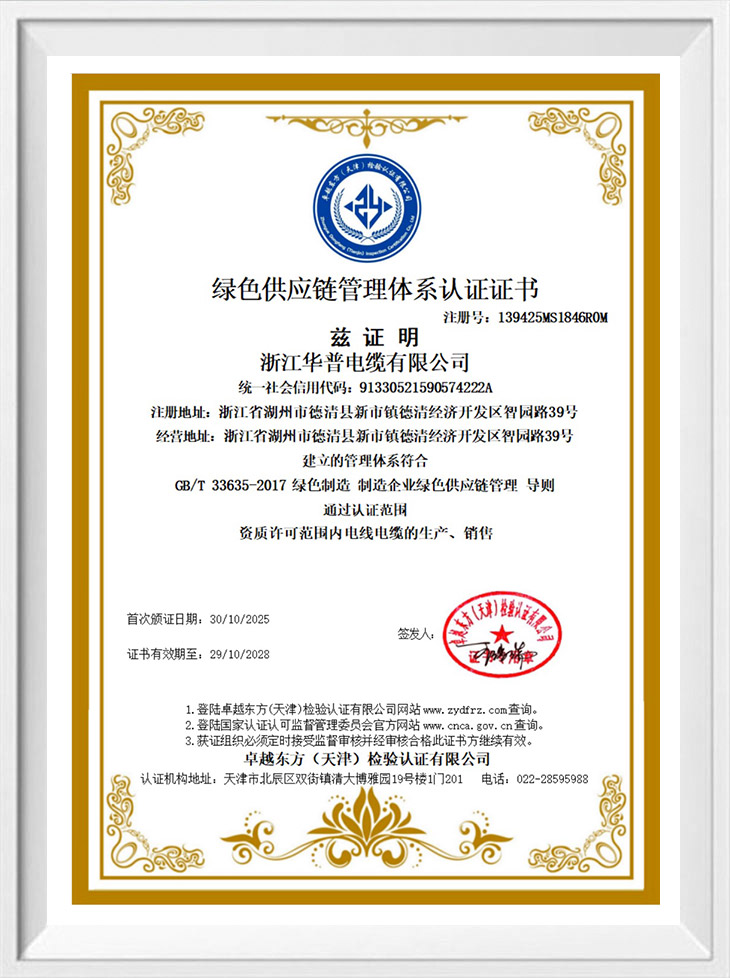
As Termite & Rodent Resistant Cables Manufacturers and Termite & Rodent Resistant Cables Suppliers in China, Equipped with advanced technology, robust technical expertise, comprehensive testing capabilities, and well-equipped laboratory facilities, the company operates modern production lines and utilizes state-of-the-art inspection and testing equipment. It has obtained certifications including National High-Tech Enterprise recognition, ISO 9001 Quality Management System, ISO 14001 Environmental Management System, OHSAS 18001 Occupational Health and Safety Management System, "Zhejiang Manufacturing" standards, and China Compulsory Product (CCC) certification. The company also holds a National Industrial Product Production License.
As Termite & Rodent Resistant Cables Factory and Termite-Proof and Rodent-Proof XLPE Insulated Cables and Wires Suppliers, the company has established a comprehensive management system, firmly believing that superior quality is the key to customer satisfaction and market success, which helps build a high-end brand image. Based on customer needs, the company continuously strives for innovation to maximize benefits for its clients.
Guided by the principles of rigor, efficiency, integrity, pragmatism, humility, and unity, the company aims to become a global advocate for green and environmentally friendly products. While providing top-tier wire and cable products, supply Custom Termite-Proof and Rodent-Proof XLPE Insulated Cables and Wires, it is committed to collaborating with partners from all sectors through scientific management, standardized production, premium quality, satisfactory service, and an outstanding reputation to achieve mutual success.
-

0 01
Company registered
-

0m² 02
Factory area
-

003
Employees
-

USD0million04
Annual Sales Volume
HIGH STANDARD HONOUR
Environmental protection certification and standards
News & Blog

Industry knowledge
Material Engineering Approaches Used in Termite-Proof and Rodent-Proof Wires and Cables
In regions where underground installation and outdoor infrastructure are common, biological damage caused by termites and rodents can significantly shorten the service life of electrical cables. Modern termite-proof and rodent-proof wires and cables therefore rely on specialized material engineering rather than simple mechanical barriers. Manufacturers such as Zhejiang Huapu Cable Co., Ltd., a professional wire and cable company integrating production, R&D, sales, and service, actively develop such solutions. Located at No. 39 Zhiyuan Road in the Deqing Economic Development Zone near Hangzhou, the company benefits from convenient logistics access via National Highway 104 and nearby expressways, enabling efficient distribution of specialized cable products to industrial and infrastructure markets.
One effective strategy is the use of modified outer sheath materials containing non-toxic anti-termite additives. These additives alter the taste and odor profile of the cable jacket, discouraging insects from chewing through the material. In rodent-prone environments, high-density polymer compounds and mineral-filled sheaths are used to increase hardness and abrasion resistance. This approach makes it physically difficult for rodents to gnaw through the protective layers.
- Polyethylene jackets blended with mineral fillers improve hardness and resistance to rodent chewing.
- Special anti-termite additives create chemical deterrents without affecting insulation performance.
- Multi-layer sheath structures increase the time required for pests to penetrate the cable.
- Armored metal tape layers provide additional mechanical barriers in high-risk environments.
Combining chemical deterrence with structural reinforcement allows these cables to remain reliable even when installed underground, in agricultural areas, or in environments where pest activity is difficult to control through external measures.
Structural Design Features of Termite-Proof and Rodent-Proof XLPE Insulated Cables and Wires
Termite-proof and rodent-proof XLPE insulated cables and wires are often used in power distribution networks, underground utility systems, and industrial installations. The use of cross-linked polyethylene (XLPE) insulation provides excellent electrical insulation and thermal resistance, but pest protection requires additional structural elements. Manufacturers such as Zhejiang Huapu Cable Co., Ltd. integrate these features into cable designs intended for long-term infrastructure deployment.
In these cable constructions, XLPE insulation protects the conductor while outer layers provide environmental and biological protection. Engineers often incorporate reinforced sheathing materials, steel tape armor, or glass fiber layers to increase mechanical durability. These protective layers also help prevent cable deformation under soil pressure or mechanical impact.
| Cable Layer | Function | Contribution to Pest Protection |
| XLPE Insulation | Electrical insulation and thermal stability | Prevents electrical damage if outer sheath is partially compromised |
| Inner Sheath | Mechanical protection and shape stability | Acts as an additional barrier layer |
| Metal Armor Layer | Impact and compression resistance | Prevents rodents from penetrating the cable structure |
| Specialized Outer Jacket | Environmental and chemical protection | Contains anti-termite compounds and hardened polymer blends |
This layered structure ensures that even if the outer sheath experiences partial damage, the internal insulation and protective layers maintain electrical safety and system reliability.
Installation Practices That Improve the Effectiveness of Pest-Resistant Cable Systems
Even when using advanced termite-proof and rodent-proof cables, installation methods play a critical role in preventing long-term damage. Infrastructure engineers often combine specialized cables with strategic routing and environmental protection techniques to minimize pest exposure. Companies such as Zhejiang Huapu Cable Co., Ltd., located in the well-connected Deqing Economic Development Zone near Hangzhou, frequently provide technical guidance to ensure that their pest-resistant cable products perform effectively after installation.
One common practice is the use of protective conduits or cable ducts in areas where rodent activity is frequent, such as agricultural land, warehouses, and underground transportation tunnels. Proper trench depth and backfill materials also influence pest resistance. For example, compacted sand or gravel backfill can discourage burrowing animals from approaching cable routes.
Environmental Planning Measures
- Avoid installing cables directly next to waste disposal areas or food storage facilities where rodent populations may be high.
- Use sealed cable entry points in buildings to prevent pests from following cable routes indoors.
- Maintain regular inspection schedules for underground cable routes to identify early signs of pest activity.
- Combine pest-resistant cables with integrated pest management strategies in high-risk environments.
By integrating advanced cable materials with careful installation planning, infrastructure operators can significantly reduce maintenance costs and extend the operational life of electrical systems in pest-prone environments.

Our Email
Our Tel
- +86-13588204183
Our Address
- No. 39 Zhiyuan Road, Deqing Economic Development Zone, Huzhou City, Zhejiang Province
QR Code

Quick Links
Online Message
Copyright © Zhejiang Huapu Cable Co., Ltd. All Rights Reserved.

Custom Termite & Rodent Resistant Cables Factory