How Twisted Pair Geometry Controls Crosstalk in Communication Cables
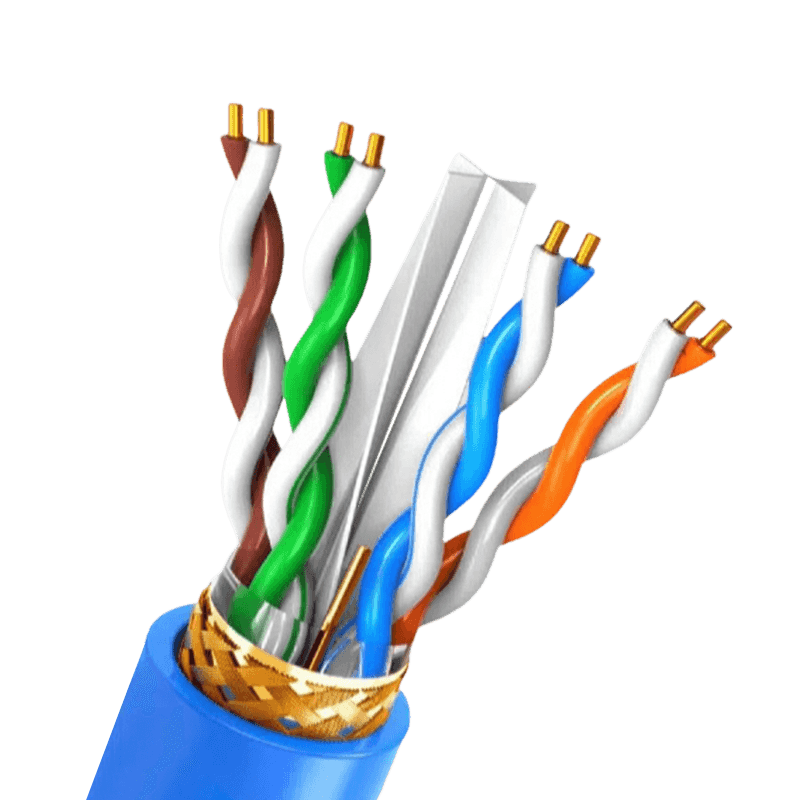
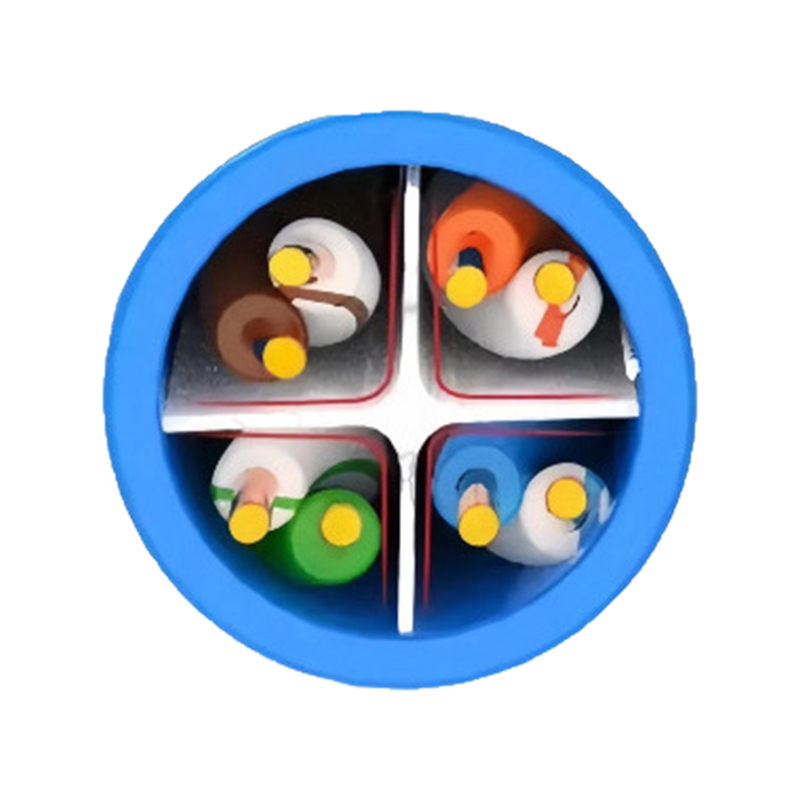
The twist in a twisted pair communication cable is not merely a manufacturing convenience — it is the fundamental mechanism by which the cable rejects electromagnetic interference and suppresses crosstalk between adjacent pairs. When two conductors are twisted together, any external electromagnetic field induces nearly equal and opposite voltages in successive half-twists, which cancel at the receiver through common-mode rejection. The effectiveness of this cancellation depends on the twist lay length: a shorter lay (more twists per meter) provides better noise rejection but increases cable cost and attenuation slightly due to the added conductor length. In multi-pair communication cables, each pair is assigned a unique, carefully controlled lay length that differs from every adjacent pair. This deliberate variation — typically spanning a range from approximately 25 mm to 38 mm per pair in a standard Cat6A cable — ensures that no two pairs achieve constructive interference alignment over a cable run, which is the primary mechanism behind the near-end crosstalk (NEXT) and far-end crosstalk (FEXT) performance specifications that define data transmission reliability. Tight manufacturing tolerances on lay length consistency along the full cable length are what separate high-performance communication cables from commodity products.
Attenuation-to-Crosstalk Ratio and Why It Predicts Real-World Data Link Performance
When evaluating communication cables for structured cabling infrastructure, attenuation and crosstalk figures are often reviewed independently, but the metric that most directly predicts whether a data link will function reliably at its rated speed is the attenuation-to-crosstalk ratio (ACR) — specifically the power sum variant (PS-ACR). ACR is calculated simply as NEXT minus insertion loss at each frequency point, expressed in decibels. A positive ACR means the signal arriving at the far end is stronger than the crosstalk noise interfering with it; the larger the positive margin, the more robust the link. For Cat6 cabling at 250 MHz, the minimum PS-ACR-N (power sum ACR at near end) is specified at approximately 3.0 dB — a very thin margin. Cat6A cabling at 500 MHz maintains a minimum PS-ACR-N of around 25 dB, which is why Cat6A is the minimum recommended category for 10GBASE-T applications. Understanding ACR rather than fixating on individual attenuation or crosstalk figures helps network designers select communication cables that deliver genuine headroom for the intended application rather than cables that merely satisfy the letter of a category specification at its worst-case limits.
Dielectric Material Selection and Its Effect on Signal Propagation Velocity
The insulation material surrounding each conductor in a communication cable directly determines the signal propagation velocity, which affects both the nominal velocity of propagation (NVP) and the cable's delay and delay skew characteristics. Propagation velocity is inversely proportional to the square root of the insulation material's relative permittivity (dielectric constant). Solid polyethylene (PE), with a dielectric constant of approximately 2.25, yields an NVP of about 66% of the speed of light in free space. Foamed polyethylene — where microscopic air voids are introduced into the PE matrix — reduces the effective dielectric constant toward 1.5 or lower, pushing NVP above 75–85% of the speed of light. This matters practically in two ways: first, higher NVP means lower propagation delay, which is important in latency-sensitive applications such as financial trading networks and real-time control systems; second, tighter control of the dielectric constant consistency along the cable length reduces delay skew between pairs, which becomes a critical parameter in 10G and 40G Ethernet where multiple pairs carry simultaneous data streams that must be recombined at the receiver within a tight timing window. High-performance communication cables for data center backbone applications routinely specify foamed PE insulation precisely to achieve the propagation velocity and skew performance that dense parallel transmission demands.
Shielding Architectures in Communication Cables: F/UTP, S/FTP, and When Each Is Appropriate
The IEC 61156 and ISO/IEC 11801 standards define a systematic nomenclature for communication cable shielding that describes both the overall cable shield and the individual pair shield, in the format XX/YTP. Understanding when to specify each architecture is a practical engineering decision rather than a specification checkbox exercise.
| Designation |
Overall Shield |
Pair Shield |
Primary Advantage |
Typical Application |
| U/UTP |
None |
None |
Lowest cost, easiest termination |
Office LAN, Cat5e/Cat6 horizontal runs in low-interference environments |
| F/UTP |
Foil tape |
None |
Reduces alien crosstalk and external EMI ingress |
Cat6A in bundled tray installations, industrial environments with moderate EMI |
| S/FTP |
Braided copper |
Foil per pair |
Maximum isolation between pairs and from external fields |
Cat7/Cat8 data center, high-frequency trading floors, broadcast facilities |
| SF/FTP |
Foil + braid |
Foil per pair |
Highest shielding effectiveness across broadest frequency range |
Aerospace, defense, industrial automation with severe EMI |
Shielded communication cables require a continuous, low-impedance ground path from shield to earth at both ends of the link to be effective. An ungrounded or poorly grounded shield on an S/FTP or F/UTP cable can actually worsen performance compared to an unshielded cable by acting as an antenna that couples external noise directly into the signal pairs.
Flame Propagation and Smoke Toxicity Classifications for Indoor Communication Cable Routing
Communication cables routed through plenum spaces, risers, and open office environments are subject to fire safety classifications that determine which products can legally be installed in which locations. In North America, the NEC (NFPA 70) classifies communication cables as CMP (Communications Multipurpose Plenum), CMR (Riser), CM (General Purpose), and CMX (Limited Use), with CMP representing the most stringent flame and smoke performance for use in air-handling plenums. In Europe and markets aligned with IEC standards, the CPR (Construction Products Regulation) EN 50575 framework applies, defining reaction-to-fire classes from Aca down through B1ca, B2ca, Cca, Dca, Eca, and Fca — each requiring testing of flame spread, heat release rate (HRR), smoke production (s1–s3), flaming droplets (d0–d2), and acidity (a1–a3). A cable classified as Cca-s1,d1,a1 offers significantly better overall fire safety performance than one classified Dca-s3,d2,a2, even though both fall within the same primary class bracket. For building designers and cable contractors, understanding the sub-classification suffixes is as important as the primary class when specifying communication cables for projects with rigorous occupant safety requirements or insurance compliance obligations.
Alien Crosstalk in Bundled Communication Cable Installations and How to Manage It
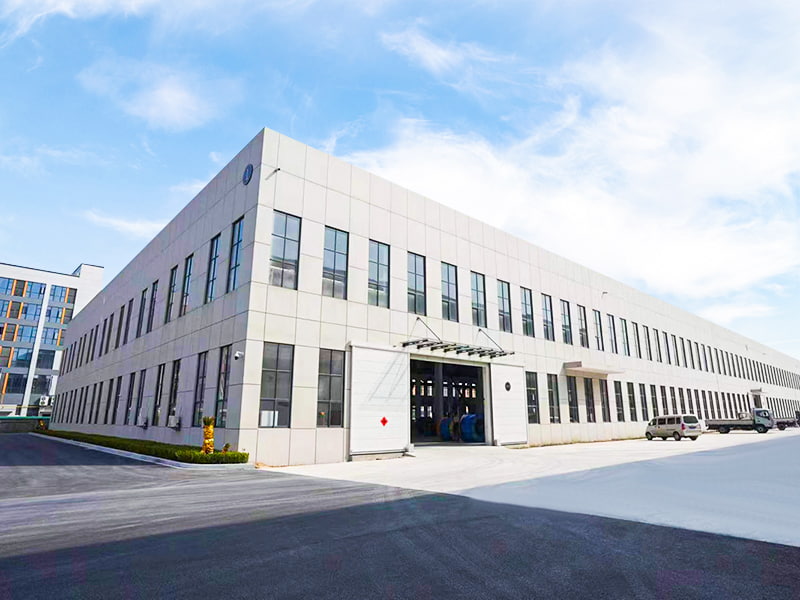
Alien crosstalk (AXT) — electromagnetic coupling between adjacent cables in the same bundle or tray, as opposed to between pairs within a single cable — became a defining design challenge with the introduction of 10GBASE-T Ethernet, which uses all four pairs simultaneously for full-duplex transmission across 100 meters of copper. Unlike internal crosstalk, which cable manufacturers control through pair geometry and shielding, alien crosstalk is an installation-dependent variable that worsens as cable bundles grow denser. IEC 61935-1 and TIA-568-C.2 address alien crosstalk through the power sum alien near-end crosstalk (PSANEXT) and power sum alien far-end crosstalk (PSAELTF) specifications. In practice, managing alien crosstalk in large horizontal cable bundles involves several approaches: maintaining physical separation between cables where possible, avoiding parallel routing of more than 24 cables in a single tight bundle, using F/UTP or S/FTP shielded communication cables whose overall foil shield provides inherent AXT rejection, and — where unshielded U/UTP cables are installed — ensuring that cables from the same manufacturer and production batch are used throughout a bundle, as AXT performance is highly sensitive to the relative phase relationship of adjacent cables' pair geometries. Our manufacturing precision at Zhejiang Huapu Cable Co., Ltd., backed by ISO 9001 quality management processes, ensures consistent lay length and geometry across production batches — a direct contributor to predictable alien crosstalk performance in dense installations.
Cat8 Communication Cables: What 2000 MHz Bandwidth Actually Demands from the Cable
Category 8 communication cables, standardized in ISO/IEC 11801-1 (Class I and Class II) and TIA-568-C.2-1, support 25GBASE-T and 40GBASE-T applications over a maximum channel length of 30 meters, operating at frequencies up to 2000 MHz. Achieving reliable signal transmission at 2 GHz imposes physical constraints on the cable that are qualitatively different from those governing Cat6A at 500 MHz. At 2000 MHz, the skin depth in copper is approximately 1.5 µm — meaning virtually all current flows within a microscopically thin outer layer of the conductor surface. Any surface irregularity, oxidation, or conductor drawing defect at this scale increases effective resistance and degrades insertion loss performance. This is why Cat8 cables universally use conductors with bare copper or silver-plated copper surfaces and mandatorily require per-pair foil shielding (all Cat8 cables are F/UTP or S/FTP by definition — unshielded Cat8 does not exist in the standard). The connector interface is equally critical: at 2 GHz, the return loss and insertion loss contribution of a poorly designed or incorrectly terminated RJ-45 or TERA connector can consume the entire channel margin. Cat8 is not simply an incremental improvement over Cat6A — it represents a different class of precision manufacturing discipline applied to communication cables, connectors, and termination tooling simultaneously.
Communication Cable Performance Degradation from Mechanical Stress During and After Installation
A communication cable that passes factory test may still fail channel certification after installation if mechanical stress during pulling, bending, or bundling has altered the cable's internal geometry. Several specific failure modes arise from installation-induced mechanical stress:
- Pair deformation from excessive pulling tension: Most Cat6 and Cat6A communication cables specify a maximum installation pulling tension of 110 N (approximately 25 lbf). Exceeding this — a common occurrence when pulling long runs through congested conduit — permanently elongates the conductors and alters the pair twist geometry, increasing NEXT and reducing return loss performance.
- Kinking and sharp bending: The minimum bend radius for Cat6A U/UTP cables is typically 8 times the cable outer diameter during installation, relaxing to 4 times for fixed installed position. A sharp kink — even one that appears to spring back — creates a permanent discontinuity in the cable's impedance profile that will appear as a return loss spike at the frequency corresponding to the electrical length of the kink.
- Crush loading in over-filled trays: Communication cables buried under heavily loaded cable trays can experience sustained crush loading that deforms the cable cross-section from round to oval. This changes the pair-to-pair spacing within the cable and increases alien crosstalk levels, often becoming apparent only months after installation as the deformation stabilizes.
- Cable tie over-tightening: Zip ties applied with excessive tension around communication cable bundles create localized high-pressure points that deform the outer jacket and compress the internal pair geometry. Industry best practice is to use hook-and-loop (Velcro) fasteners for communication cable bundles, or to verify that zip tie tension does not visibly deform the cable jacket.
Post-installation channel certification testing using a Level IV or Level V field tester provides the only reliable confirmation that installed communication cables meet their specified performance category after the mechanical realities of construction-phase installation.
Industrial Communication Cables: Differences from Commercial IT Cabling in Construction and Testing
Communication cables deployed in industrial automation environments — connecting PLCs, HMIs, sensors, and industrial Ethernet switches in manufacturing plants, process facilities, and energy infrastructure — face a fundamentally different set of stresses than office IT cabling. The IEC 61784 and IEC 61918 standards specifically address industrial communication networks (fieldbuses and industrial Ethernet), and the cables used in these systems differ from commercial Cat6 or Cat6A products in several important respects. Industrial communication cables typically incorporate oil-resistant and chemical-resistant outer sheaths compounded from PUR (polyurethane) or CPE (chlorinated polyethylene) rather than standard PVC or LSZH compounds. They are designed to withstand repeated flexing over cable carriers (drag chains), with flex cycle ratings of 5–10 million cycles at specified bend radii — a requirement that commercial communication cables are never tested to. Many industrial communication cables also incorporate overall copper braid shielding with coverage above 90% to protect the signal pairs from the intense electromagnetic interference generated by variable frequency drives, servo amplifiers, and welding equipment operating in close proximity. At Zhejiang Huapu Cable Co., Ltd., our production capabilities and state-of-the-art testing equipment enable us to manufacture and validate communication cables to both commercial and industrial performance standards, drawing on the same technical expertise that underpins our broad cable portfolio spanning power, control, and specialty cable categories.
Power over Ethernet (PoE) and Its Thermal Implications for Communication Cable Specification
Power over Ethernet (PoE) technology, standardized in IEEE 802.3af (15.4 W), 802.3at (30 W), and 802.3bt (up to 90 W for Type 4), uses the same communication cable conductors to simultaneously carry data signals and DC power to network endpoints such as IP cameras, access points, VoIP phones, and IoT devices. While PoE is electrically compatible with standard structured cabling categories, the thermal implications of sustained power delivery through bundled cable runs are significant and frequently underestimated during network design. When current flows through a cable conductor's resistance, it generates heat proportional to I²R. In a single cable, this heat dissipates readily into the surrounding air. In a tightly bundled group of 24 or more PoE-active cables, the thermal environment changes fundamentally: adjacent cables act as mutual insulation, trapping heat and raising the cable's operating temperature above the ambient. IEEE 802.3bt Task Force modeling demonstrated that a bundle of 24 Type 4 PoE cables (each carrying 960 mA per conductor pair) can elevate cable temperature by 15–20°C above ambient — a rise that increases conductor resistance, increases insertion loss (which rises approximately 0.4% per °C for copper), and can push an already marginal channel outside its specification limits. Communication cable specifications for high-density PoE deployments should therefore include confirmation of the cable's conductor resistance at elevated temperature and the insertion loss derating curve, rather than relying on room-temperature channel calculations alone. As a National High-Tech Enterprise with comprehensive laboratory facilities, Zhejiang Huapu Cable Co., Ltd. conducts thermal performance validation on our communication cable products to support customers designing high-density PoE infrastructure with confidence.

 en
en English