
 en
en English
 中文简体
中文简体 русский
 Español
 عربى
عربى
Cable Naming Logic: Analysis of Global Regional Differences and Decoding of Mainstream Identification Systems
Content
- 1. International Mainstream Naming System: Scenario-Based and Professional "Technical Language"
- 1.1 Chinese System (GB Standard): Rigorous Hierarchical "Engineering Logic Method"
- 1.2 European System (IEC/VDE): Concise and Efficient "Material Abbreviation Method"
- 1.3 US System (UL/NEC): Performance-Focused "Functional Certification Method"
- 1.4 Middle East and Southeast Asia: Practice Areas of "Hybrid Application" of International Standards
- 2. Fundamental Differences: Precise Adaptation to Regional Scenarios and Standards
- 3. Avoid Mistakes in Cable Selection: Huapu Cables Provides Precise Matching
When selecting or designing cables, have you ever felt confused by letter combinations like "YJV," "NA2XY," and "THHN"? These codes are not random; they are core "technical identity cards" that encapsulate the conductor material, insulation structure, sheath performance, and even the application scenario. Globally, due to differences in technological traditions, standard systems, and engineering needs, various unique naming rules have emerged. Understanding these "technical dialects" is crucial for ensuring accurate cable selection and achieving international technical alignment in engineering projects.
1. International Mainstream Naming System: Scenario-Based and Professional "Technical Language"
1.1 Chinese System (GB Standard): Rigorous Hierarchical "Engineering Logic Method"
Chinese cable models strictly follow the hierarchical coding rule of "conductor—insulation—inner sheath—armor—outer sheath," which is logically clear, easy for engineering to quickly interpret, and perfectly adapted to large-scale power grid and construction projects.
Typical Decoding Example: YJV22-0.6/1kV
- YJ: Cross-linked polyethylene (XLPE) insulation (Y represents XLPE, J is often associated with insulation materials)
- V: Polyvinyl chloride (PVC) sheath
- 22: The first "2" indicates double steel tape armor, the second "2" indicates PVC outer sheath
- Copper conductors are usually omitted, while aluminum conductors are marked with "L" (e.g., YJLV22)
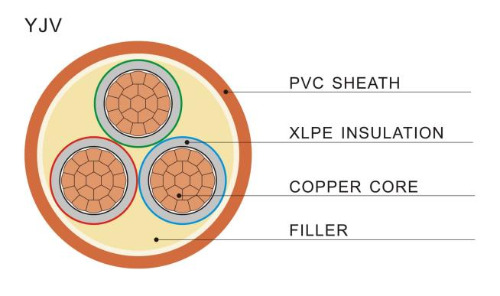
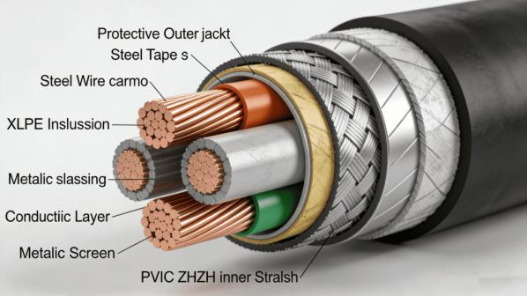
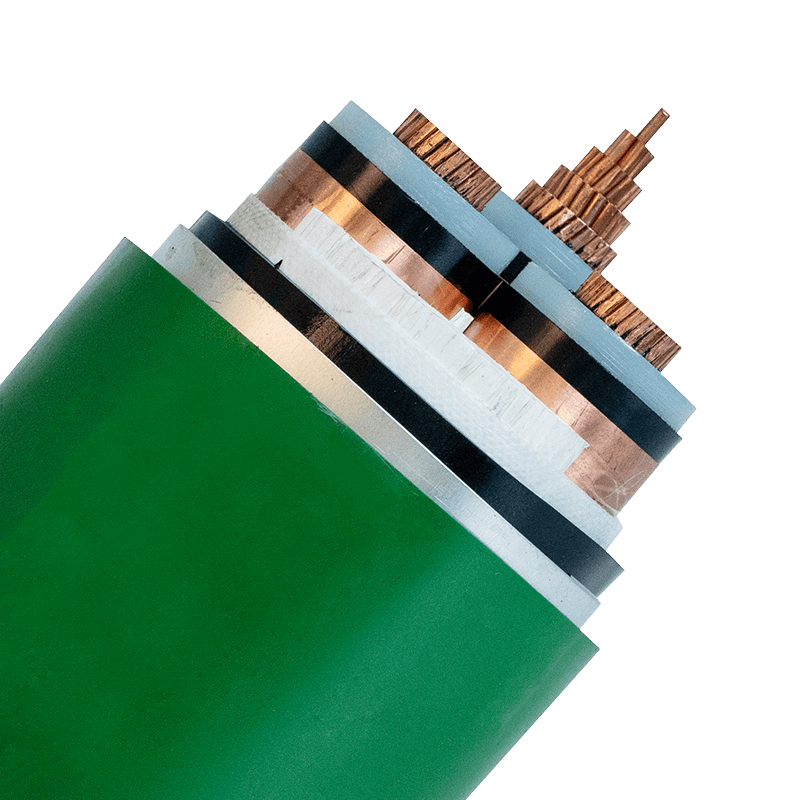
The image above clearly shows the typical cross-sectional structure of the YJV series cable: copper conductor, XLPE insulation, filler, PVC sheath, and armor layer.
1.2 European System (IEC/VDE): Concise and Efficient "Material Abbreviation Method"
European countries prefer to use direct abbreviations of core materials, with concise codes, and emphasize seamless integration with EU CPR regulations.
Typical Decoding Example: NA2XY
- N: Cable conforming to the standard (Norm)
- A: Aluminum conductor
- 2X: Cross-linked polyethylene (XLPE) insulation (2X is a specific identifier for XLPE)
- Y: Polyvinyl chloride (PVC) sheath Another common example is "H07V-K": H represents the harmonized standard, 07 is the 450/750V voltage rating, V is PVC insulation, and K is for flexible conductor fixing.
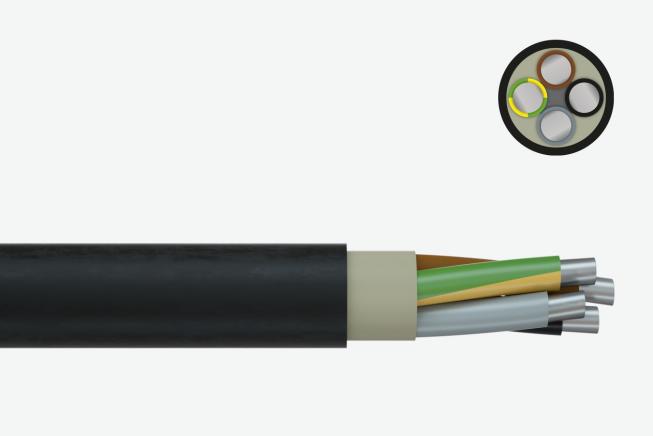
The image above shows a cross-section and structural diagram of the NA2XY cable, a classic combination of aluminum core + XLPE insulation + PVC sheath.
1.3 US System (UL/NEC): Performance-Focused "Functional Certification Method"
US naming is more like a "safety performance label," directly reflecting key indicators such as heat resistance and fire resistance, serving the stringent NEC regulations and insurance liability system.
Typical Decoding Example: THHN
- T: Thermoplastic insulation (usually PVC-based)
- HH: High heat resistance rating (90℃)
- N: Nylon sheath
In addition, fire resistance ratings (such as CM, CMR, CMP) are also indicated, emphasizing market access and fire safety.
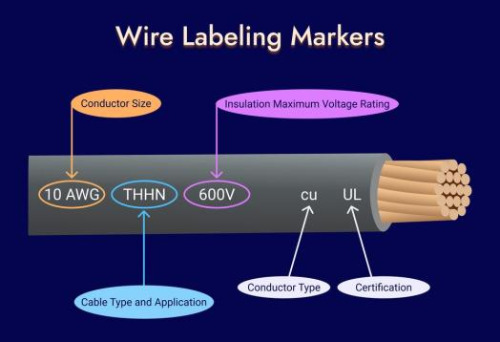
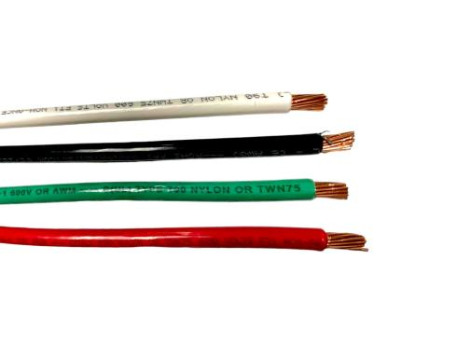
The image above shows the typical marking method and color coding of THHN wires, which facilitates quick identification on site.
1.4 Middle East and Southeast Asia: Practice Areas of "Hybrid Application" of International Standards
Projects in the Middle East (such as Saudi Arabia and Iraq) often require dual compliance with IEC and BS/VDE, and have additional stringent requirements for flame retardancy and high temperature resistance; Southeast Asia (such as Singapore and Vietnam) uses IEC as a blueprint (CP5, TCVN, etc.), and high-end projects often directly specify IEC/BS, especially emphasizing the low smoke and halogen-free characteristics of LSZH.
2. Fundamental Differences: Precise Adaptation to Regional Scenarios and Standards
Chinese System: Serving the engineering rhythm of "rapid design + standardized procurement," with clear hierarchical levels and easy batch management.
- European System: Rooted in a unified market and regulatory alignment, pursuing minimalist coding.
- US System: Originating from commercial insurance and legal culture, emphasizing "certifiable performance."
- Middle East/Southeast Asia: A standard convergence field under the international EPC (Engineering, Procurement, and Construction) model, requiring products to be "multi-standardized."
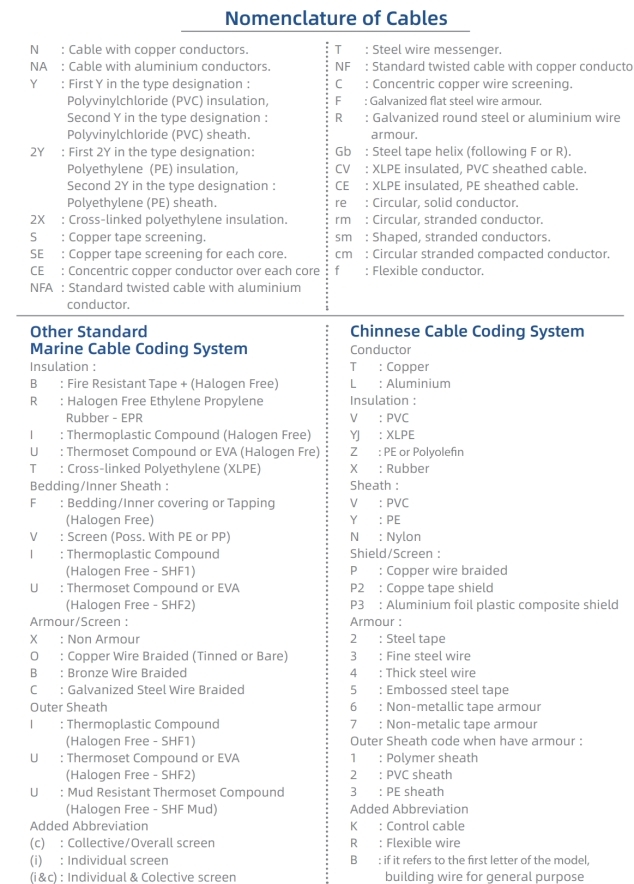
General Cable Coding Quick Reference Table:
3. Avoid Mistakes in Cable Selection: Huapu Cables Provides Precise Matching
Understanding the naming convention is only the first step. More importantly, it's about matching the cable to your project's voltage, installation environment, fire safety requirements, budget, and other factors. We recommend prioritizing products that have passed complete type testing and third-party certification.
We cover the full range of cables, including bare wires, power cables, control cables, and specialty cables. Whether it's YJV series power cables, KVV control cables, WDZ-YJY low-smoke halogen-free cables, ZR-YJV flame-retardant cables, or customized products adapted to different conductor shapes (round, fan-shaped, corrugated), we can precisely match the needs of various scenarios such as construction, industry, and communications.
No more worries about cable selection for your projects! Huapu Cables helps you find the perfect match! Click the link below to get a customized selection solution and let professional cables safeguard your projects.

- +86-13588204183
- No. 39 Zhiyuan Road, Deqing Economic Development Zone, Huzhou City, Zhejiang Province

Copyright © Zhejiang Huapu Cable Co., Ltd. All Rights Reserved.
 ISO 9001 Cable Manufacturer