 en
en English
Fiber Optic Cable Manufacturers
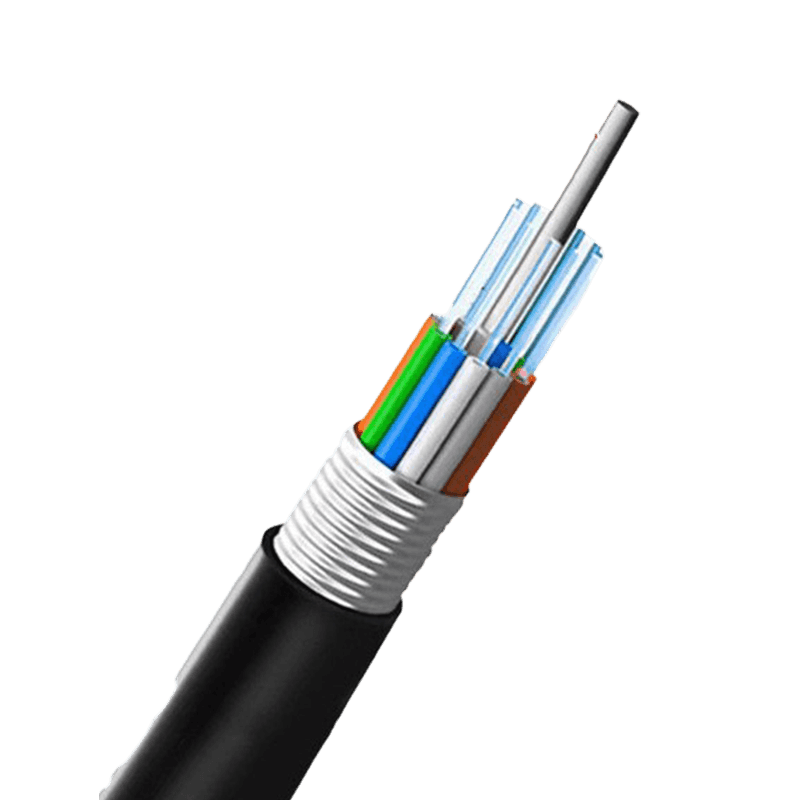
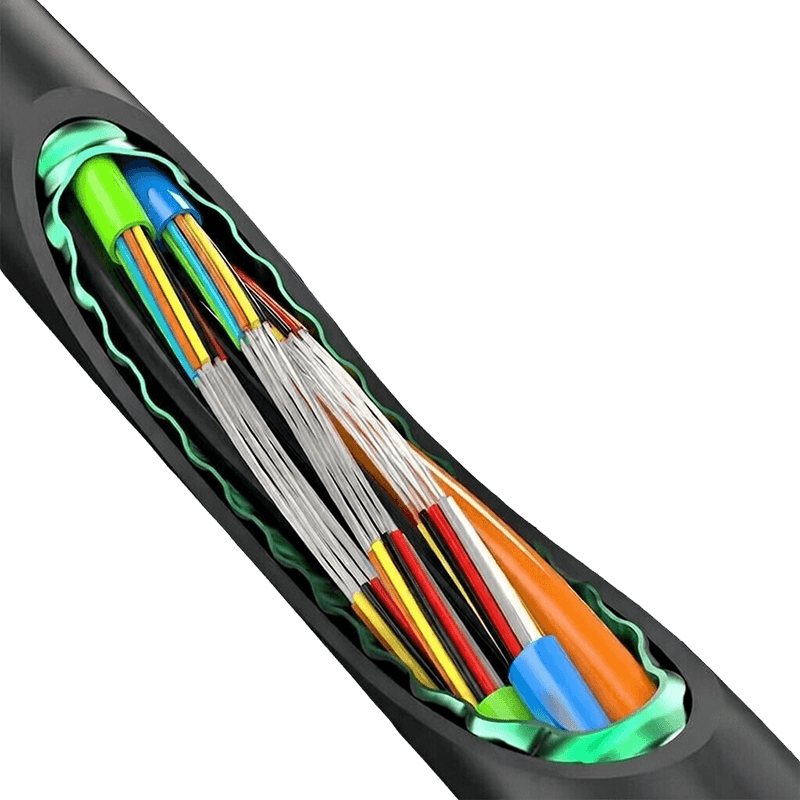
Heavy Armored Underground Optical Cables
Characteristic:
1. Excellent transmission performance, high bandwidth, and low loss;
2. Strong anti-interference capability, completely immune to electromagnetic interference;、
3. Good mechanical properties, minimum bending radius ≤ 10 times outer diameter;
4. Strong environmental adaptability, corrosion resistant, and wide operating temperature range;
5. Safe and reliable, good insulation, and radiation-free.
Application:
1. Telecommunications and network backbone transmission
2. Data center and cloud computing interconnection
3. Cable television and broadcast television networks
4. Industrial control and automation systems
5. Smart grid and power communication
6. Security monitoring and intelligent transportation
Description:
This product series comprises high-quality single-mode/multimode fiber optic cables for communication, designed and manufactured in strict accordance with national and international standards such as YD/T, IEC 60794, and ITU-T. The products boast superior signal transmission performance and extremely high environmental reliability, enabling high-speed, high-capacity, long-distance, and lossless data transmission via optical signals. They are completely immune to all electromagnetic interference, making them an ideal choice for building modern communication backbone networks and high-speed data links.
The optical fibers are drawn from high-quality preforms, exhibiting extremely low attenuation constants and stable geometric characteristics, ensuring ample bandwidth and high signal fidelity in the transmission channel. The cable structure is robustly designed, typically incorporating aramid reinforcement fibers, water-blocking materials, and a high-density polyethylene sheath, providing excellent tensile strength, lateral pressure resistance, and moisture resistance, ensuring the physical safety and stable performance of the fiber optic cable in complex installation environments and during long-term use.
The product design balances high performance with ease of use. The minimum bending radius is typically no less than 20 times the cable's outer diameter (or the fiber's own bending radius ≥30mm), with some tight-buffered or miniature optical cables allowing for even smaller bends, facilitating flexible cabling within conduits, cable trays, and equipment. The sheath has excellent weather resistance, corrosion resistance and flame retardancy (such as meeting LSZH standards), and is suitable for various laying methods such as indoor, outdoor, pipeline, direct burial and overhead. It is easy to install and highly adaptable.