
 en
en English
 中文简体
中文简体 русский
 Español
 عربى
عربى
What Is Thermoplastic Rubber (TPR)? Properties, Uses & Cable Applications
Content
Pick up a portable power cord on a cold morning and you can usually tell what its sheath is made of within seconds. A plasticized PVC jacket tends to feel stiff and hold the shape it was coiled into overnight, while a rubbery jacket springs back and stays supple close to freezing. That rubbery hand-feel, common in modern cords, tool cables, and molded grips, comes from thermoplastic rubber, abbreviated TPR. In brief: thermoplastic rubber is a family of materials that behaves like cured rubber in service yet melts and re-forms like plastic during manufacturing. The sections below explain how that dual behavior works, how TPR compares with vulcanized rubber and PVC, where it fits in cable construction, and which numbers to check before specifying it.
What Is Thermoplastic Rubber (TPR)?
Thermoplastic rubber is the trade name for what engineers call a thermoplastic elastomer (TPE). It is not a single polymer but a family of copolymers and blends built from two phases: hard plastic segments that soften when heated, and soft rubbery segments that provide elasticity. In short, TPR delivers rubber performance through plastic processing.
Below its softening range, the hard phase locks the soft phase in place and works as a set of physical crosslinks, so the material stretches and recovers like rubber. Heat it above that range and the links disengage, letting the compound flow through an extruder or injection molding machine; cool it and the rubbery state returns. In raw form TPR is typically a translucent or milky-white pellet that runs on standard thermoplastic equipment, with no curing ovens and no sulfur.
Commercial grades fall into five broad families, and the family behind the label matters more than the label itself:
| Family | Base chemistry | Typical hardness | Typical continuous service temperature | Common uses |
|---|---|---|---|---|
| Styrenic (SBS, SEBS) | Styrene block copolymers, often blended with polypropylene and oils | Shore 10A to 65D | About -50 to +90 °C | Grips, seals, footwear, cable jackets |
| TPV | Fine EPDM rubber particles cured inside a polypropylene matrix | Shore 35A to 50D | Up to about +125 °C | Weather seals, under-hood parts, cable jackets |
| TPU | Thermoplastic polyurethane | Shore 60A to 74D | About -40 to +100 °C | Abrasion-resistant jackets, hoses, films |
| TPO | Polypropylene blended with EPDM rubber | Shore 60A to 75D | About -40 to +100 °C | Automotive fascias, roofing membranes |
| Copolyester (TPEE) | Polyester hard segments with polyether soft segments | Shore 35D to 72D | About -40 to +110 °C | Gears, bellows, hydraulic hose |
How TPR Differs from Vulcanized Rubber and PVC
The defining difference is chemistry. Conventional rubber becomes elastic through vulcanization, an irreversible chemical crosslinking reaction; TPR relies on reversible physical crosslinks; flexible PVC gains softness from plasticizers. Each route produces a distinct property profile.
| Property | Thermoplastic rubber (TPR) | Vulcanized rubber | Flexible PVC |
|---|---|---|---|
| Processing | Melt-processable, no curing step | Requires vulcanization with heat and curing agents | Melt-processable |
| Production scrap | Usually reground and reused | Cannot be re-melted | Usually reprocessed |
| Low-temperature flexibility | Good to excellent, often to -40 °C | Excellent | Moderate; stiffens in cold unless specially compounded |
| Continuous heat resistance | Moderate; most grades hold between about 90 and 125 °C | High; many compounds rated 105 to 150 °C and above | Moderate; typically 70 to 90 °C |
| Compression set | Higher; recovers less under sustained pressure | Low; recovers well | Moderate to high |
| Weathering and ozone | Good for SEBS and TPV; SBS degrades in UV | Good, especially EPDM | Good with additives; plasticizer migration possible |
| Relative cost | Moderate; offset by shorter cycles and scrap reuse | Higher processing cost | Lowest |
Two practical consequences follow. Cured rubber needs minutes of dwell in a vulcanization line, while TPR solidifies as soon as it cools, and its trimmed scrap can go straight back into the machine. TPR also bonds well to rigid thermoplastic substrates in two-shot molding, which is why connector strain reliefs, tool grips, and cable glands are so often overmolded in one pass.
Where TPR Earns Its Place in Cable Design
In the cable industry, TPR competes directly with flexible PVC and vulcanized rubber for jackets on products that move, flex, and get handled. Typical applications include:
- Power tool and appliance cords that need a dry, grippy surface and cold-weather workability
- Welding and battery cables routed across workshop floors
- Robot and drag-chain cables subject to millions of flex cycles
- EV charging cable jackets dragged over concrete and handled in winter
- Overmolded connector strain reliefs and molded plugs
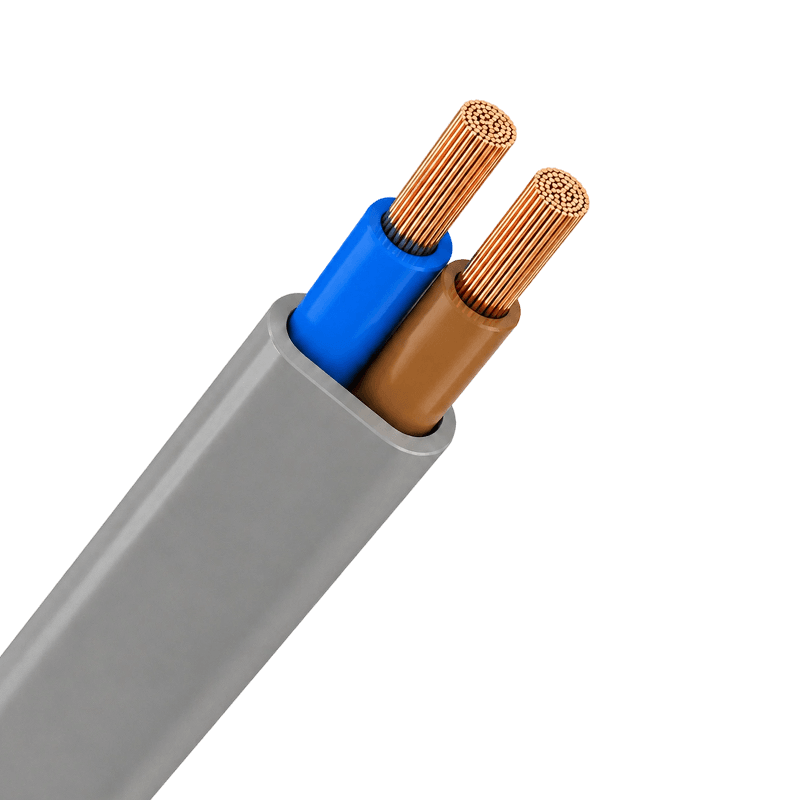
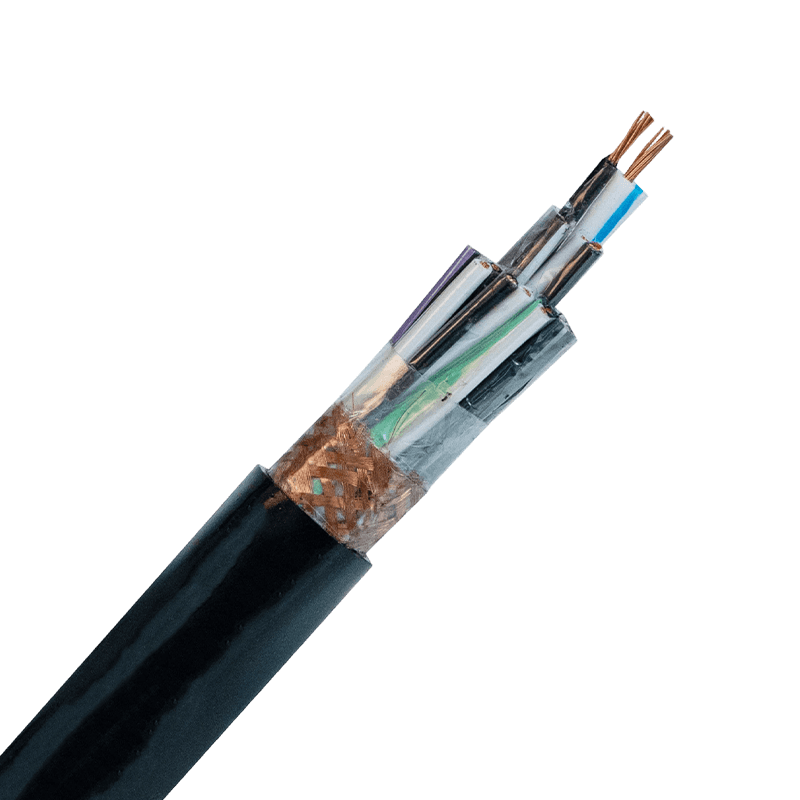
For household and workshop cords, a TPE or rubber-family sheath keeps the cable workable in cold garages and on building sites, where plasticized PVC would feel stiff and kink. Our rubber-sheathed flexible cables cover the H07BZ-F and YC-type constructions where this behavior is specified.
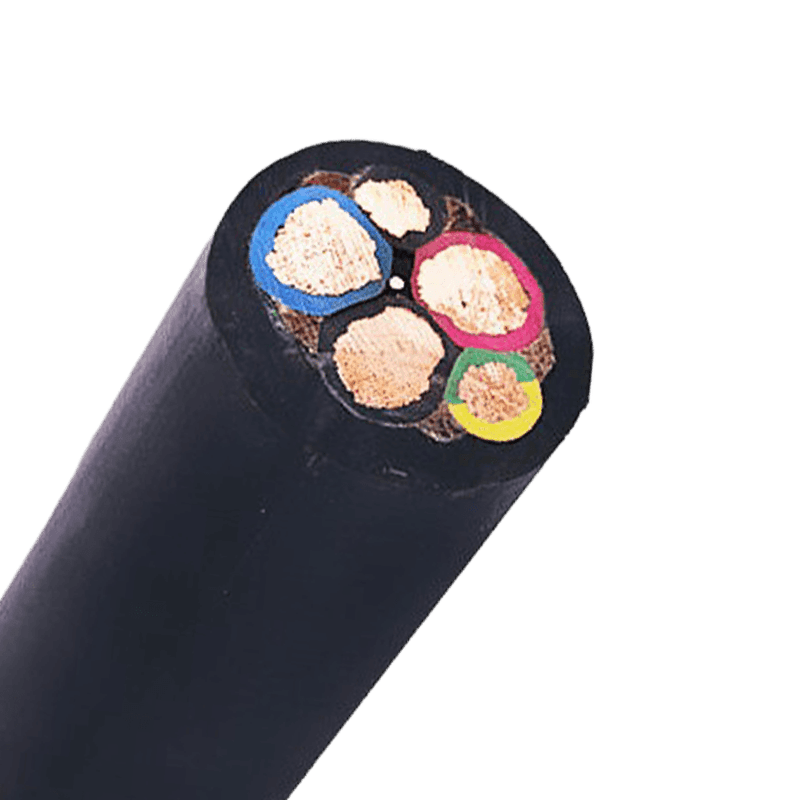 Rubber-Sheathed Flexible Cables for Portable PowerThese rubber insulated and sheathed flexible cables offer excellent cold flexibility, oil and abrasion resistance, and waterproofing. They suit the H07BZ-F and YC-type cords mentioned for cold garages, building sites, and portable equipment.View Product →
EV charging has become one of the strongest growth areas for TPE jacket materials. The compounds stay flexible at low ambient temperatures, resist abrasion from daily handling, and bond cleanly to overmolded strain reliefs. Our EV charging cables are built around exactly these requirements.
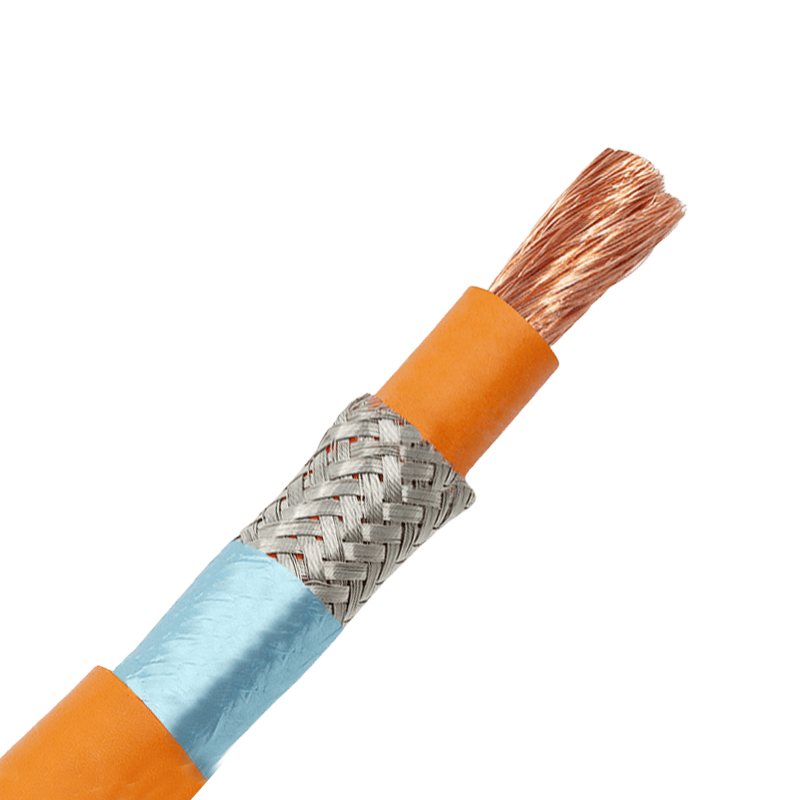 EV Charging Cables with TPE Jacket PerformanceBuilt for charging pile applications, these EV charging cables provide strong weather resistance, oil and wear resistance, and heat tolerance during charging, matching the TPE jacket qualities described for outdoor EV charging environments.View Product →
Choosing between PVC, TPE, and rubber for a given cord is rarely about one property; it is a balance of cold flexibility, oil exposure, outdoor weathering, flame requirements, and price. Our guide to electrical equipment cable types and materials walks through that decision step by step.
When TPR Is Not the Right Choice
TPR's physical crosslinks are heat-reversible, and that is also its ceiling. As continuous temperatures approach a grade's rating, the material softens gradually and creep under clamps, cable ties, and sustained loads rises sharply. Applications that need dimensional stability at elevated temperatures, such as solar DC wiring, use chemically crosslinked compounds instead; our article on crosslinking degree and heat deformation in PV cables explains why that curing step matters.
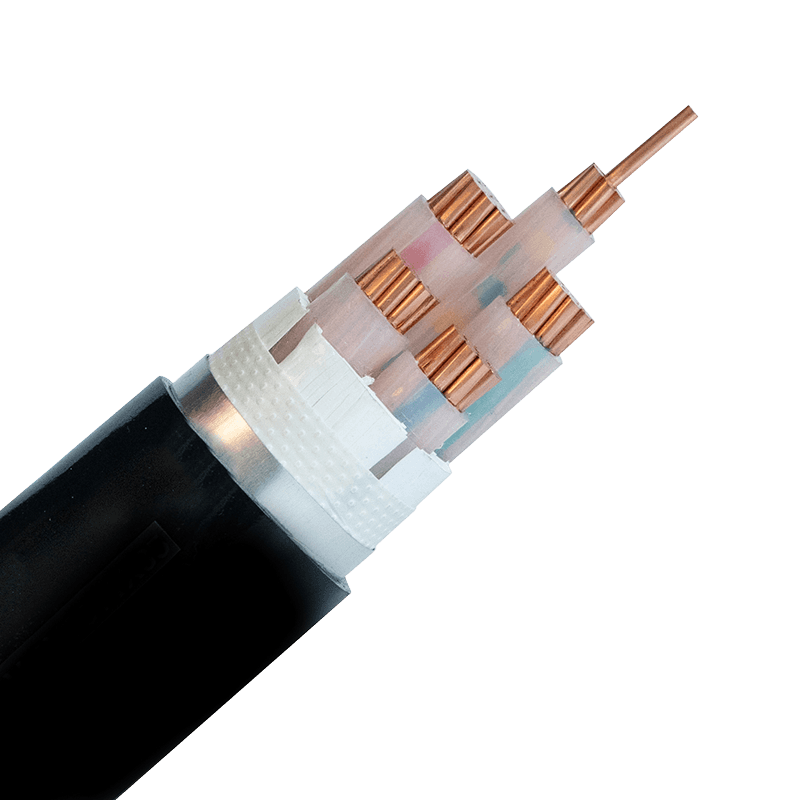
The same logic applies to fixed building and infrastructure wiring, where cold flexibility is a minor benefit and thermal endurance dominates. Crosslinked XLPE insulation remains the standard choice there, as in our 0.6/1 kV XLPE insulated power cables.
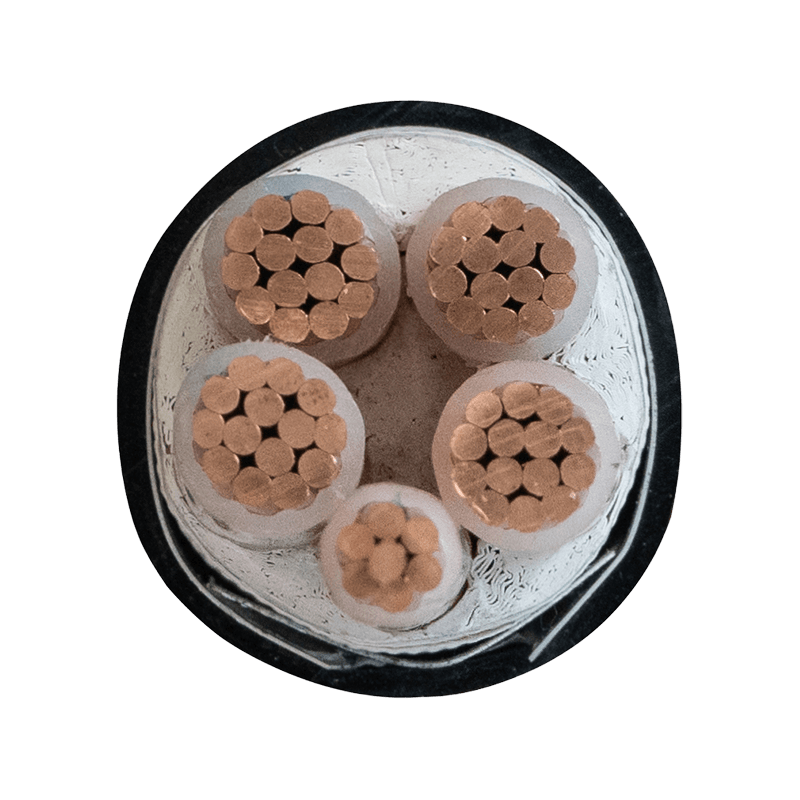 YJV22 0.6/1kV XLPE Insulated Armoured Power CableThis 0.6/1 kV XLPE insulated, steel tape armoured cable with copper conductors and PVC sheath suits fixed distribution where thermal endurance and mechanical protection matter, as described for building and infrastructure wiring.View Product →
A Six-Point Checklist Before You Specify
Before approving any TPR compound, work through this checklist:
- Identify the base family (SEBS, TPV, TPU, TPO, or copolyester), since weathering and temperature capability follow from it.
- Request Shore hardness on both the A and D scales, because a single number can hide a wide range of feel and crush resistance.
- Match the low-temperature rating to the worst installation case, not the average one.
- Compare the continuous operating temperature with your real duty cycle, including heat generated inside cable bundles.
- Confirm flame-retardant and halogen-free grades against the standard your project cites.
- Ask for material data sheets and cable test reports rather than accepting the generic TPR label.
Thermoplastic rubber is best understood as rubber performance delivered through plastic processing: two-phase materials whose physical crosslinks provide elasticity in service and release under heat, making TPR fast to manufacture, colorable, overmoldable, and largely recyclable. That combination explains why it has become the default for soft grips, cold-flexible cords, and EV charging jackets, while vulcanized rubber and crosslinked polyolefins keep the jobs that demand higher heat endurance. For buyers, the practical step is to identify the family behind the TPR label, then match hardness, temperature window, weathering, and flame performance to the actual duty cycle of the cable or part.

- +86-13588204183
- No. 39 Zhiyuan Road, Deqing Economic Development Zone, Huzhou City, Zhejiang Province

Copyright © Zhejiang Huapu Cable Co., Ltd. All Rights Reserved.
 ISO 9001 Cable Manufacturer