
 en
en English
 中文简体
中文简体 русский
 Español
 عربى
عربى
THHN vs. THWN-2 Wire: 2026 Comprehensive Comparison & Market Analysis
Content
Introduction
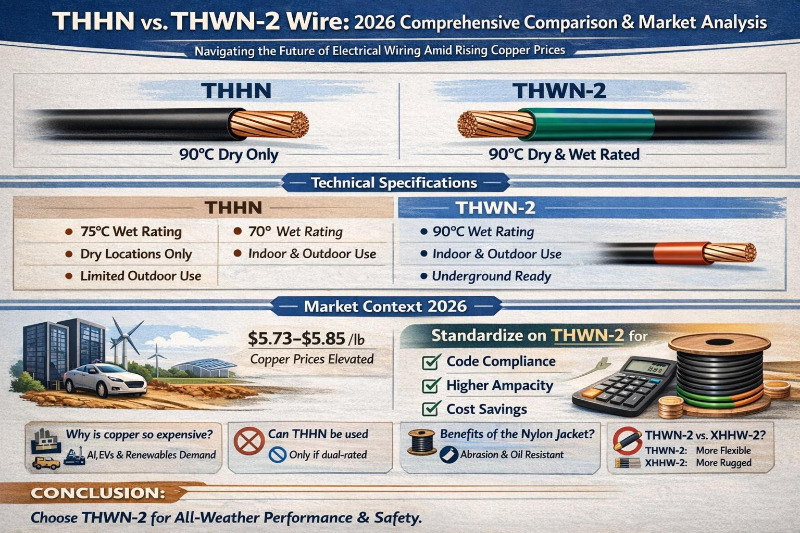
In 2026, amid accelerating global electrification, AI-driven data center expansion, and renewable energy infrastructure growth, the selection of building wire transcends basic code compliance—it directly influences project reliability, thermal performance, and total installed cost. THHN and THWN-2 remain the predominant types for conduit installations in North America. Although structurally similar and frequently dual-rated in modern production, their environmental ratings differ significantly, particularly in wet locations.
With copper prices remaining elevated (COMEX copper futures hovering around $5.73–$5.85 per pound as of mid-March 2026; LME 3-month copper approximately $12,700–$12,900 per metric ton), choosing the appropriate wire type is essential for optimizing material efficiency and avoiding costly rework or derating penalties.
Technical Specifications Breakdown
The designations follow National Electrical Code (NEC) conventions, describing insulation composition, thermal limits, and environmental suitability:
- T — Thermoplastic (PVC-based primary insulation)
- HH — High Heat-resistant (90°C continuous operating temperature in dry locations)
- W — Wet-location rated (suitable for exposure to moisture or condensation)
- N — Nylon outer jacket (provides abrasion resistance, oil/chemical protection, and low-friction surface for easier conduit pulls)
- 2 — Dual-temperature upgrade: retains the full 90°C rating in both dry and wet conditions
Primary Difference: Environmental and Thermal Performance
|
Feature |
THHN (non-2 / legacy) |
THWN-2 (or modern THHN/THWN-2 dual-rated) |
|
Dry-Location Temperature Rating |
90°C |
90°C |
|
Wet-Location Temperature Rating |
75°C (or prohibited without dual rating) |
90°C (full rating maintained) |
|
Wet Locations Permitted (NEC) |
No (or requires 75°C derating) |
Yes |
|
Underground / Outdoor Conduit |
Not permitted unless dual-rated |
Preferred and fully compliant |
|
Ampacity Advantage in Wet Conditions |
Lower (use 75°C column) |
Higher (use 90°C column; often allows smaller conductor size) |
|
Nylon Jacket |
Yes |
Yes |
|
Market Availability (2026) |
Rare (pure THHN-only) |
Dominant (standard dual-rated product) |
Key Insight
THHN is suitable for dry and damp indoor applications. THWN-2 is the preferred solution for wet, underground, or outdoor conduit runs.
2026 Market Context: Strategic Selection in a High-Cost Environment
Copper remains in a tight market due to AI infrastructure, electrification trends, supply constraints, and geopolitical factors.
Procurement Recommendation
Standardize on dual-rated THHN/THWN-2 to reduce risk and optimize cost efficiency.
Frequently Asked Questions (FAQ)
- Why do copper wire prices remain elevated in 2026?
Demand from AI, EVs, and renewables exceeds supply growth.
- Can THHN be used in outdoor or underground conduit?
No, unless marked THWN-2.
- What is the benefit of the nylon jacket?
Improves pullability and durability.
- How does THWN-2 compare to XHHW-2?
THWN-2 is lighter and easier to install; XHHW-2 offers better extreme resistance.
Conclusion
Specifying THWN-2 or dual-rated THHN/THWN-2 ensures compliance, performance, and cost efficiency.

- +86-13588204183
- No. 39 Zhiyuan Road, Deqing Economic Development Zone, Huzhou City, Zhejiang Province

Copyright © Zhejiang Huapu Cable Co., Ltd. All Rights Reserved.
 ISO 9001 Cable Manufacturer