
 en
 English
 中文简体
 русский
 Español
 عربى

Silicone Insulation for Cable: Temperature Limits, Trade-offs and Sizing Rules
Content
- What silicone insulation actually is
- Temperature and electrical limits you can design around
- Silicone versus PVC, XLPE and LSZH
- Where silicone insulation fails on site
- Matching silicone insulation to the application
- Writing a silicone insulation spec that holds up
- Silicone insulation questions buyers ask most
A silicone insulated cable usually gets specified for one of two reasons: the conductor runs above 105 C in normal service, or the circuit has to keep working while everything around it is on fire. When neither applies, silicone is the most expensive way to solve a problem that PVC or XLPE would handle quietly for thirty years.
That narrow window is why silicone insulation gets misapplied in both directions. Buyers who genuinely need it order a construction with no braid and then wonder why the insulation is cut through at the first tray edge. Buyers who do not need it pay three to six times the PVC compound cost for a cable that swells and fails in an oil-soaked machine base. The checks below are the ones worth settling before a high-temperature cable order is released.
What silicone insulation actually is
Silicone insulation is a cross-linked polysiloxane rubber applied as the dielectric over a conductor, normally protected by a fiberglass braid rather than a thermoplastic jacket.
Silicone insulation is a thermoset dielectric compounded from polysiloxane gum, fumed silica filler and a cure system, extruded or molded onto the conductor and cross-linked by heat. It does not melt when overheated; it depolymerizes and leaves a silica residue that still insulates.
The compound is what matters in a quotation. Two cables can both be described as silicone insulated and still differ in cure system, filler loading and heat class, and those differences surface as a 20 C gap in the continuous rating or a factor of two in tear strength.
- Dielectric constant typically 2.9 to 3.5 at power frequency, dissipation factor under 0.01.
- Volume resistivity in the 10^13 to 10^15 ohm-cm range, dielectric strength around 18 to 25 kV/mm.
- Density 1.1 to 1.25 g/cm3, tensile strength 5 to 10 MPa, elongation 200 to 400 percent.
- Limiting oxygen index around 26 to 30, with no halogens in the compound.
Treat those as published ranges, not guarantees. A manufacturer datasheet governs, and the values that matter for acceptance are the ones written into the type test report.
Temperature and electrical limits you can design around
A standard heat-resistant silicone cable is rated at 180 C continuous conductor temperature, holds short-term overload to roughly 250 C, and stays flexible at -60 C.
The chart below places that rating beside the compounds silicone usually replaces. The gap is not incremental, which is exactly why the material cost gap is not incremental either.
Current carrying capacity is where these numbers get misused. A 180 C cable does not automatically carry more current than a 90 C XLPE cable of the same copper size, because conductor temperature depends on ambient, grouping and installation method. The cable is also often not the limiting component: terminals, glands and the equipment terminal block are usually rated 105 C or 130 C, so the assembly is only as heat resistant as its weakest connection.
Silicone versus PVC, XLPE and LSZH
Silicone wins on temperature, cold flexibility and fire behaviour, and loses to all three common compounds on tear strength, oil resistance and cost.
Fire performance in particular is often argued at the material level when the argument belongs at the standard level. A silicone construction that passes flame propagation testing does not automatically hold circuit integrity, and it is worth reviewing how flame-retardant and fire-resistant constructions are actually tested before the attribute is written into a purchase order.
| Property | PVC | XLPE | LSZH | Silicone |
| Halogen content | Chlorine based | None | None | None |
| Smoke on burning | High | Moderate | Low | Low |
| Cold flexibility | About -15 C | About -20 C | About -25 C | About -60 C |
| Oil and fuel contact | Good | Fair | Fair | Poor |
| Tear and abrasion | Medium | Medium to high | Medium | Low |
| Relative compound cost | 1.0 | 1.2 to 1.4 | 1.5 to 2.0 | 3 to 6 |
Where silicone insulation fails on site
Almost every silicone cable failure we see comes back to mechanics or chemistry rather than voltage stress; the dielectric itself is rarely the first thing to give up.
- Tear during installation. Tear strength of 5 to 10 N/mm is low compared with XLPE. Pulling a braided silicone cable over a sharp tray edge or through a rough conduit knockout creates a nick that becomes a tracking path a year later. Braid, conduit or a pulling sock is not optional.
- Oil and fuel contact. Silicone swells in hydrocarbon oils, hydraulic fluid and diesel. A cable routed along a machine base in a workshop is a scheduled replacement, not a permanent installation. Where contact is unavoidable, fluorosilicone is the honest answer.
- Termination creep. Under compression at 180 C the compound relaxes, so screw terminals lose torque and the joint runs hot. Use ferrules or compression lugs, and re-torque after the first heat cycle.
- Surface contamination. Silicone attracts dust and keeps it. In a foundry, cement plant or paper mill a damp, contaminated surface tracks across the insulation surface even though the bulk material is sound. Cleaning schedules or creepage extensions belong in the design.
Matching silicone insulation to the application
Silicone insulation fits high-temperature, low-mechanical-stress and fire-critical circuits; it does not fit oily machine areas, direct burial or continuous flexing.
Silicone is usually right for
- Steel, glass and ceramic plants where radiant heat is constant
- Boiler rooms, kiln areas and equipment near hot process lines
- Fire alarm and circuit integrity routes through occupied buildings
- Appliance, oven and luminaire wiring rated above 150 C
- Cold store and outdoor installations that must bend at -40 C
Choose another compound for
- Machine tools and hydraulic areas with oil mist
- Direct burial without duct or armour
- Continuous flexing on a moving carriage or cable chain
- Long runs where material cost dominates the project budget
- Any circuit that never exceeds 90 C in service
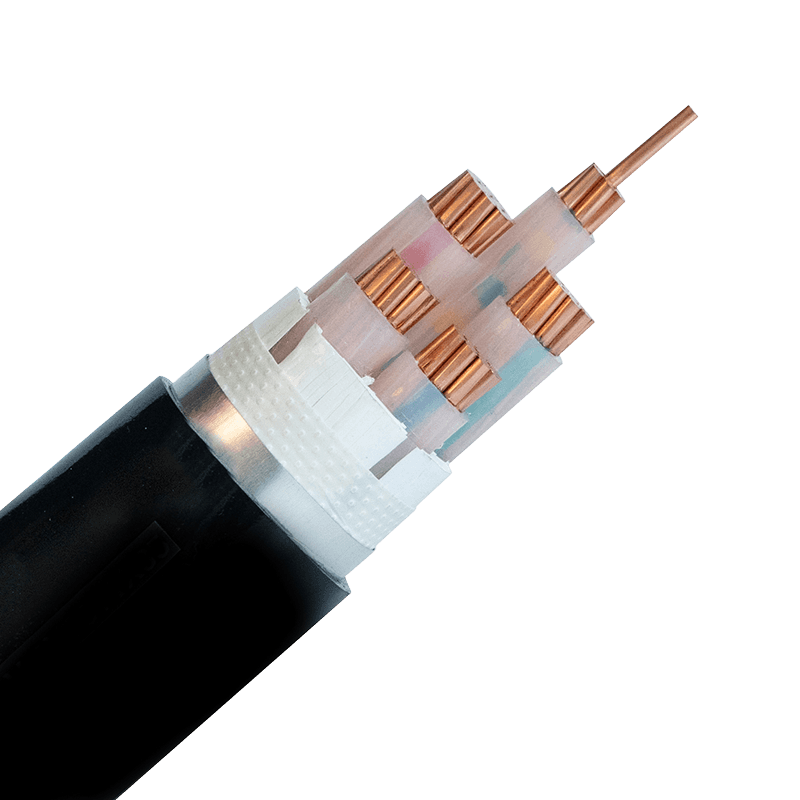
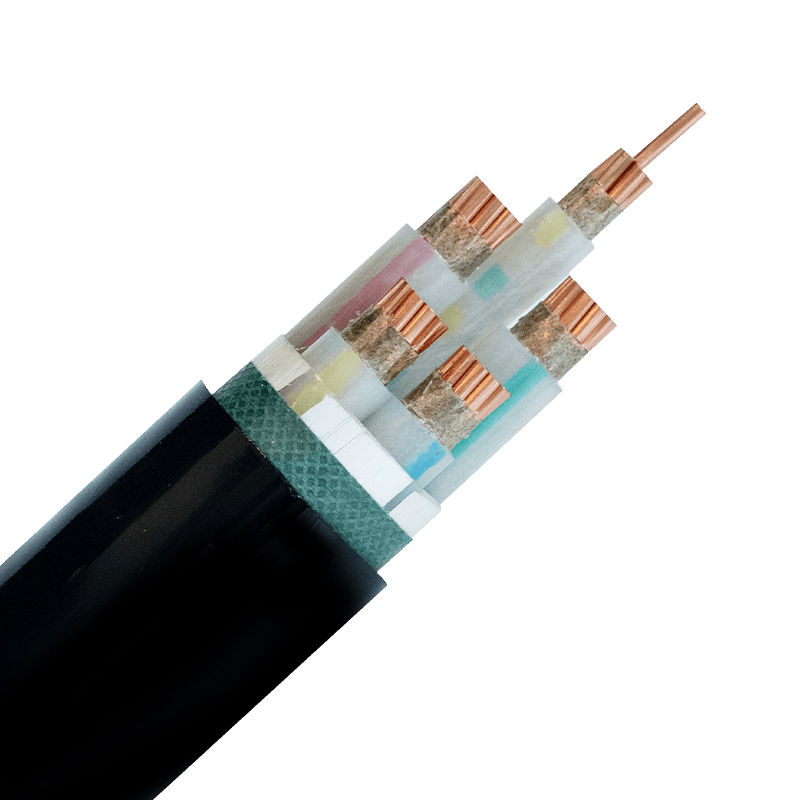 0.6/1 kV Flame-Retardant Fire-Resistant XLPE Power CableMica-tape fire barrier and XLPE insulation suit emergency power routes in buildings and high-temperature plant areas; useful when separating fire-critical circuits from general high-heat zones.View Product →
Most of our silicone work lands in high-temperature industrial applications in manufacturing, where the cable is chosen for a specific heat zone rather than for a whole plant. In that setting the useful question is not whether silicone is good, but which section of the route actually exceeds 105 C.
Writing a silicone insulation spec that holds up
A working specification fixes five things: heat class, braid or jacket construction, fire test standard, termination method and acceptance test.
- Heat class and test basis. State 180 C continuous against IEC 60245-3 or the national adoption of it, not simply the phrase heat resistant.
- Construction. Silicone insulation plus fiberglass braid, or silicone insulation with a braided outer jacket. An unbraided silicone core is a laboratory cable, not a plant cable.
- Fire performance. IEC 60331 for circuit integrity, IEC 60332-1-2 for flame propagation, and a low smoke requirement if the route passes through occupied space.
- Termination. Name the lug type and the torque value. A compression lug with the correct die is not interchangeable with a screw terminal at 180 C.
- Acceptance. Voltage test, insulation resistance measured after the heat cycle, and a dimensional check on insulation thickness at three points.
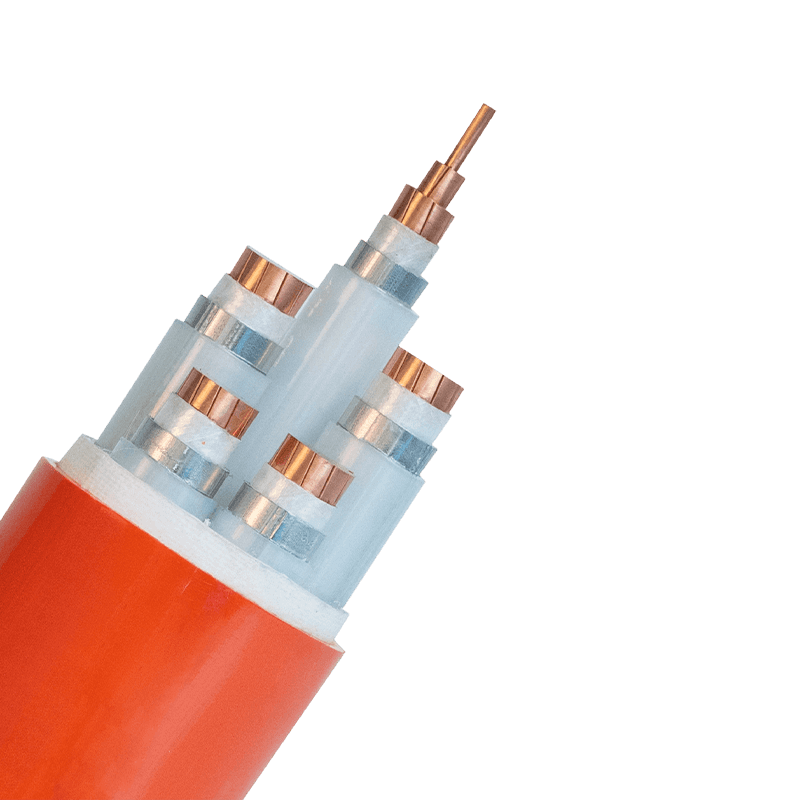 0.6/1 kV Mineral Insulated Fire-Resistant CablesCopper-tape, aluminum-tape and segregated variants use mica and magnesium oxide layers for circuit integrity in fire routes requiring direct flame, impact and water-spray resistance.View Product →
Where the fire requirement moves beyond circuit integrity testing, the comparison changes. A silicone plus mica construction survives a standard fire test in most building routes; a route that must take direct flame, impact and water spray is better served by a mineral insulated construction, which is why both sit in the same special cable range rather than being sold as substitutes for each other.
Silicone insulation questions buyers ask most
What temperature is a silicone insulated cable rated for?
Standard silicone rubber insulated cable is rated 180 C continuous at the conductor, with short-term excursion to about 250 C and a cold bend limit near -60 C. Anything above that range belongs to PTFE or mineral insulation, not to a higher grade of silicone.
Is silicone insulation halogen-free and low smoke?
Yes for the insulation compound, which contains no halogens and burns to a silica ash with comparatively low smoke. The jacket, the braid finish and the binder are separate materials, so a halogen-free claim has to cover the finished cable, not just the dielectric.
Can silicone cable be installed outdoors or underground?
Outdoors is fine: silicone resists ultraviolet light, ozone and weathering better than most compounds. Underground is conditional. Low tear strength and relatively high water vapour transmission mean direct burial is a poor fit, while a duct or a mechanically protected route works normally.
Silicone or mineral insulated for a fire-rated circuit?
Use silicone with mica tape for typical building circuit integrity routes at moderate cost and easy termination. Use mineral insulated construction where the route must survive direct flame, impact or water spray, and accept the harder termination work that comes with it.
Silicone insulation is a precise tool with a narrow band of correct use. Fix the heat class, confirm the braid, name the termination and test the assembly, and it will outlast the equipment it serves. Skip those steps and the cable becomes the weakest part of a high-temperature circuit that looked simple on the drawing.

- +86-13588204183
- No. 39 Zhiyuan Road, Deqing Economic Development Zone, Huzhou City, Zhejiang Province

Copyright © Zhejiang Huapu Cable Co., Ltd. All Rights Reserved.
 ISO 9001 Cable Manufacturer