
 en
en English
 中文简体
中文简体 русский
 Español
 عربى
عربى
Flame-Retardant Cables Explained: How They Work, Key Standards, and Selection Guide
Content
A visitor once asked our engineering team how long a flame-retardant cable would keep a fire pump running. The answer—zero minutes—surprised them, and it is the single most important fact to understand before specifying any cable with a fire-related name. Flame-retardant cables are designed to slow the spread of flames along the cable, not to survive a fire while continuing to carry power. The difference matters enormously for safety, code compliance, and project cost. This article explains what flame-retardant cables actually do, how they are tested, and how to choose the right type for your application.
What Makes a Cable Flame-Retardant?
A flame-retardant cable is one that will not readily convey or propagate a flame, as verified by standardized flame-propagation tests. When the cable is exposed to a flame source, its materials resist ignition and limit flame spread; once the source is removed, the flame should extinguish rather than travel along the cable run.
The performance is not achieved by a single component. The insulation, inner sheath, fillers, and outer sheath are all formulated as part of one flame-retardant system. In a typical PVC-based design, the compound includes plasticizers and stabilizers that interfere with combustion. In halogen-free designs, mineral fillers and modified polymer chemistry perform a similar role with much lower smoke and toxicity.
Flame-Retardant Versus Fire-Resistant: Two Different Jobs
A common mistake is treating "flame-retardant" and "fire-resistant" as interchangeable terms. They serve different functions in a fire scenario.
| Feature | Flame-Retardant Cable | Fire-Resistant Cable |
|---|---|---|
| Primary function | Limits flame spread along the cable | Maintains circuit integrity during a fire |
| Behavior in fire | Burns but self-extinguishes or limits propagation | Continues operating for a specified duration |
| Typical standards | IEC 60332, UL 1581, EN 50399 | IEC 60331, BS 6387, UL 2196 |
| Common applications | Building wiring, cable trays, general power circuits | Emergency lighting, fire alarms, fire pumps |
| Material emphasis | Flame-retardant compounds, low-smoke options | Mica glass tape, mineral insulation |
Choose flame-retardant cables when the goal is to avoid turning a cable installation into a fire path. Choose fire-resistant cables when the connected system must keep working during a fire—emergency lighting, fire alarms, smoke extraction fans, and fire pumps all fall into this second category. A building often requires both types, placed in different parts of the electrical system.
For circuit integrity during a fire, mineral-insulated fire-resistant cables use a copper tube and magnesium oxide insulation to withstand high temperatures. They belong to the same family of fire-safety cables but are engineered for a completely different role than standard flame-retardant designs.
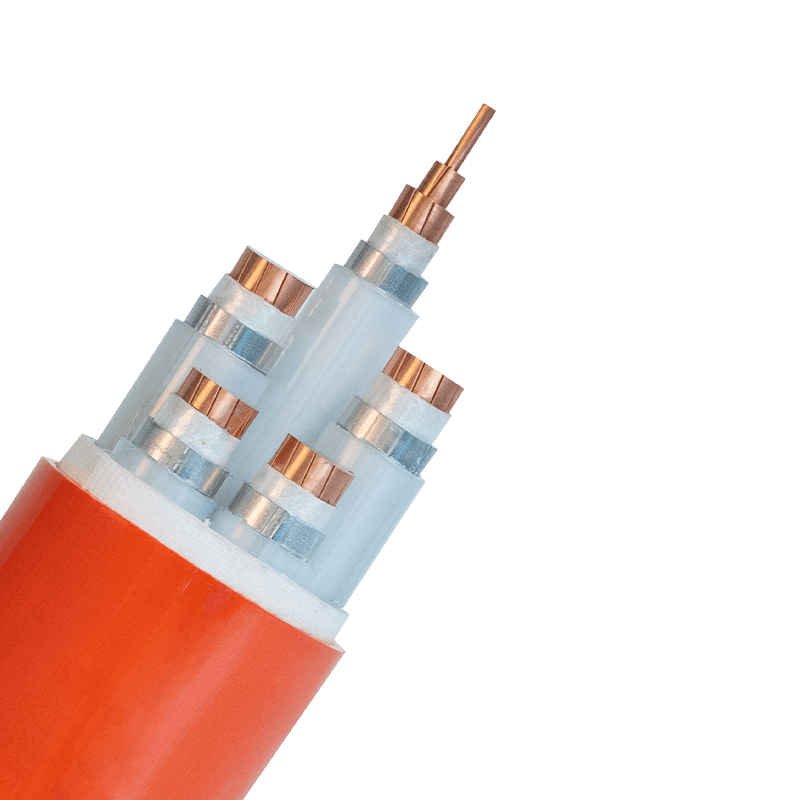 Mineral Insulated Fire-Resistant Cables Manufacturers, Suppliers, FactoryAs China Mineral Insulated Fire-Resistant Cables Manufacturers, Mineral Insulated Fire-Resistant Cables Suppliers and Factory, Huapu offe...View Product →
How Flame-Retardant Materials Work
Flame retardancy relies on interrupting one or more stages of combustion: heating, decomposition, ignition, or flame spread. The mechanisms fall into three broad categories.
- Gas-phase action: certain halogen-based compounds release radicals that interrupt the chemical chain reaction of burning. This is the traditional mechanism behind PVC and other chlorinated materials.
- Solid-phase action: additives promote the formation of a carbon char layer on the cable surface. This layer insulates the material below and slows the release of flammable volatiles.
- Endothermic action: fillers such as aluminium hydroxide absorb a large amount of heat as they decompose, releasing water vapour. This cools the material and dilutes the surrounding flammable gases.
Modern halogen-free flame-retardant (HFFR) compounds combine the second and third mechanisms with carefully selected polymer basestocks. The result is a cable that passes flame-propagation tests while producing substantially less smoke and no corrosive halogen gases.
Standards and Test Methods
Understanding flame-retardant cable claims begins with the tests behind the label. The most widely used family of flame-spread standards is IEC 60332.
- IEC 60332-1: vertical flame test on a single cable. Measures the charred length after a defined flame application.
- IEC 60332-2: similar test for small cables.
- IEC 60332-3: vertical flame test on bunched cables, with categories A, B, C, and D. This is far more demanding, because cables in a bundle can feed a fire like a chimney.
Categories A, B, C, and D in IEC 60332-3 correspond to different volumes of non-metallic material per meter of the test bundle, with Category A being the most severe. Two additional standards cover other fire properties: IEC 60754 measures halogen acid gas content, and IEC 61034 measures smoke density.
A cable can be labelled flame-retardant based solely on IEC 60332-1, but if it will be installed in large bundles in a cable tray, IEC 60332-3 is the test that really matters. Specifiers should verify which test the cable has passed, because a single-cable pass does not guarantee bundled performance.
LSZH, HFFR, FRNC: Decoding the Labels
Three abbreviations dominate flame-retardant cable specifications, and they are often confused.
- LSZH (Low Smoke Zero Halogen): a material system that emits limited smoke and no halogen gases when burning.
- HFFR (Halogen-Free Flame-Retardant): emphasizes the flame-retardant performance of a halogen-free compound.
- FRNC (Flame-Retardant Non-Corrosive): focuses on flame retardancy plus low corrosivity of combustion gases.
The labels overlap in practice: most LSZH cables are also HFFR. When a project specification says "LSZH cable," it generally requires a cable that passes IEC 60332 flame tests and also meets smoke and halogen limits under IEC 61034 and IEC 60754. You can read more about the benefits, applications, and fire-safety standards of LSZH cable if you are evaluating it for an occupied building or transit project.
Selecting the Right Flame-Retardant Cable
Start with the application, then check the environment. Three questions will guide most selections.
- Where will the cable be installed? A single raceway in a residential building has different requirements than a densely packed cable tray in an industrial plant.
- Who might be exposed to smoke or gas in a fire? Public buildings, transit systems, and healthcare facilities generally require low-smoke, halogen-free compounds rather than standard PVC.
- What fire-performance evidence must the supplier provide? Request test reports showing the specific IEC standards that the product has passed.
Flame retardancy is not the only property that matters. Mechanical flexibility, operating temperature range, voltage rating, and conductor material all need to be checked against the duty. A flame-retardant rating does not guarantee performance at high service temperatures. When operating temperature is also a constraint—for example, near furnaces, exhaust ducts, or process equipment—the cable may need to combine flame retardancy with high-temperature resistance. Huapu's flame-retardant and high-temperature-resistant wires and cables are designed for exactly these combined conditions.
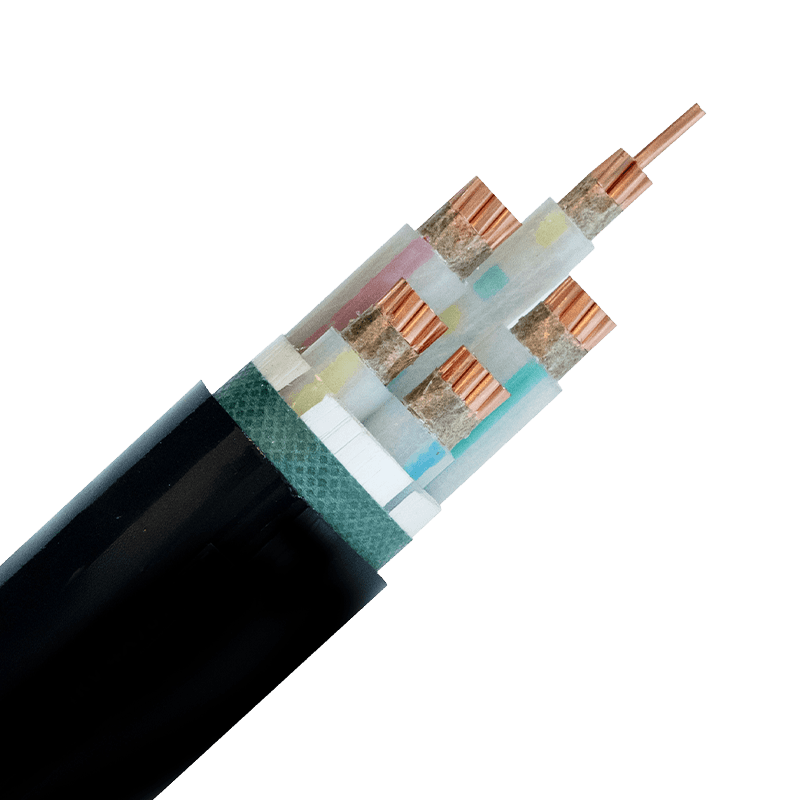 IEC 60331 Flame-Retardant High-Temperature Resistant Cables ManufacturersHuapu is IEC 60331 Flame-Retardant Cable Manufacturers, China High-Temperature Resistant Cables Factory offer Wholesale Fire Resistant Ca...View Product →
Where Flame-Retardant Cables Matter Most
Flame-retardant cables are used throughout modern construction, but certain environments demand special attention.
- High-rise buildings: vertical risers act as chimneys, and flame spread along a cable can travel from floor to floor. Building codes in most countries require flame-retardant cables in vertical runs.
- Industrial facilities: power and control cables running close together create a large potential fire load. A fault in one cable should not ignite the whole bundle. Industrial plant installations often require bunched flame-propagation testing to demonstrate this.
- Data centers: high cable densities and sensitive electronic equipment make smoke and corrosive gas extremely costly, which is why LSZH flame-retardant cables are the norm.
- Renewable energy: solar plants and EV charging stations add outdoor exposure, UV radiation, and high DC voltages. Flame retardancy must be combined with weather resistance.
- Public transportation and tunnels: smoke density directly affects occupant evacuation, so fire-safety cable standards in this sector are stricter than in general building wiring.
Flame-retardant cables are not all the same, and the label is only meaningful when you know which test it refers to. Start by defining the fire-safety role of the circuit, then select the cable type that matches that role, and verify the test reports before making a final specification. If the circuit must keep running during a fire, choose a fire-resistant design rather than a flame-retardant one. If the goal is to prevent fire from spreading through the cable installation, flame-retardant cables—ideally low-smoke, halogen-free versions in occupied spaces—are the right choice. When both fire performance and high-temperature resistance are required, look for a manufacturer with documented experience in both areas.


- +86-13588204183
- No. 39 Zhiyuan Road, Deqing Economic Development Zone, Huzhou City, Zhejiang Province

Copyright © Zhejiang Huapu Cable Co., Ltd. All Rights Reserved.
 ISO 9001 Cable Manufacturer