
 en
 English
 中文简体
 русский
 Español
 عربى

Diamond Dies: Applications, Selection Criteria, and Practical Guidance
Content
A copper rod drawn from 8 mm down to 0.20 mm passes through twenty or more dies, and the last three decide whether the shift reaches its output target. Diamond dies hold that final tolerance, yet in plenty of plants they sit loose in a drawer and get replaced only after the wire breaks.
This guide covers what a diamond die is, which grades suit which drawing stages, how die geometry shapes conductor quality, and how to weigh die cost against the scrap it prevents. It is written for drawing shop supervisors, cable process engineers and buyers who specify tooling alongside conductor and insulation.
Core definition
A diamond die is a wire-drawing die in which the reduction zone, the bearing surface that sets the final wire diameter, is formed in diamond. Cable plants work with four grades: natural single crystal, synthetic single crystal, polycrystalline and CVD diamond.
What a Diamond Die Actually Is
A diamond die is a drawing die whose working hole is cut into diamond instead of tungsten carbide or tool steel, so the wire is sized by a surface that barely wears.
Whatever the material, every die is a stack of functional zones. Each one does a different job, and each one can fail on its own:
- Entry cone: guides the wire in and carries lubricant toward the reduction zone.
- Approach angle: performs the reduction; on copper, included angles usually sit between 12 and 18 degrees.
- Bearing, or land: the cylindrical section that sets the finished diameter. On fine wire its length is typically 30 to 50 percent of the hole diameter.
- Back relief and exit: release the wire with as little friction and scoring as possible.
The bearing is where the money sits. Too short and the wire bells at the exit, producing an oval conductor; too long and friction climbs, drawing temperature rises, and the wire runs under tension it does not need.
Diamond earns the job on three properties: near-maximum hardness, low friction against copper and aluminium, and high thermal conductivity that pulls heat out of the contact zone. Together they hold diameter tolerances in the low single-digit microns and stretch die life to tonnes rather than kilograms.
Four Grades and Where Each One Fits
Pick the grade from wire diameter and production volume, not from the price tag on a single die.
Natural single crystal dies still deliver the finest surface finish, but the wear pattern differs from stone to stone, which makes them awkward to schedule on a line that runs the same size for weeks. Synthetic single crystal removes that variability and has become the default for fine copper. Polycrystalline dies trade a little surface quality for toughness, which is why they dominate rod breakdown and aluminium drawing where pickup and shock loading are routine. CVD diamond sits between synthetic single crystal and polycrystalline: consistent behaviour, moderate price, no natural inclusions waiting to be discovered halfway through a campaign.
| Grade | Typical hole range | Behaviour | Best fit |
| Natural single crystal | 0.02 to 0.6 mm | Excellent finish, wear pattern varies between stones | Ultra-fine copper where surface quality dominates |
| Synthetic single crystal | 0.02 to 1.0 mm | Uniform structure, predictable wear, no natural flaws | Fine drawing on high-speed multi-wire machines |
| Polycrystalline | 0.10 to 6.0 mm | Tough, resistant to shock and to aluminium pickup | Intermediate and coarse passes, rod breakdown |
| CVD diamond | 0.05 to 2.0 mm | Isotropic wear, good repeatability between dies | Fine drawing where every die must behave the same |
The practical advice is to specify by position rather than by plant-wide standard. The finish dies that set conductor tolerance deserve the most consistent stone you can buy, while intermediate passes can absorb a tougher grade with a wider wear window.
Die Geometry and the Pass Schedule
Die geometry, not diamond grade, explains most drawing failures.
A schedule that removes 26 percent of area on a coarse copper pass and about 18 percent on a finish pass is ordinary practice. Push one pass past 30 percent and the wire work-hardens faster than the annealer can recover, breakage moves upstream, and the die takes the blame. Angle matters as much as reduction: a tight approach angle on soft aluminium raises friction, while an open angle on fine copper leaves the wire undersized and slightly oval.
Lubricant completes the picture. Clean, correctly diluted emulsion carries heat away and keeps a film between wire and bearing. When the emulsion is contaminated with fines, the die is effectively grinding the wire instead of drawing it, and the damage shows on the conductor long before the diameter drifts.
For a full walk through from rod breakdown to finished conductor, our guide to copper drawing from rod to finished cable conductor covers the equipment and intermediate steps.
How Die Condition Shows Up in the Cable
A worn die rarely stops a line; it raises scrap two or three stations downstream.
The first sign is usually copper dust in the lubricant tank or a dull grey conductor where it used to be bright. By the time breakage climbs, the die has been out of tolerance for days, and the wire that passed through it is already inside finished cable.
For building wire and flexible cord, the link is shorter and more expensive. Conductor ovality and surface defects feed straight into insulation thickness variation, and that is a material cost on every metre produced. Our
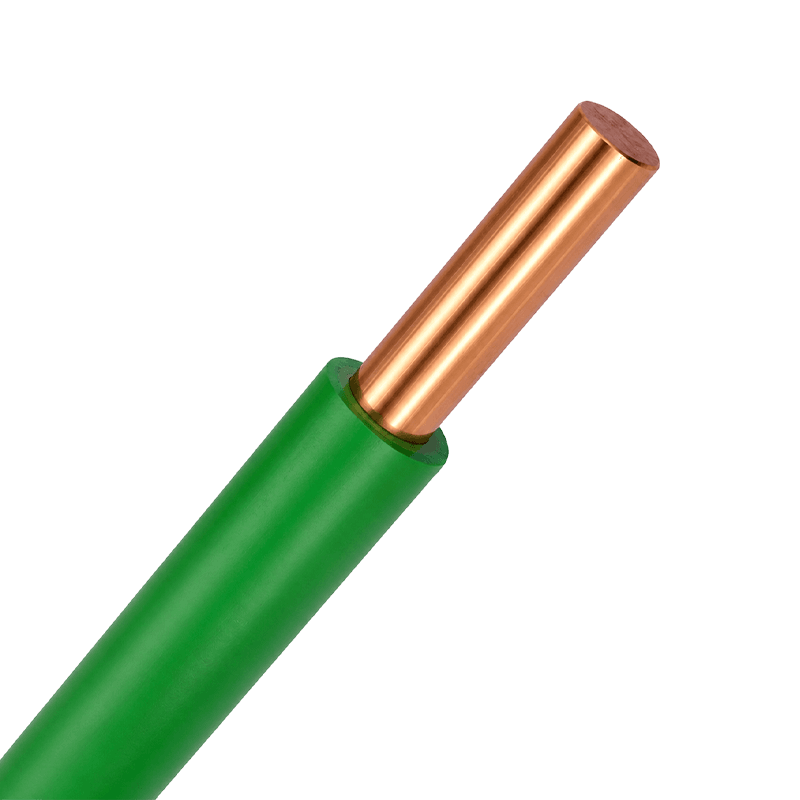 Building Wires for Lighting and Fixed WiringCopper building wires with PVC, XLPE, LSZH and other insulations for 450/750 V lighting, appliance and fixed wiring, where conductor quality affects insulation consistency.View Product →
The drawing hall is the first place to look when downstream rejects appear, and the die drawer is the first place to look in the drawing hall. Die records kept by position, with diameter, ovality and tonnes drawn, make that check a five-minute job instead of a morning. More on how those lines are set up is on our manufacturing facility page.
Die Life, Re-Polishing and the Real Cost
The purchase price of a diamond die is rarely the expensive part; the scrap it causes is.
A single fine die costs far less than one shift of rejects on a fast line. That ratio is the whole argument for a measurement routine: inspect on a schedule, not on a hunch, and treat diameter drift of 1.5 to 2 microns as the trigger to re-polish rather than the point where breakage forces your hand.
- Measure every shift. Log diameter and ovality per die position with a laser gauge or pin set, and keep the numbers next to the machine.
- Clean without damage. Ultrasonic cleaning is safe; abrasive pastes and hard scrapers on the bearing are not.
- Re-polish before failure. Re-polishing restores the bearing and removes score marks, and each cycle enlarges the hole slightly, so the die is re-sized to the next standard.
- Retire with a record. Track tonnes per die by position so replacement planning becomes a calculation instead of an emergency.
Aluminium is the case that catches most people out. It is softer, it smears, and it builds up on the bearing far faster than copper, especially when lubricant flow is marginal. Polycrystalline dies resist that pickup better than single crystal, which is why the grade choice for aluminium drawing is usually settled before the geometry discussion even starts. Conductor ranges built on these drawn wires, from
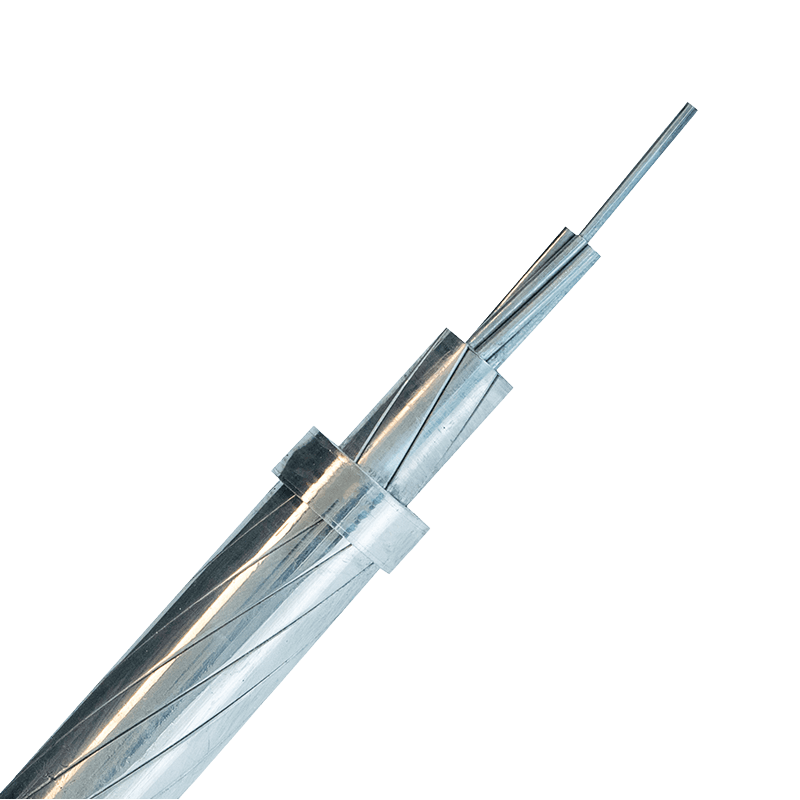 Aluminium Conductors for Overhead Power LinesDrawn aluminium conductor ranges including AAC, AAAC and steel-core stranded types for overhead transmission, with alloy options for humid or coastal environments.View Product →
Water quality is an underrated factor in die life. Hard water leaves scale in cooling and lubricant circuits, and the resulting temperature swings show up as wear variation between dies that were supposedly identical. If two lines running the same schedule show different die life, check the water before blaming the stones.
Frequently Asked Questions
What is a diamond die used for?
A diamond die sizes wire during drawing. In cable production it takes copper or aluminium rod through a sequence of passes down to the final conductor diameter, and the last dies in the sequence set the tolerance and surface finish of the finished wire.
How long does a diamond die last?
Life depends on grade, wire material, reduction and lubrication, so supplier averages are a weak guide. On fine copper, a healthy die may run several hundred tonnes before diameter drift calls for re-polishing. Track tonnes per die position in your own plant and plan replacement from that data.
Can a diamond die be re-polished?
Yes, within limits. Re-polishing restores the bearing and removes score marks, but each cycle enlarges the hole slightly, so the die is re-sized to the next standard. Most dies survive two or three polishing cycles before retirement, and tracking those cycles keeps the pass schedule honest.
What tolerance can a diamond die hold?
Fine single crystal and CVD dies commonly hold plus or minus 1 to 2 microns on diameter with ovality under 1 percent, provided the die is correctly aligned, the lubricant is clean and the approach angle matches the material being drawn.
Diamond dies are a small line item that decides a large share of conductor quality. Grade selection, geometry discipline and a simple measurement routine cover most of the risk, and all three cost far less than the scrap a worn die produces quietly over a week.

- +86-13588204183
- No. 39 Zhiyuan Road, Deqing Economic Development Zone, Huzhou City, Zhejiang Province

Copyright © Zhejiang Huapu Cable Co., Ltd. All Rights Reserved.
 ISO 9001 Cable Manufacturer