
 en
en English
 中文简体
中文简体 русский
 Español
 عربى
عربى
Plastic Insulated Control Cable: Selection Guide for Industrial Automation
Content
- A Control Cable Carries Signals, Not Power
- Core Construction: Conductor, Insulation, and Jacket
- Voltage Ratings: Where Underspecification Gets Expensive
- Shielding: Protecting Low-Energy Signals in a Noisy Plant
- Environmental Conditions That Shorten Service Life
- Choosing by Application
- Three Procurement Errors to Avoid
- Specifying With Confidence
A Control Cable Carries Signals, Not Power
A machine builder once told us that any cable that fits into the gland is good enough. That assumption held until a lathe feed-axis started tripping twice a week, and the drive reported a position loss every time the spindle ramped up. The cause was an unshielded control cable running four meters parallel to a variable frequency drive output. It picked up common-mode noise that corrupted the encoder signal, and replacing it with a properly screened control cable solved the fault permanently.
A plastic insulated control cable transmits low-energy signals for monitoring, regulation, and measurement in automation systems. It connects push buttons, sensors, relay logic, PLC inputs and outputs, and motor starters. It is not designed to carry bulk power, and confusing the two roles is the most common source of intermittent faults on production lines. Even a simple limit-switch circuit can fail unpredictably when the cable is undersized, unshielded in a noisy environment, or built with the wrong insulation. If you are uncertain which construction your project needs, the practical differences between control cables and power cables are a useful starting point.
Core Construction: Conductor, Insulation, and Jacket
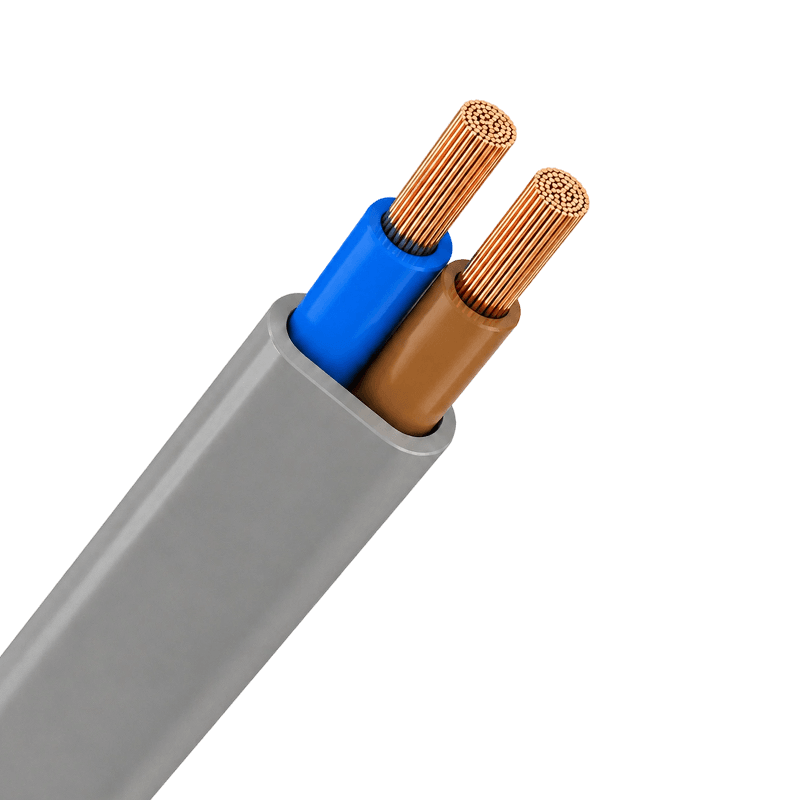
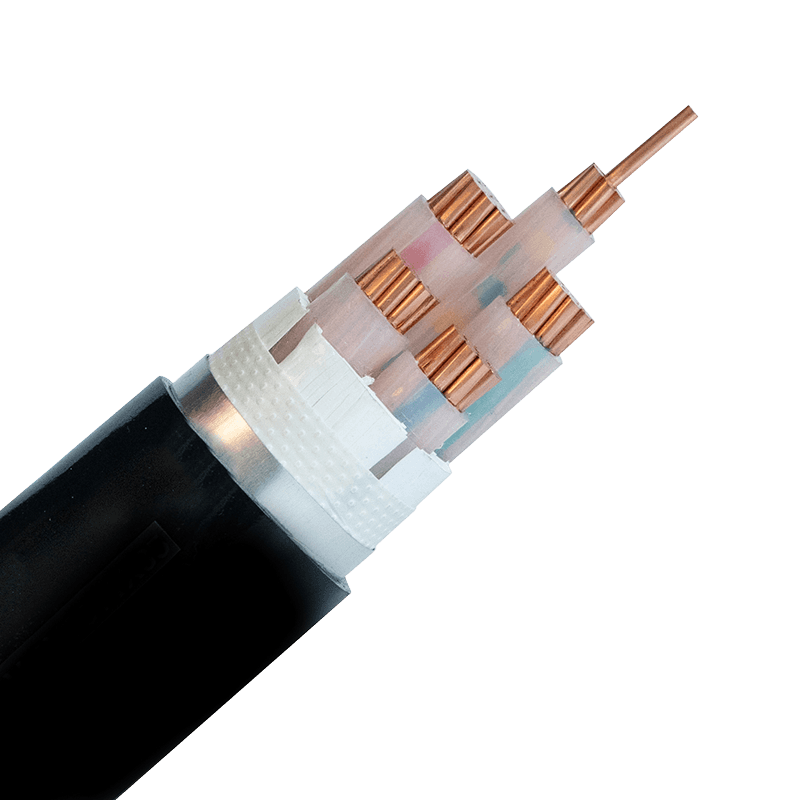
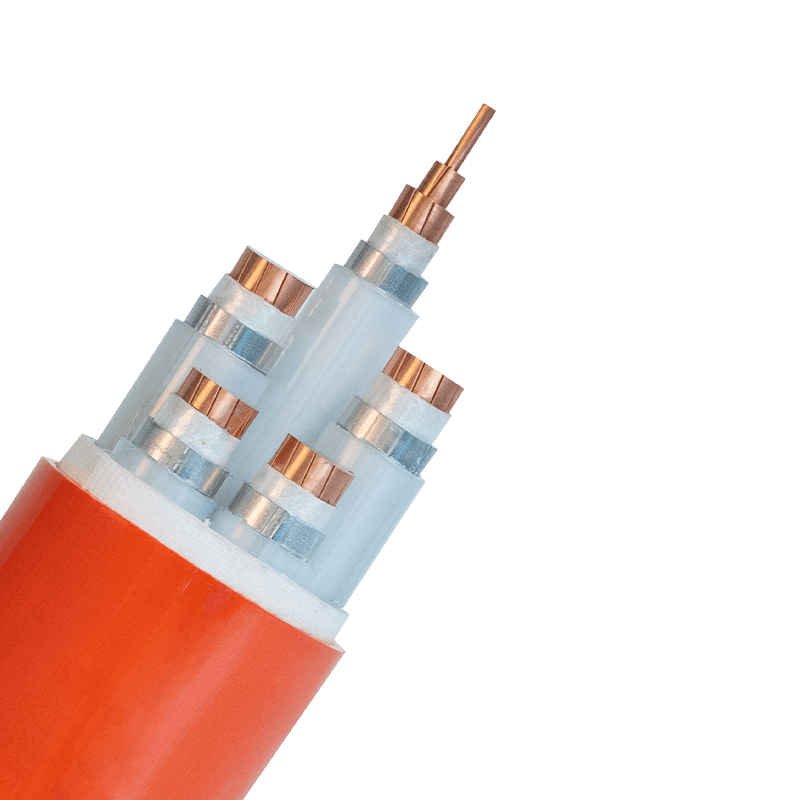
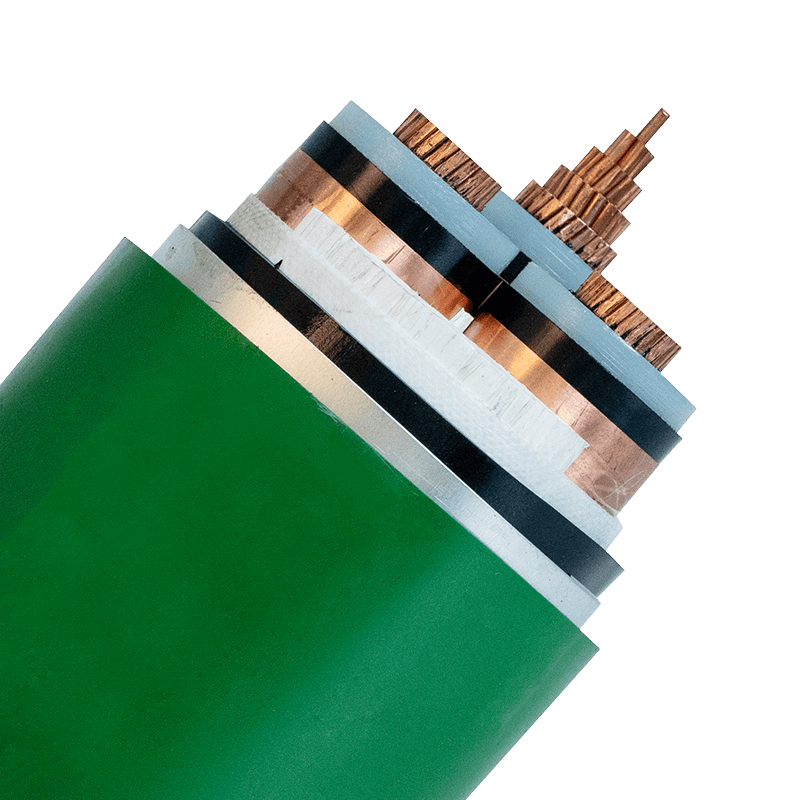
What separates one plastic insulated control cable from another is the combination of conductor stranding, insulation compound, and outer sheath. Each choice affects cost, flexibility, and long-term reliability, so it pays to understand these three elements before comparing prices.
Conductor Material and Stranding
Copper is the default conductor material for control cables. Aluminum is rarely used for signal circuits because its higher resistance reduces the voltage margin over long runs. For fixed installation in trays or conduit, Class 2 stranded conductors per IEC 60228 provide the right balance of flexibility and stable terminations. For moving machine parts, robot arms, or areas with constant vibration, Class 5 flexible stranding is the safer choice. A cable that is too stiff for the application will eventually break at the termination point, usually during a night shift.
Insulation and Jacket Compounds
The insulation compound sets the temperature rating, chemical resistance, and fire behavior. PVC remains the workhorse for indoor control circuits because it is inexpensive, easy to strip, and self-extinguishing. XLPE raises the continuous conductor temperature to 90 degrees Celsius, which helps when cables are routed near hot equipment. LSZH compounds are specified where fire safety is critical, such as public buildings, transit systems, and data centers, because they emit little smoke and no halogen under fire.
| Insulation compound | Continuous conductor rating | Fire behavior | Typical control cable use |
|---|---|---|---|
| PVC | 70°C | Self-extinguishing; releases HCl smoke under fire | General factory wiring and machine panels |
| XLPE | 90°C | Crosslinked; sustains flame when exposed | Hot areas and short overload conditions |
| LSZH | 70–90°C by compound | Halogen-free; very low smoke | Public buildings, transit, data centers |
For most factory applications, a PVC-insulated, PVC-sheathed control cable with Class 2 stranded copper is the practical default. If you are reviewing options for a new line, the control cable range at Huapu Cable lists the standard conductor classes, insulation, and sheath combinations in one place, which makes comparison easier than working from a vague catalog page.
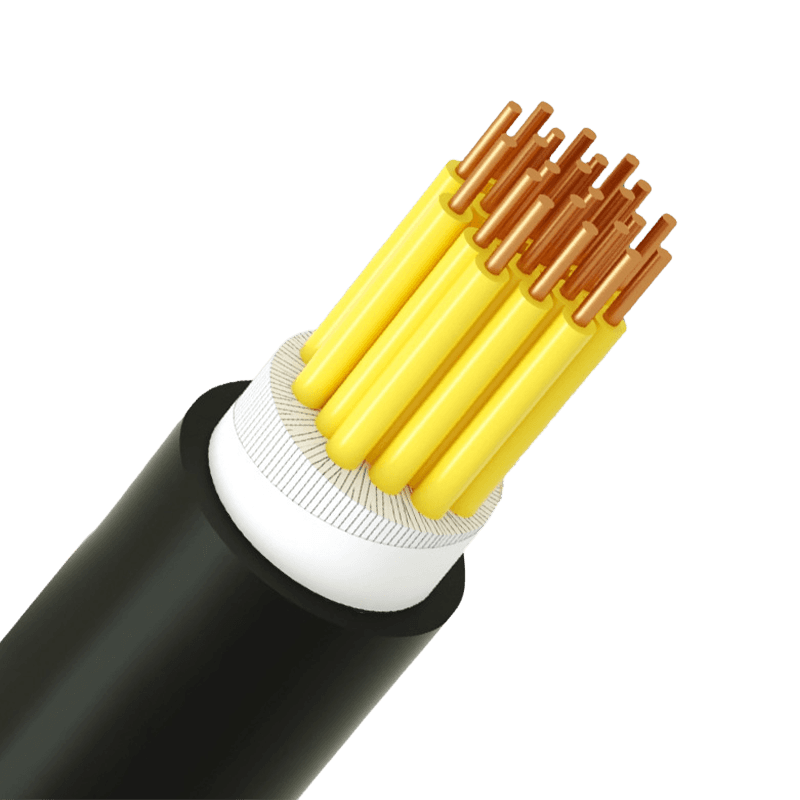 Plastic Insulated Control Cable Manufacturers, Multi-Core Control Cable SupplierAs Control Cable Manufacturers and Plastic Insulated Control Cable Suppliers, Multi-Core Control Cable Factory, Huapu offer Custom Contro...View Product →
Voltage Ratings: Where Underspecification Gets Expensive
Control cables in industrial use are normally rated 300/500 V or 450/750 V, with 0.6/1 kV versions available where the same cable feeds remote push-button stations or small control transformers. The hidden risk is underspecification, because control circuits frequently drive inductive loads such as contactor coils, solenoid valves, and relay coils. These generate switching surges several times the nominal voltage every time they de-energize.
A 300/500 V cable can be perfectly adequate for a DC sensor loop and still fail prematurely in an AC contactor circuit. If the circuit includes inductive loads, or if the cable runs inside a panel full of switching devices, make 450/750 V the default choice. This one decision eliminates a large share of early insulation breakdowns and does not add meaningful cost.
Shielding: Protecting Low-Energy Signals in a Noisy Plant
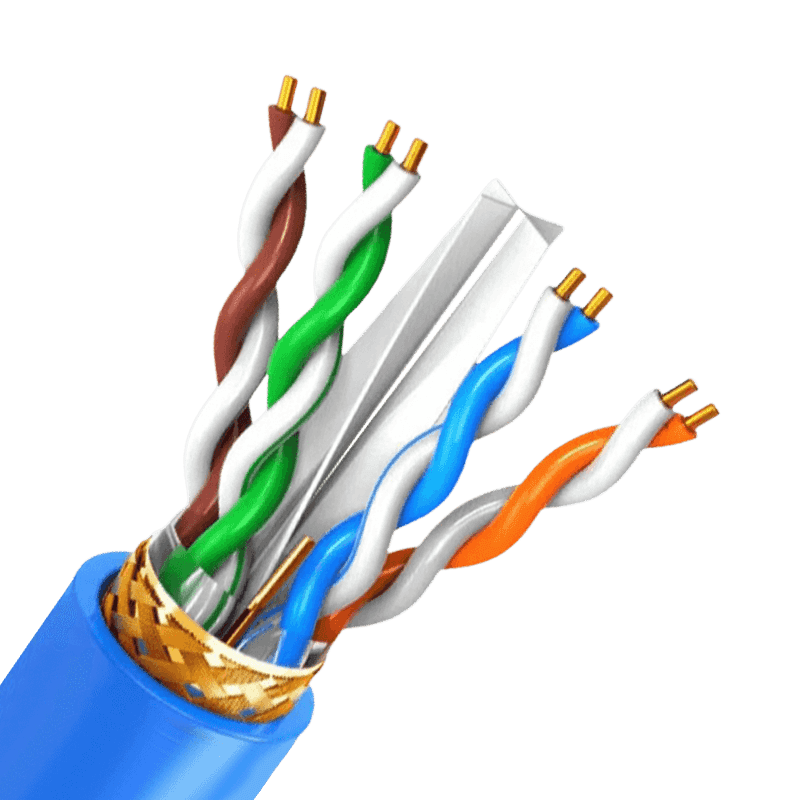
Plastic insulated control cables are available unshielded, with a braided copper screen, or with foil and braid combinations. Unshielded cable is acceptable in clean, low-power environments where the route stays away from drives, transformers, and welding equipment. The moment a control cable shares a tray with VFD feeders or runs parallel to power cables, shielding stops being optional.
The shield has two jobs: it reflects and absorbs radiated interference, and it provides a controlled path for common-mode currents. Braided shields offer robust coverage and mechanical integrity, while foil shields are lighter and cheaper but less durable under repeated flexing. For VFD output runs, where the drive, motor, and cable form a high-frequency loop, a dedicated VFD cable with symmetric ground conductors outperforms a standard control cable with an added screen.
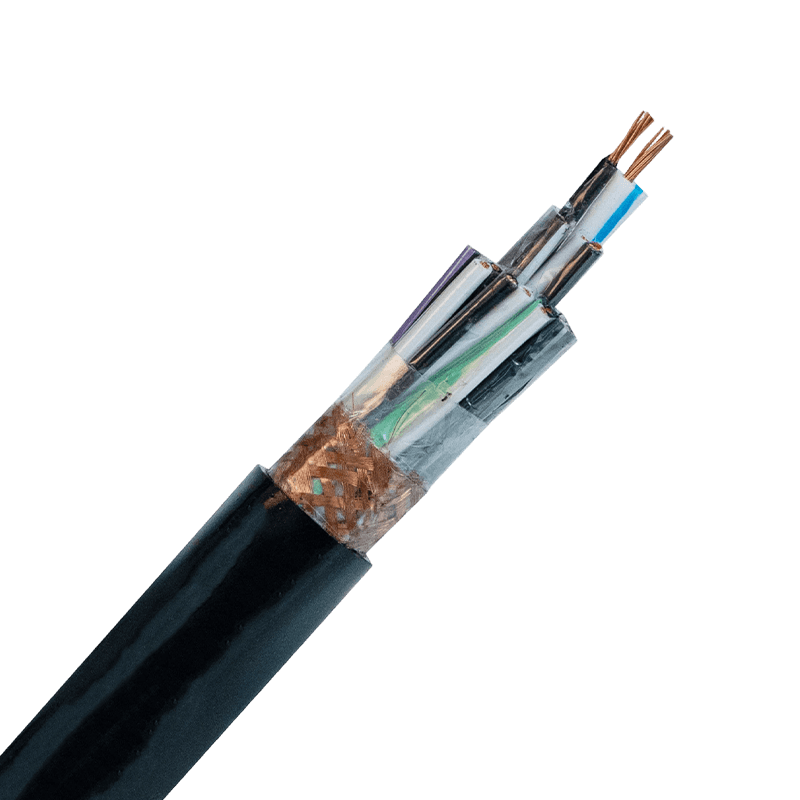 VFD (Variable Frequency Drive) Supply Cables Manufacturers, Suppliers, FactoryAs China VFD (Variable Frequency Drive) Supply Cables Manufacturers, VFD (Variable Frequency Drive) Supply Cables Suppliers and Factory, ...View Product →
One detail is often missed: a shield is only as effective as its termination. A braided shield connected with a pigtail longer than about 50 mm is nearly useless at high frequencies.
Environmental Conditions That Shorten Service Life
Most premature control-cable failures are not caused by electrical overload but by the environment. Temperature, moisture, oil, and UV radiation attack plastic insulation in different ways, and these factors rarely appear on a datasheet in plain language.
PVC becomes stiff and brittle below roughly minus 15 degrees Celsius, so outdoor installation in cold climates requires a cold-grade compound. In washdown areas, constant exposure to water and cleaning chemicals can soften a standard PVC jacket; a cable with a higher-grade sheath or an added waterproof layer lasts years longer. In process plants, aromatic hydrocarbons and cutting oils are the classic enemies of PVC insulation.
One practical rule: check the operating temperature range against both the ambient temperature and the heat inside the panel or tray. Conductor temperature, ambient temperature, and cable grouping all add up, and the sum must stay below the insulation rating.
For instrument loops carrying 4–20 mA signals over long distances, individual pair screening matters more than overall screen coverage. The computer and instrumentation cable range is built with twisted pairs and layered screening for exactly this purpose, making it the right product family for process transmitters rather than a general-purpose control cable.
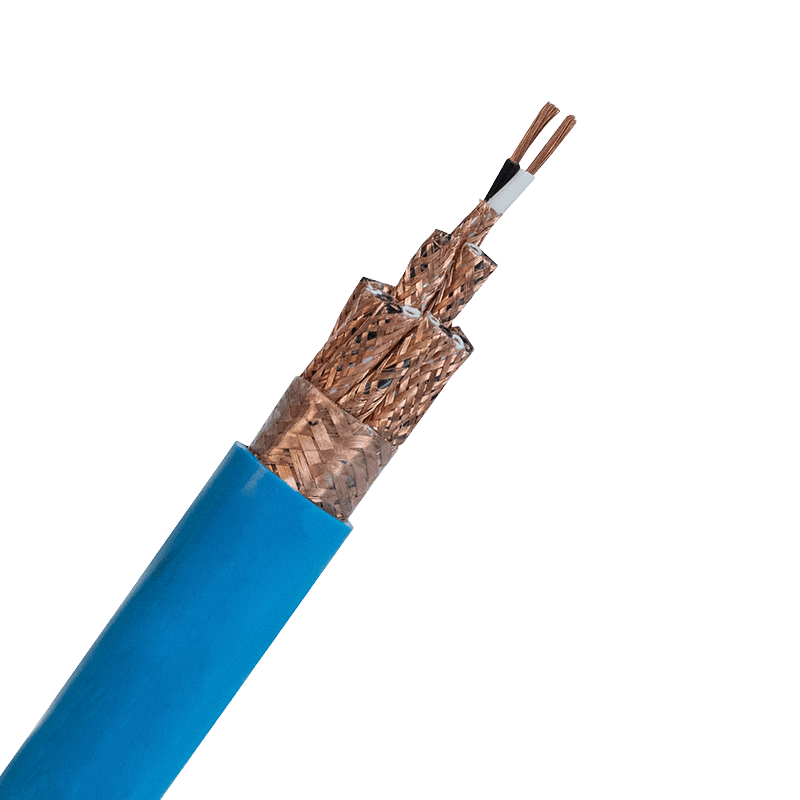 Computer & Instrumentation Cables Manufacturers, Suppliers, FactoryAs China Computer & Instrumentation Cables Manufacturers, Computer & Instrumentation Cables Suppliers and Factory, Huapu offer Custom Ele...View Product →
Choosing by Application
The right plastic insulated control cable depends on where it lives, not just what it carries. Three application groups cover most industrial situations.
Machine Tools and Robotics
Moving machinery demands flexible stranding, a controlled bend radius, and a shield that survives continuous flexing. A standard tray-rated cable works initially but fails early at the point of highest stress. Treat the manufacturer's minimum bend radius and flex-cycle count as hard constraints, not suggestions.
Process Automation and Chemical Plants
Chemical environments require resistance to vapors, occasional liquid splash, and high ambient heat. Pairing a shielded control cable with an oil-resistant or LSZH jacket avoids two common failure modes: insulation swelling and fire-safety gaps in control rooms. For analog loops, use instrument cables with individually screened pairs. The manufacturing sector installations that Huapu Cable supports show how these cable families are applied in both discrete and process manufacturing environments.
Direct Burial and Outdoor Runs
Direct burial stresses the sheath mechanically, so an armored or reinforced outer sheath is preferable to a plain PVC sheath. Water-blocked constructions prevent longitudinal water migration along conductor gaps if the sheath is damaged. For outdoor above-ground runs, UV-stabilized compounds prevent surface crazing, which is often the first stage of insulation failure.
Three Procurement Errors to Avoid
Over the years, the same three mistakes show up in almost every failed control-cable order. Avoiding them is straightforward if you know what to look for.
- Buying purely on price per meter. A cheaper cable with thinner insulation or a smaller conductor saves maybe 5–10 percent of material cost but multiplies the risk of line stoppages, which cost far more than any cable.
- Confusing overall diameter with conductor size. Two cables with the same outer diameter can have completely different conductor cross-sections. Check the cross-section in square millimeters, not the gland size.
- Ignoring the standard the cable is manufactured to. A cable that meets the relevant IEC or national standard can be traced, tested, and repeated. An unmarked equivalent cannot.
Specifying With Confidence
A reliable plastic insulated control cable specification is short and specific: conductor material and stranding class, insulation compound, rated voltage, shielding, and the expected environment. Once these are fixed, the remaining variables such as jacket color, drum length, and packaging are purely administrative.
Start by confirming the circuit voltage and whether the route passes near drives or power cables. Then match the insulation to ambient heat and chemical exposure. Finally, compare the construction against a documented product range instead of a vague catalog line. If the application involves analog instruments or VFD drives, resist the temptation to use one cable everywhere; the computer and instrumentation cable and VFD cable families exist for a reason.
If you buy control cables regularly, the detailed industrial selection criteria for plastic insulated multicore control cables is worth keeping as a reference. With the construction defined, the cable can be ordered, inspected, and installed with confidence, and the production line stays running.


- +86-13588204183
- No. 39 Zhiyuan Road, Deqing Economic Development Zone, Huzhou City, Zhejiang Province

Copyright © Zhejiang Huapu Cable Co., Ltd. All Rights Reserved.
 ISO 9001 Cable Manufacturer