
 en
en English
 中文简体
中文简体 русский
 Español
 عربى
عربى
Plastic Insulated Multi-Core Control Cables: Industrial Selection
Content
The Foundation of Reliable Signal Transmission
In modern automated facilities, a dependable control cable is not a commodity but a critical component that safeguards the integrity of every signal between controllers, sensors, and actuators. Plastic insulated multi-core control cables have established themselves as the backbone of industrial wiring by offering an optimal balance of mechanical flexibility, electrical insulation, and long-term stability. The direct answer to achieving consistent system uptime lies in selecting a cable whose insulation material and core arrangement are precisely matched to the operational environment. A properly specified multi-core control cable reduces electromagnetic interference, streamlines installation, and withstands the thermal and mechanical stresses of the plant floor, directly preventing unplanned downtime.
Insulation Materials and Their Direct Impact on Performance
The plastic insulation encasing each conductor is the primary defense against signal leakage and environmental attack. Three material classes dominate plastic insulated control cable manufacturing, each offering distinct electrical and thermal characteristics that determine suitability for a given task.
| Material | Continuous Temperature Range | Key Electrical & Fire Properties |
|---|---|---|
| PVC | -15°C to +70°C | Flame retardant; insulation resistance > 10¹² Ω·cm |
| XLPE | -40°C to +90°C | Low dielectric constant; excellent moisture resistance; fire retardant options available |
| LSZH | -20°C to +70°C | Low smoke emission; halogen-free; reduces toxic gas in fire |
Polyvinyl Chloride (PVC) Insulation
PVC remains the most widely used material due to its cost-effectiveness and inherent flame retardancy. It provides reliable service in dry, indoor control panels and machinery interconnections where ambient temperatures stay below 70°C. However, PVC can stiffen at sub-zero temperatures and releases dense smoke and acidic gases when forced to burn, making it less suited for enclosed public spaces.
Cross-Linked Polyethylene (XLPE) Insulation
XLPE insulation transforms the cable’s thermal and electrical profile. Through cross-linking the polymer chains, the material gains a continuous operating temperature of 90°C and can sustain emergency overloads up to 130°C for short periods. Its lower dielectric constant improves signal clarity over long runs, and its resistance to moisture penetration makes it the preferred plastic insulated control cable for outdoor cable trays, humid tunnels, and buried conduits.
Low Smoke Zero Halogen (LSZH) Insulation
Where human safety during a fire is paramount, LSZH compounds are mandatory. These materials emit minimal smoke and no corrosive halogen gases, allowing personnel to evacuate and reducing secondary damage to sensitive electronic equipment. Plastic insulated control cables with LSZH jackets are often specified for tunnels, data centers, and mass transit signaling.
Critical Role of Multi-Core Configurations
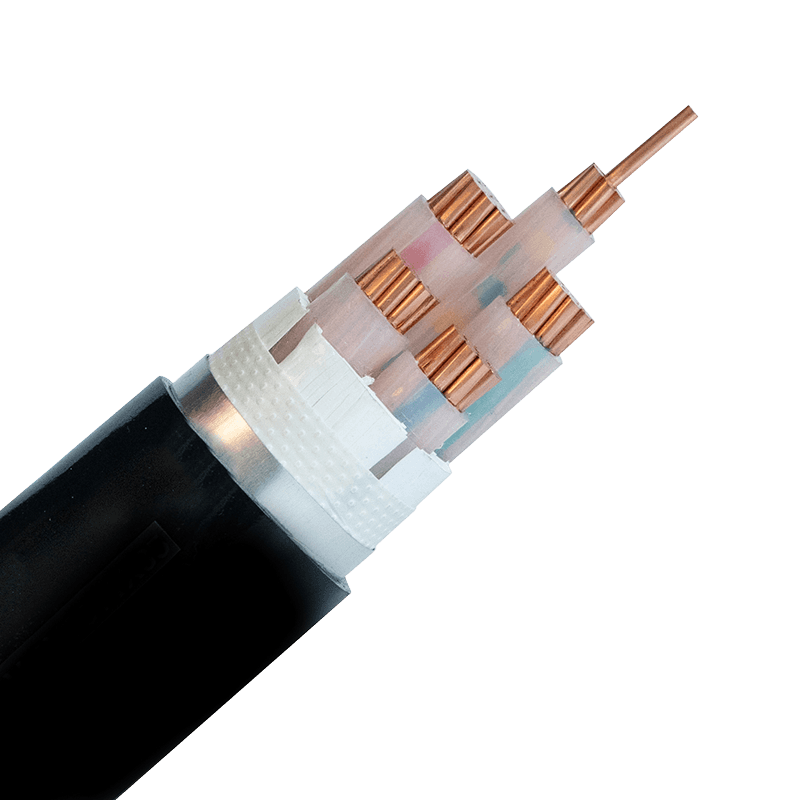
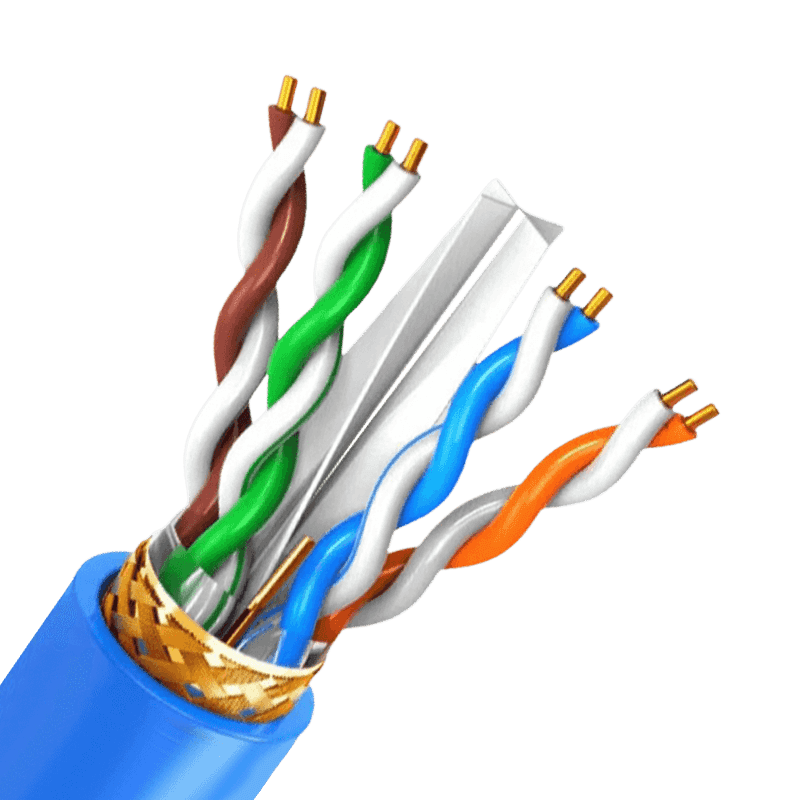
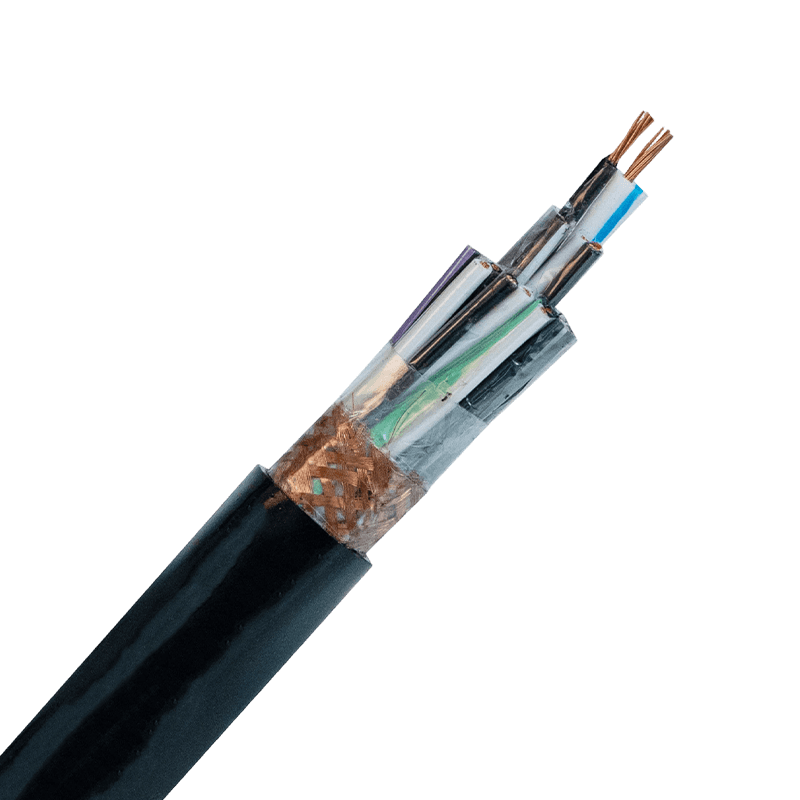
A multi-core control cable bundles several insulated conductors under a common sheath, drastically simplifying wiring and reducing the installed footprint. Common configurations range from 2 cores up to 61 cores, with 7-core, 12-core, and 24-core cables being workhorses for analog and digital signal distribution. Key advantages of a multi-core layout include:
- Reduced cable tray congestion and installation time compared to multiple single-core runs.
- Enhanced noise rejection when cores are twisted in pairs or layered with a collective screen, lowering susceptibility to electromagnetic fields from adjacent power cables.
- Consistent electrical characteristics across all paths, ensuring uniform voltage drop and signal timing in parallel control circuits.
When selecting the core count, one practical rule is to factor in at least 20% spare cores for future modifications. This foresight avoids the cost of pulling new cables when adding sensors or actuators later in the equipment lifecycle.
Fire Performance and Safety Standards
Control cables installed in industrial plants often traverse areas with fire risk, so their behavior under flame directly impacts safety. Two critical performance categories define cable survival and functionality during a fire event.
Flame Retardance
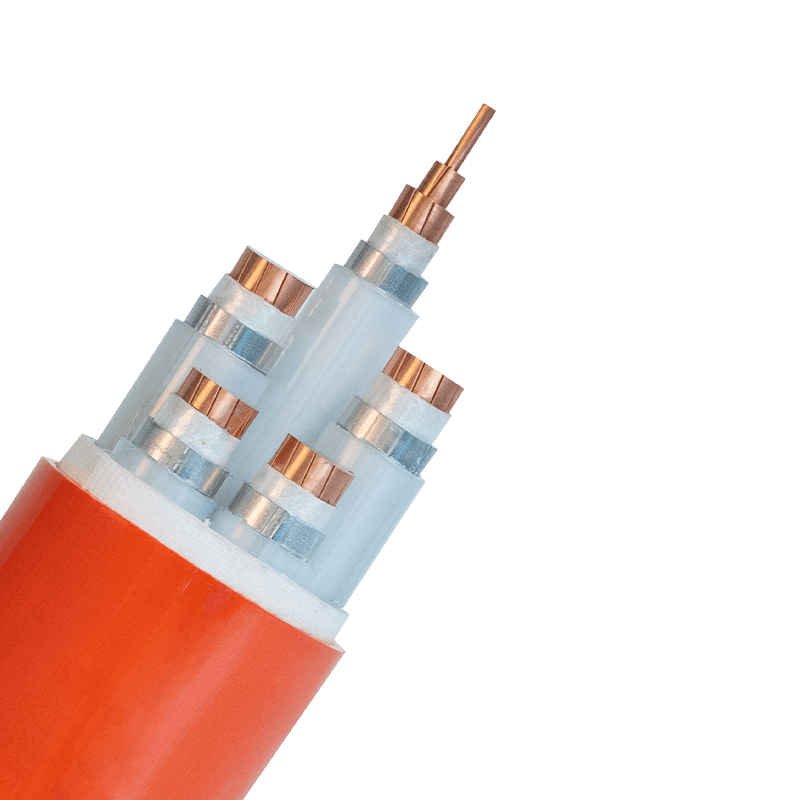
Flame-retardant plastic insulated control cables are engineered to stop burning once the external flame is removed. The test standard IEC 60332-1 evaluates a single cable’s vertical flame propagation, while IEC 60332-3 covers bunched cables. Passing these tests means the cable will not act as a wick, spreading fire along a cable tray. For critical circuits, fire-resistant designs incorporate a mica glass tape layer around each conductor. Under the IEC 60331 test, such cables maintain circuit integrity for 90 minutes at temperatures reaching 750°C, keeping emergency shutdown systems and fire alarms operational.
Halogen-Free and Low-Smoke Demands
In underground railways and control rooms, the requirement often shifts from flame retardance alone to limiting smoke and toxicity. LSZH multi-core control cables fulfill this need by achieving a light transmittance rate of at least 60% during smoke density tests, ensuring escape route visibility and reducing the risk of acid gas corrosion on nearby control panels.
Installation Practices for Long-Term Durability
Even the highest quality plastic insulated control cable will underperform if subjected to poor handling. Respecting mechanical limits during installation preserves both the electrical properties and the physical integrity of the sheath.
- Observe the minimum bending radius, which is typically 6 times the overall diameter for unarmored multi-core control cables. Tighter bends can crack the insulation and disrupt the lay of the cores.
- Do not exceed the maximum pulling tension. A safe limit is 50 N per square millimeter of conductor cross-section for copper conductors. Excessive force stretches the copper, creating high-resistance thin spots.
- In environments with vibration or continuous movement, install cables with finely stranded conductors and strain relief grips to prevent work hardening and eventual breakage of the cores.
- When outdoor routing is unavoidable, choose a cable with a UV-resistant black polyethylene or XLPE outer sheath to prevent degradation from prolonged sunlight exposure.
Certifications as a Guarantee of Quality
The performance promises of a control cable datasheet must be backed by verifiable manufacturing standards. Before procurement, confirm that the multi-core control cable supplier holds ISO 9001 certification for quality management and that the products carry the relevant compulsory approvals for the market, such as CCC certification or a national production license. These documents ensure that the cable has passed rigorous type testing for insulation resistance, voltage withstand, flame propagation, and cold impact. A manufacturer operating accredited laboratory facilities and an ISO 14001 environmental management system further signals a process-driven approach that eliminates batch-to-batch inconsistency.
Concluding with a direct recommendation: for most general industrial signal circuits, an XLPE insulated, flame-retardant multi-core control cable with a polyvinyl chloride or LSZH outer sheath offers the highest safety margin. PVC insulation remains a solid choice for indoor, temperature-controlled environments where initial cost drives the budget. Matching the cable’s listed test reports to the actual installation conditions is the most constructive step an engineer can take to secure decades of trouble-free control system operation.

- +86-13588204183
- No. 39 Zhiyuan Road, Deqing Economic Development Zone, Huzhou City, Zhejiang Province

Copyright © Zhejiang Huapu Cable Co., Ltd. All Rights Reserved.
 ISO 9001 Cable Manufacturer