
 en
en English
 中文简体
中文简体 русский
 Español
 عربى
عربى
Oxygen Free Copper (OFC): Grades, Properties, and When It Really Matters
Content
Two reels of copper conductor can sit side by side in a warehouse and look identical, yet one was melted and cast without ever touching air, while the other carries up to 400 ppm of oxygen locked inside as copper oxide particles. That single difference defines oxygen free copper (OFC): a grade of copper with oxygen content at or below 0.001% (10 ppm), copper purity of 99.95% or higher, and a casting route that keeps the melt sealed away from the atmosphere. The conclusion up front: OFC delivers measurable value in hydrogen atmospheres, vacuum systems, cryogenic equipment, and precision signal cables, and it is usually an unnecessary cost in general power distribution and building wiring. Knowing which side of that line a project falls on is what separates a sound specification from a padded budget.
What Oxygen Free Copper Means on a Datasheet
When a supplier calls copper oxygen free, the term points to standardized grades rather than a marketing mood. The two most common designations should appear by name on any purchase order:
- Cu-OF (UNS C10200): oxygen content no greater than 0.001%, with copper purity of at least 99.95%
- Cu-OFE (UNS C10100, often labeled oxygen-free electronic copper): oxygen content no greater than 0.0005%, with purity of 99.99% or better
Both grades are covered by ASTM B170 in the United States and EN 13601 in Europe. The baseline for comparison is electrolytic tough pitch copper (ETP, UNS C11000), which represents the overwhelming majority of copper produced worldwide. ETP is cast in contact with air, and a controlled oxygen level of roughly 0.02% to 0.04% is deliberately left in the melt because it scavenges impurities during refining. That oxygen is harmless in most service conditions, which is exactly why ETP dominates commodity applications.
| Grade | UNS Number | Oxygen Content | Copper Purity | Minimum Conductivity |
|---|---|---|---|---|
| Electrolytic tough pitch (ETP) | C11000 | 0.02-0.04% (200-400 ppm) | 99.90% min | 100% IACS |
| Oxygen-free copper (Cu-OF) | C10200 | 0.001% max (10 ppm) | 99.95% min | 100% IACS |
| Oxygen-free electronic (Cu-OFE) | C10100 | 0.0005% max (5 ppm) | 99.99% min | 101% IACS |
The figures above explain a recurring purchasing question: if ETP and Cu-OF are both rated at 100% IACS, what does the extra money actually buy? The answer lies in process-dependent properties rather than headline conductivity, which the next sections address.
How the Manufacturing Process Removes the Oxygen
Oxygen free copper is not made by refining tough pitch copper an extra step. It starts from the same electrolytic cathode but takes a fundamentally different casting route. The cathode is melted in an induction furnace sealed under a reducing or inert atmosphere, typically carbon monoxide or nitrogen, so oxygen never dissolves into the melt in the first place. Upward continuous casting, known in the industry as the Upcast process, then pulls solid rod directly out of the molten pool through a graphite die, keeping the metal shielded from air until it has fully solidified.
The result is a microstructure free of copper oxide particles at the grain boundaries. In practice this shows up as cleaner drawing behavior: fewer inclusions mean fewer break points when reducing down to fine and ultra-fine gauges, and a more uniform annealing response from batch to batch. For a cable manufacturer, that consistency is a production advantage before any end-user property is even considered.
The Properties That Justify the Premium
Hydrogen embrittlement resistance
This is the decisive property. In tough pitch copper, copper oxide (Cu2O) dispersed along the grain boundaries reacts with hydrogen at elevated temperatures, roughly 370°C and above, forming high-pressure steam inside the metal. That steam opens internal fissures and can crack a component outright during hydrogen furnace brazing, annealing in hydrogen atmospheres, or long service in hydrogen-rich environments. Oxygen free copper contains no oxide phase, so it is effectively immune to this failure mode. That is why OFC is the default requirement for brazed assemblies, vacuum furnace hardware, and equipment destined for hydrogen service.
Conductivity at the ceiling
Both ETP and Cu-OF carry a minimum rating of 100% IACS, while Cu-OFE can reach 101%. A one percent gain sounds trivial, and for a 50-meter power feeder it genuinely is. It becomes meaningful in precision resistors, calibration-grade conductors, and very long signal runs where every increment of resistivity compounds along the length.
Ductility and microstructural cleanliness
With no oxide inclusions, OFC forms more predictably in deep drawing, flaring, and glass-to-metal sealing, and it draws into fine wire with lower break rates. These properties matter most to component makers, though cable producers drawing fine stranding benefit from the same cleanliness.
Where OFC Earns Its Cost and Where It Does Not
Applications that depend on it
Vacuum technology and hydrogen service top the list. Waveguides, particle accelerator components, vacuum furnace fixtures, and brazed assemblies all depend on the embrittlement resistance described above. Cryogenic systems specify OFC because its thermal conductivity holds up better at low temperatures than that of oxide-bearing grades, which matters for superconducting magnet leads, medical imaging coils, and plasma-facing components.
Signal transmission is the largest cable-side market. High-grade RF coaxial assemblies are routinely built on oxygen free copper because conductor surface quality influences high-frequency behavior: at radio frequencies, current crowds toward the conductor surface, so surface anomalies have an outsized effect. Audio interconnects, instrumentation circuits, and precision measurement leads follow the same reasoning.
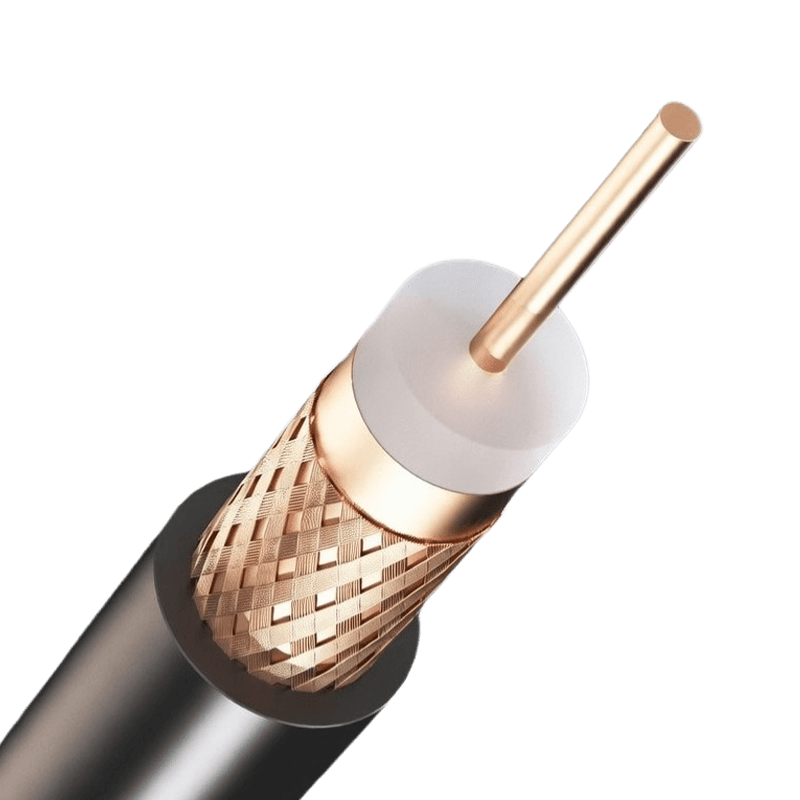 Coaxial Cables for Stable High-Frequency Signal TransmissionBuilt with accurate impedance matching, strong shielding, and a bending radius of no more than ten times the outer diameter, these coaxial cables suit the RF and instrumentation circuits discussed above, where conductor surface quality directly affects high-frequency performance.View Product →
The same logic extends to low-level signal circuits in factories and data rooms, where instrument loops leave little margin for conductor inconsistency.
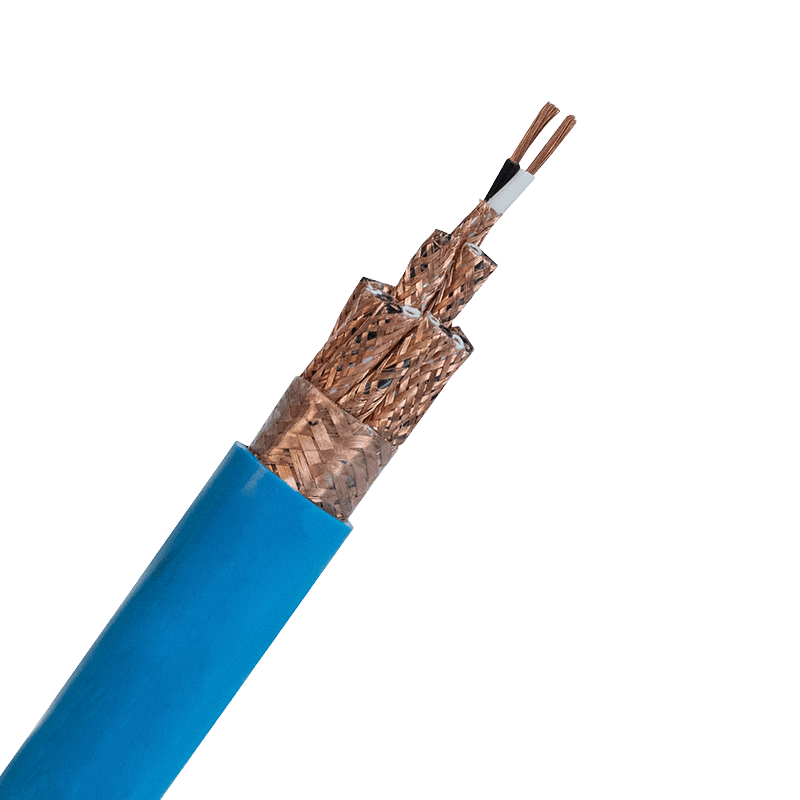 Computer and Instrumentation Cables for Low-Level SignalsThese 300/500 V PE-insulated cables offer low signal distortion, high transmission rates, and strong electromagnetic interference resistance, making them well suited to the factory and data-room instrument loops where conductor consistency leaves little margin for error.View Product →
Readers planning signal infrastructure can see how conductor, shielding, and jacket decisions fit together in our communication and data industry overview.
Where standard copper is the smarter choice
Building wire, low-voltage power cable, and most medium-voltage distribution run on tough pitch copper by design. Standards such as IEC 60228 and ASTM B3 define resistivity, elongation, and dimension requirements that ETP meets at its standard price point, and oxygen content has no bearing on ampacity, insulation life, or terminations in ordinary service. Paying an OFC premium in these applications buys nothing measurable. What does matter is conductor construction, from solid class 1 cores to flexible class 5 stranding, and, in corrosive or marine environments, whether the conductor should be tin-plated. We cover that plating decision separately in our comparison of tinned copper versus bare copper conductors.
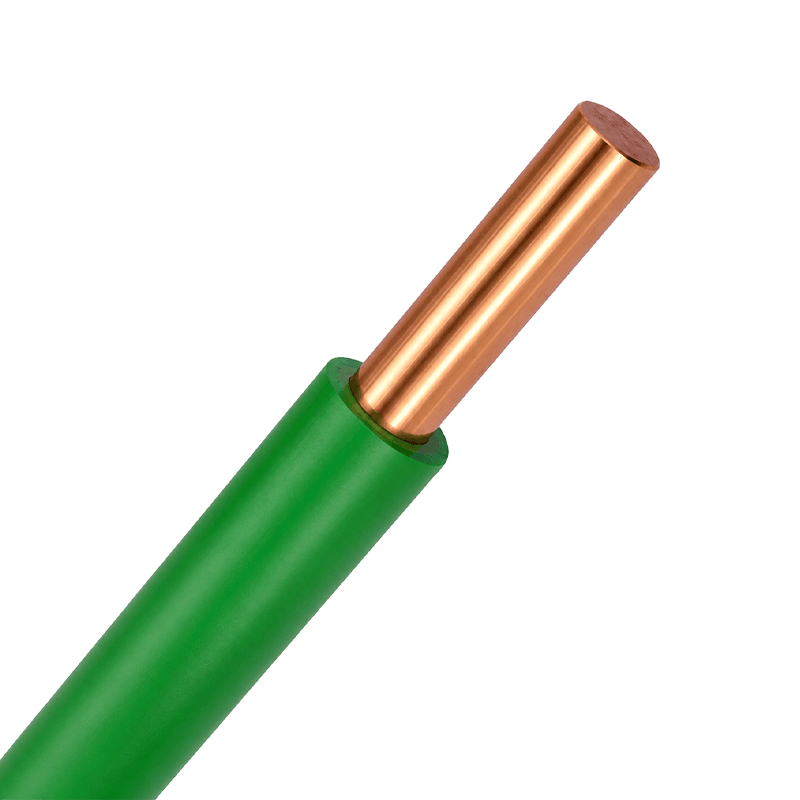 Copper Building Wires for 450/750V Electrical SystemsPVC and XLPE insulated building wires rated 450/750V and below cover a full range of diameters for different loads. For ordinary power distribution, standard tough pitch copper meets IEC and ASTM requirements without paying an OFC premium.View Product →
Verifying the Grade Before the Purchase Order
Because OFC appears on packaging far more often than it is actually tested, verification should be contractual rather than assumed. A credible oxygen free copper offer includes:
- A mill test certificate stating the UNS grade (C10200 or C10100) and heat-lot chemical composition.
- Oxygen analysis by inert gas fusion, with the ppm value reported rather than merely claimed.
- Resistivity testing per ASTM B193, since conductivity is the property certification will be judged on.
- For hydrogen service, results from a hydrogen embrittlement acceptance test following annealing.
Two clarifications prevent common purchasing mistakes. First, copper grade and conductor class are separate variables: IEC 60228 classes 1 through 6 describe stranding and flexibility, not oxygen content, so a class 5 flexible conductor can be either ETP or OFC. Second, oxygen free does not mean corrosion-proof; outdoor and marine durability depend far more on insulation, sheathing, and plating choices than on residual oxygen content.
Oxygen free copper is best treated as an engineering answer to specific environments, including hydrogen exposure, vacuum, cryogenics, and precision signal paths, rather than a universal upgrade. Specifying it where those conditions exist prevents a well-understood failure mode; specifying it everywhere else inflates cost without changing performance. As a cable manufacturer producing power, control, communication, and specialty cables for customers worldwide, we work with both standard tough pitch and higher-purity conductors and can help match the grade to the service environment. If a project sits on the line between the two, our engineering team can review the operating conditions and recommend the most economical conductor that still meets the requirement.


- +86-13588204183
- No. 39 Zhiyuan Road, Deqing Economic Development Zone, Huzhou City, Zhejiang Province

Copyright © Zhejiang Huapu Cable Co., Ltd. All Rights Reserved.
 ISO 9001 Cable Manufacturer