
 en
en English
 中文简体
中文简体 русский
 Español
 عربى
عربى
Tinned Copper vs Bare Copper Conductor Which Wire Is Right for Your Application?
Content
- Where Bare Copper Wire Makes Sense
- Where Tinned Copper Wire Makes Sense
- Is tinned copper wire better than bare copper wire?
- Does tinning reduce copper's conductivity?
- Can tinned copper wire be used outdoors?
- Is tinned copper wire more expensive than bare copper?
- Does tinned copper last longer?
- Can bare copper turn green?
- Does tinned copper carry less current?
Choosing the right conductor material plays a critical role in the long-term reliability and performance of an electrical system. Two of the most common options — tinned copper conductor and bare copper conductor — may appear similar on a specification sheet, but they behave very differently once installed in real-world conditions. Whether you are designing a marine electrical system, manufacturing industrial equipment, or installing residential wiring, understanding the differences between tinned copper and bare copper conductors can help you make the right choice for reliability, durability, and cost.
In this guide, we break down what tinned copper and bare copper conductors are, how they compare in conductivity, corrosion resistance, solderability, and cost, and which one makes the most sense for your specific application.
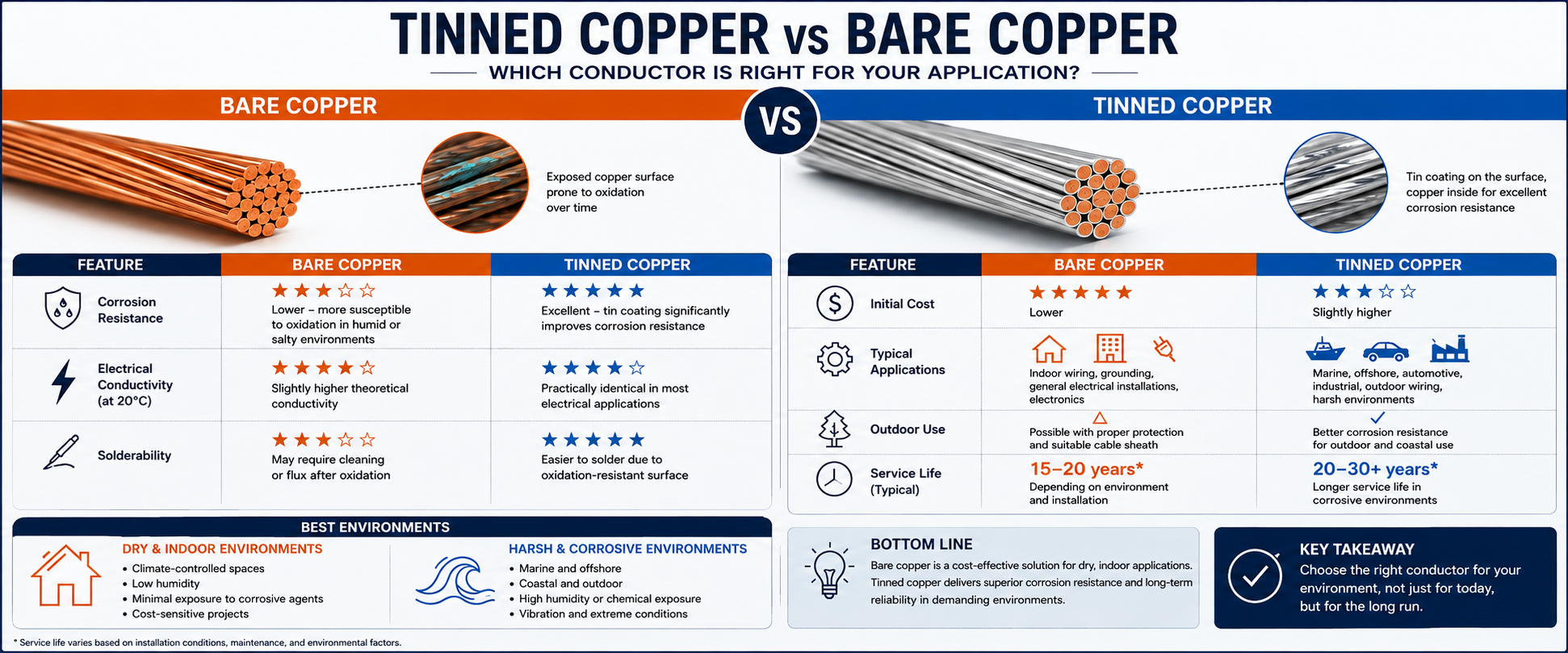
What Is Bare Copper Conductor?
Bare copper conductor is copper wire in its purest, uncoated form. No protective layer sits between the copper and the outside environment, which means the wire offers excellent electrical conductivity right out of the box. Copper is naturally one of the best conductive metals available for wiring, and without any coating, bare copper delivers that conductivity at the lowest possible cost.
The trade-off is exposure. When exposed to oxygen, moisture, salt, or airborne contaminants, bare copper gradually forms surface oxides. In most indoor, dry environments, this natural oxidation develops slowly and has little effect on the conductor itself. However, in humid, coastal, or chemically aggressive environments, oxidation can increase contact resistance at terminals, connectors, and splices, potentially affecting the long-term reliability of electrical connections.
What Is Tinned Copper Conductor?
Tinned copper conductors are typically manufactured using individually tinned copper strands that are stranded together. The thin tin coating forms a protective barrier between the copper and the surrounding environment, significantly slowing oxidation and corrosion.
Tin is far less reactive than copper when exposed to moisture, salt spray, and many common chemicals, which is why tinned copper wire is widely preferred for marine wiring, offshore installations, aerospace systems, and other applications where corrosion resistance and long-term reliability are critical.
Tinned Copper vs Bare Copper: Key Differences at a Glance
|
Feature |
Bare Copper Conductor |
Tinned Copper Conductor |
|
Corrosion Resistance |
Lower—more susceptible to oxidation in humid or salty environments |
Excellent—tin coating significantly improves corrosion resistance |
|
Electrical Conductivity |
Slightly higher theoretical conductivity |
Practically identical in most electrical applications |
|
Solderability |
May require cleaning or flux after oxidation |
Easier to solder due to oxidation-resistant surface |
|
Initial Cost |
Lower |
Slightly higher |
|
Typical Applications |
Indoor wiring, grounding, general electrical installations |
Marine, offshore, automotive, industrial, outdoor wiring |
Corrosion Resistance: The Biggest Differentiator
Corrosion resistance is where tinned copper wire truly separates itself from bare copper. Surface discoloration, including dark copper oxides or green copper carbonate patina, is more than a cosmetic issue — it increases contact resistance at electrical terminations rather than significantly affecting the conductivity of the conductor itself.
The tin coating on tinned copper conductor forms a protective shield that resists this oxidation process for years longer than bare copper under the same conditions. This is especially critical in:
- Marine and coastal environments, where salt air accelerates corrosion
- Outdoor installations exposed to rain, humidity, and temperature swings
- Industrial settings with chemical fumes or high moisture levels
- Automotive and aerospace applications subject to vibration and environmental stress
Conductivity and Electrical Performance
In terms of raw electrical conductivity, bare copper has a slightly higher theoretical electrical conductivity because tin is less conductive than copper. However, the tin coating is extremely thin, so its impact on the overall conductivity of the conductor is negligible. In practical electrical installations, both bare and tinned copper conductors provide virtually identical electrical performance when properly sized.
Solderability and Ease of Assembly
For applications involving soldering — such as electronics assembly, wire harnesses, or marine wiring — tinned copper wire has a practical advantage. Because the tin coating resists oxidation before installation, tinned copper is easier to solder without extensive surface preparation. Bare copper wire, especially after sitting in storage or exposed to air, may develop a thin oxide layer that requires additional flux or cleaning before a solid solder joint can form.
Cost Comparison
Bare copper conductor is generally less expensive than tinned copper because it skips the tinning process entirely. For short-term, indoor, or low-risk applications, this cost savings can make bare copper the more practical choice. Tinned copper carries a modest price premium, but that added cost is often justified by a longer service life, fewer maintenance issues, and reduced risk of connection failure in demanding environments — resulting in a lower total cost of ownership in demanding environments.
Does Tinning Affect Current Carrying Capacity?
No. The current-carrying capacity (ampacity) of a cable is primarily determined by the conductor cross-sectional area, insulation temperature rating, installation method, and ambient temperature. The thin tin coating has virtually no impact on ampacity, meaning tinned copper and bare copper conductors of the same size generally carry the same current under identical installation conditions.
Standards and Compliance
Both bare copper and tinned copper conductors can comply with international standards such as IEC, UL, ASTM, and BS, depending on the cable design and application. The choice between bare and tinned copper is typically driven by environmental requirements rather than electrical performance. Marine, offshore, and other corrosion-prone applications often specify tinned copper conductors to improve long-term durability.
Common Applications for Each Conductor Type
Where Bare Copper Wire Makes Sense
- Indoor residential and commercial electrical wiring
- Grounding systems in dry, controlled environments
- General-purpose electronics not exposed to moisture
- Budget-sensitive projects where environmental exposure is minimal
Where Tinned Copper Wire Makes Sense
- Marine wiring, including boats, docks, and offshore equipment
- Aerospace and defense applications requiring high reliability
- Automotive wiring exposed to road salt, moisture, and vibration
- Outdoor and coastal installations
- Industrial equipment operating in humid or chemically active environments
How to Choose Between Tinned Copper and Bare Copper Conductor
The right choice ultimately comes down to the environment the wiring will live in and how critical long-term reliability is to your project. If your installation stays indoors, in a dry and climate-controlled space, bare copper conductor will likely perform well and save on upfront material costs. But if the wiring will face moisture, salt air, temperature extremes, or long-term outdoor exposure, tinned copper conductor is the safer investment — protecting your electrical system from the corrosion-related failures that bare copper is more vulnerable to over time.
Frequently Asked Questions
Is tinned copper wire better than bare copper wire?
Neither option is universally "better" — it depends on the application. Tinned copper offers superior corrosion resistance and easier solderability, making it ideal for marine, outdoor, and industrial use. Bare copper offers slightly higher conductivity and a lower price, making it well-suited for dry, indoor applications.
Does tinning reduce copper's conductivity?
Tinning causes only a marginal reduction in conductivity, one that is negligible for the vast majority of electrical and electronic applications.
Can tinned copper wire be used outdoors?
Yes. Tinned copper wire is specifically favored for outdoor, marine, and coastal applications because its tin coating resists the corrosion that bare copper is prone to in these environments.
Is tinned copper wire more expensive than bare copper?
Yes, typically. The tinning process adds a modest cost premium, but it often pays for itself through longer service life and reduced maintenance in demanding environments.
Does tinned copper last longer?
Yes. In corrosive environments, tinned copper conductors generally offer a longer service life because the tin coating helps protect the copper strands from oxidation and corrosion.
Can bare copper turn green?
Yes. When exposed to moisture, oxygen, and carbon dioxide over time, bare copper may develop a green patina. While this does not significantly affect the conductor itself, it can increase contact resistance at electrical connections if left untreated.
Does tinned copper carry less current?
No. Under the same conductor size and installation conditions, tinned copper and bare copper conductors have essentially the same current-carrying capacity.
Final Thoughts
Both tinned copper and bare copper conductors have a place in modern wiring systems. Bare copper remains a cost-effective, high-conductivity option for dry, indoor environments, while tinned copper conductor delivers the corrosion resistance and durability needed for marine, outdoor, and industrial applications. By matching the conductor type to your specific environment and performance requirements, you can build an electrical system that delivers reliable electrical performance throughout its expected service life.

- +86-13588204183
- No. 39 Zhiyuan Road, Deqing Economic Development Zone, Huzhou City, Zhejiang Province

Copyright © Zhejiang Huapu Cable Co., Ltd. All Rights Reserved.
 ISO 9001 Cable Manufacturer