
 en
en English
 中文简体
中文简体 русский
 Español
 عربى
عربى
What Is LSZH Cable? Benefits, Applications, and Fire Safety Standards
Content
Introduction
In modern construction and infrastructure projects, fire safety is a critical consideration—especially when it comes to cable selection. During a fire, cables can significantly impact smoke levels, air quality, and visibility, directly affecting evacuation and emergency response.
This is where LSZH cable (Low Smoke Zero Halogen cable) plays an essential role. Compared to traditional PVC cables, LSZH cables are designed to reduce smoke emission and eliminate harmful halogen gases.
In this article, we will explain what LSZH cable is, its key advantages, where it should be used, and the relevant international standards.
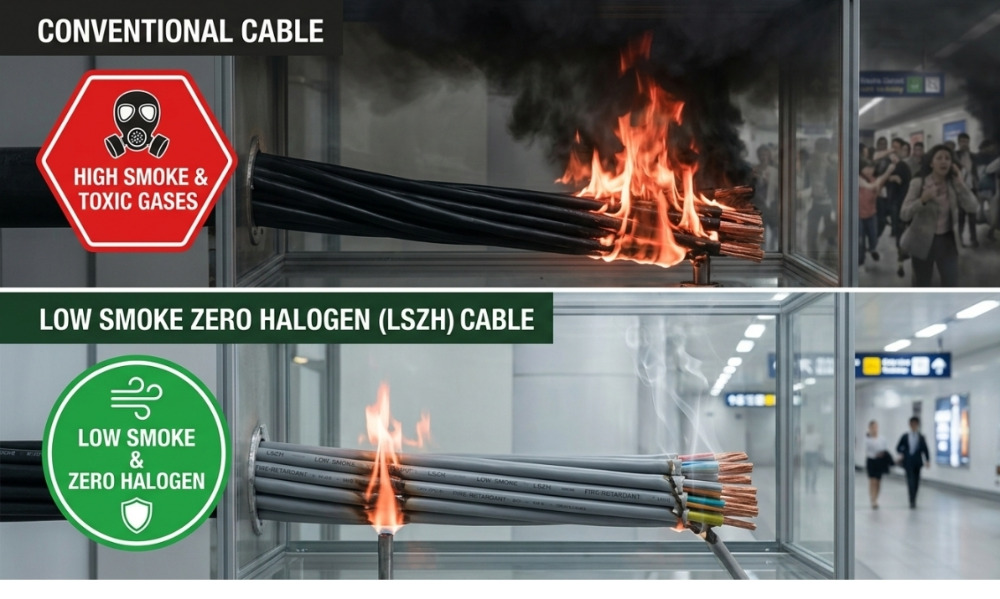
What Is LSZH Cable?
LSZH cable stands for Low Smoke Zero Halogen cable, a type of cable manufactured using materials that produce:
- Low levels of smokewhen exposed to fire
- No halogen-based gases, such as chlorine or bromine
Unlike conventional PVC cables, LSZH cables are specifically engineered to improve safety in fire conditions.
Key Characteristics
- Low Smoke (LS):
Reduces smoke density, helping maintain visibility during evacuation. - Zero Halogen (ZH):
Prevents the release of corrosive and toxic gases that can harm people and damage equipment.
Why LSZH Cable Is Safer Than PVC Cable
Traditional PVC cables can release dense black smoke and corrosive gases such as hydrogen chloride (HCl) when burned. These gases can:
- cause severe respiratory irritation
- reduce visibility
- corrode electronic equipment
- damage infrastructure
In contrast, LSZH cables significantly reduce these risks.
Key Safety Benefits of LSZH Cable
- Improved visibility during fire emergencies
- Reduced toxic gas emission
- Lower risk of corrosion to equipment
- Enhanced safety for occupants and rescue teams
Because of these advantages, LSZH cables are widely used in environments where fire safety is a priority.
Where Is LSZH Cable Used?
LSZH cables are commonly used in enclosed or high-density environments where smoke and toxic gases pose serious risks.
1. Public Transportation Systems
- Subway stations and tunnels
- Airports
- Railway stations
These environments require strict fire safety measures due to high passenger volumes and complex evacuation routes.
2. Healthcare and Educational Facilities
- Hospitals
- Nursing homes
- Schools and universities
Occupants in these facilities may need more time to evacuate, making low-smoke environments essential.
3. High-Rise Buildings
- Office towers
- Residential complexes
In tall buildings, evacuation can take longer, increasing the importance of smoke control.
4. Commercial and Public Spaces
- Shopping malls
- Exhibition centers
- Convention halls
High crowd density makes visibility and air quality critical during emergencies.
5. Data Centers and Critical Infrastructure
- Data centers
- Control rooms
- Power plants
LSZH cables help protect sensitive equipment from corrosion caused by acidic gases.
How to Identify LSZH Cable
When sourcing LSZH cables, it is important to verify both markings and compliance standards.
Common Markings
You may find the following labels on cable jackets:
- LSZH / LSOH
- HFFR (Halogen-Free Flame Retardant)
Important Note
Not all “low smoke” cables are fully halogen-free. Always confirm through:
- technical datasheets
- test reports
- certification documents
International Standards for LSZH Cable
To ensure performance and safety, LSZH cables are typically tested according to international standards:
- IEC 60332– Flame propagation
- IEC 61034– Smoke density
- IEC 60754– Halogen gas emission and acidity
Compliance with these standards is essential when selecting cables for regulated projects.
LSZH Cable vs PVC Cable
|
Feature |
LSZH Cable |
PVC Cable |
|
Smoke Emission |
Low |
High |
|
Halogen Content |
None |
Contains chlorine |
|
Toxic Gas Release |
Minimal |
High |
|
Corrosion Risk |
Low |
High |
|
Fire Safety Level |
High |
Moderate |
When Should You Choose LSZH Cable?
You should consider LSZH cable when:
- the project involves public safety requirements
- the installation is in enclosed or poorly ventilated spaces
- local regulations or project specifications require low smoke or halogen-free cables
- protecting sensitive equipmentis important
Conclusion
LSZH cable is a critical solution for improving fire safety in modern infrastructure. By reducing smoke and eliminating halogen gases, it helps protect both human life and valuable equipment.
As safety regulations continue to evolve worldwide, LSZH cable is becoming an increasingly important choice for engineers, contractors, and project owners.
When selecting cables, always verify compliance with international standards and ensure the product truly meets LSZH performance requirements.
FAQ
What does LSZH stand for?
LSZH stands for Low Smoke Zero Halogen.
Is LSZH cable mandatory?
In many projects—especially public buildings and transportation systems—LSZH cable is often required by regulations or specifications.
Is LSZH cable more expensive?
Yes, LSZH cables are typically more expensive than PVC cables, but they provide significantly higher safety performance.
Is LSZH cable environmentally friendly?
LSZH cables are considered more environmentally friendly in fire situations because they emit fewer toxic and corrosive substances.

- +86-13588204183
- No. 39 Zhiyuan Road, Deqing Economic Development Zone, Huzhou City, Zhejiang Province

Copyright © Zhejiang Huapu Cable Co., Ltd. All Rights Reserved.
 ISO 9001 Cable Manufacturer