
 en
en English
 中文简体
中文简体 русский
 Español
 عربى
عربى
Do I Need Shielded Ethernet Cable for Home?
Content
When setting up a home network, many people face a common question: Do I need shielded Ethernet cable (STP), or is unshielded cable (UTP) enough? Understanding the difference and knowing when shielding matters can help you make a smarter, cost-effective decision for your home setup.
What Is Shielded Ethernet Cable?
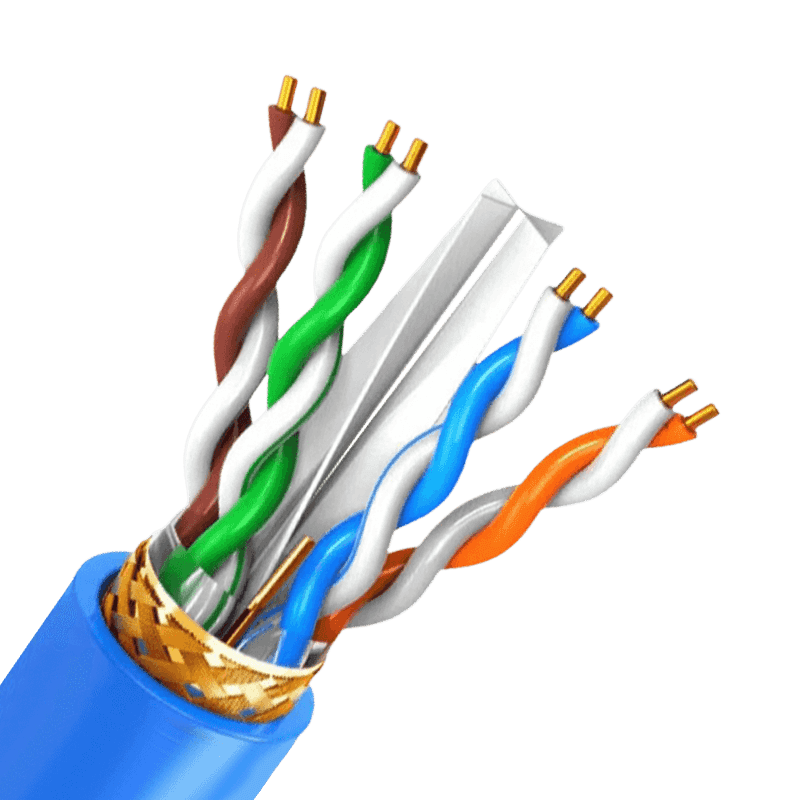
Shielded Ethernet cable (STP) is designed with an extra layer of protection—usually foil or braided shielding—wrapped around the internal wire pairs. This shielding helps reduce electromagnetic interference (EMI) and radio frequency interference (RFI).
In contrast, unshielded twisted pair (UTP) cables rely only on the twisting of wires to minimize interference and are the most commonly used cables in homes.
Key Differences Between STP and UTP
|
Feature |
Shielded (STP) |
Unshielded (UTP) |
|
Interference Protection |
High |
Moderate |
|
Cost |
Higher |
Lower |
|
Installation Complexity |
More difficult |
Easy |
|
Flexibility |
Less flexible |
More flexible |
|
Grounding Requirement |
Required |
Not required |
Do You Need Shielded Ethernet Cable at Home?
1. Typical Home Environments: No, You Don’t
For most households, UTP cables (like Cat5e, Cat6, or Cat6a) are more than sufficient. Homes generally do not have enough electromagnetic interference to justify the added cost and complexity of shielded cables.
If your setup includes:
- Standard Wi-Fi routers
- Gaming consoles
- Smart TVs
- Home offices
Then UTP will deliver excellent performance without any issues.
2. When Shielded Cable Might Be Necessary
There are some specific situations where STP cables make sense:
a. High Interference Areas
If your Ethernet cables run near:
- Power lines
- Industrial equipment
- Large appliances (e.g., HVAC systems)
Shielding can help maintain signal integrity.
b. Advanced Smart Homes
Homes with extensive automation systems or dense wiring setups may benefit from reduced interference.
c. Long Cable Runs
If you’re running Ethernet over longer distances (close to the 100-meter limit), shielding can help reduce signal degradation.
d. Outdoor Installations
Shielded cables are often used in outdoor or underground installations, especially when paired with weatherproofing.
Important Consideration: Grounding
One critical factor often overlooked is proper grounding. Shielded cables must be grounded correctly; otherwise, they can:
- Perform worse than unshielded cables
- Act like antennas and introduce interference
- For most homeowners, proper grounding adds unnecessary complexity.
Cost vs. Benefit Analysis
- UTP Cable: Affordable, easy to install, and reliable for 95% of home users
- STP Cable: More expensive, harder to install, and only beneficial in specific scenarios
For a typical home network, the extra investment in shielded cable usually doesn’t translate into noticeable performance gains.
Best Recommendation for Home Users
For most users, the best choice is:
- Cat6 or Cat6a UTP cablefor future-proofing
- High-quality connectors and proper cable management
This setup provides excellent speed, stability, and value without unnecessary complications.
Conclusion
So, do you need shielded Ethernet cable for your home?
In most cases, the answer is no.
Unless you’re dealing with high interference environments, complex installations, or specialized setups, unshielded Ethernet cables are more than enough for reliable and fast home networking.
Choosing the right cable isn’t about getting the most advanced option—it’s about selecting what fits your actual needs. For the majority of households, simple, well-installed UTP cabling is the smartest and most efficient solution.
If you're planning your home network and want recommendations based on your layout, feel free to ask—getting the foundation right makes all the difference.

- +86-13588204183
- No. 39 Zhiyuan Road, Deqing Economic Development Zone, Huzhou City, Zhejiang Province

Copyright © Zhejiang Huapu Cable Co., Ltd. All Rights Reserved.
 ISO 9001 Cable Manufacturer