
 en
en English
 中文简体
中文简体 русский
 Español
 عربى
عربى
Copper Wire Price Trend 2025: Why Prices Are Rising
Content
Introduction
Copper is one of the most important raw materials used in electrical infrastructure. It plays a critical role in manufacturing power cables, building wires, communication cables, and industrial electrical equipment.
In 2025, copper prices have experienced a noticeable increase, affecting industries such as construction, renewable energy, telecommunications, and power transmission. Rising copper costs directly impact project budgets and procurement decisions.
The increase in copper wire prices is driven by several long-term structural factors, including limited mining supply, growing demand from new technologies, and geopolitical changes affecting global trade.
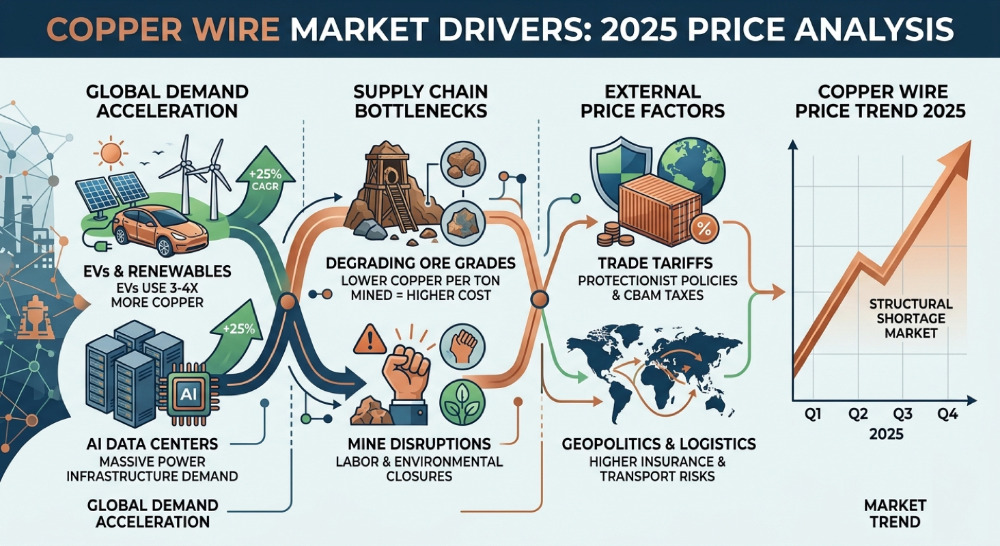
1. Global Copper Supply Is Tightening
Many of the world's largest copper mines are facing declining ore grades, meaning more raw material must be processed to extract the same amount of copper. This increases production costs and slows supply growth.
Major producing regions such as Chile and Peru supply a large share of the world's copper, but environmental regulations, labor disputes, and aging mines have made it difficult to expand production quickly.
In addition, developing a new copper mine can take 10–15 years from discovery to production, limiting the industry's ability to respond to demand increases.
2. AI Data Centers Are Driving Massive Copper Demand
The rapid expansion of artificial intelligence infrastructure is creating new demand for copper.
Modern data centers require enormous electrical capacity to power servers, cooling systems, and networking equipment. As a result, they rely heavily on high‑capacity power cables and electrical distribution systems that use large amounts of copper.
As global technology companies continue investing in AI infrastructure and cloud computing, demand for copper wiring is expected to grow significantly.
3. Electric Vehicles and Renewable Energy
The global transition toward electrification is another major driver of copper consumption.
Electric vehicles typically require three to four times more copper than traditional gasoline vehicles because of electric motors, battery systems, charging infrastructure, and power electronics.
Renewable energy projects such as solar farms and wind power plants also require large volumes of copper cabling for power transmission and grid connection.
4. Trade Policies and Geopolitical Risks
Global supply chains for metals are increasingly influenced by geopolitical factors.
Tariffs, export restrictions, shipping disruptions, and rising logistics costs can all increase the price of copper in international markets. Environmental policies and carbon regulations in certain regions may also increase production costs for copper suppliers.
These geopolitical and regulatory factors contribute to price volatility in the copper market.
5. Commodity Investment and Market Speculation
Copper is widely traded on global commodity exchanges.
When investors expect strong economic growth or supply shortages, they often increase their positions in copper futures markets. This speculative activity can amplify price movements and increase short‑term price volatility.
Copper Market Outlook
Most industry analysts expect copper demand to continue growing over the next decade.
The expansion of electrification, renewable energy systems, electric vehicles, and AI infrastructure will likely increase copper consumption significantly. However, mining supply may struggle to keep up with this growth, which could keep prices relatively strong in the long term.
FAQ: Copper Wire Prices
Why are copper wire prices increasing in 2025?
Copper wire prices are rising due to limited mining supply, strong demand from AI data centers, electric vehicles, renewable energy infrastructure, and geopolitical factors affecting global trade.
Will copper prices continue to rise?
While short‑term fluctuations are possible, long‑term demand for copper is expected to grow due to electrification and renewable energy development.

- +86-13588204183
- No. 39 Zhiyuan Road, Deqing Economic Development Zone, Huzhou City, Zhejiang Province

Copyright © Zhejiang Huapu Cable Co., Ltd. All Rights Reserved.
 ISO 9001 Cable Manufacturer