
 en
 English
 中文简体
 русский
 Español
 عربى

Copper Extrusion: Applications, Selection Criteria, and Practical Guidance
Content
- What Copper Extrusion Actually Does to the Metal
- From Billet to Finished Profile: Six Steps That Decide the Result
- Continuous Extrusion Versus Conventional Extrusion
- Four Numbers That Decide Acceptance
- Where Extruded Copper Ends Up, Including in Cable
- Buying Extruded Copper Without Overpaying
- Frequently Asked Questions
A switchgear assembler rejects a pallet of extruded copper bar and the reason fits in one line: conductivity 55.6 MS/m against a 57 MS/m minimum, plus a 0.12 mm oversize on the width. The same die had run all week. What changed was the billet soak and the die bearing, and neither shows up on a dimensional drawing.
Copper extrusion sits upstream of almost every copper part a panel builder, connector supplier, or cable plant buys, yet it is usually specified with one line on a purchase order. What follows covers what the process does to the metal, where a continuous line beats a billet press, which numbers decide acceptance, and how extruded copper eventually reaches a finished cable.
What Copper Extrusion Actually Does to the Metal
Copper extrusion is a hot forming process in which a heated copper billet is pushed through a shaped die by a hydraulic ram, forcing the metal to flow into a constant cross-section that matches the die opening.
Copper extrusion: the conversion of a cast or wrought copper billet into a solid or hollow profile by forcing it through a die at 700-900 °C. The process fixes the cross-section, the grain flow, and the temper. It does not change the alloy chemistry.
Three process families cover nearly all production, and they are not interchangeable:
- Direct hot extrusion. A preheated billet in a container is pushed through a flat or porthole die. It handles large solids, hollow busbar, and complex shapes, and delivers a discrete length per billet.
- Indirect and hydrostatic extrusion. The die moves through a stationary billet, or the billet sits inside pressurised fluid. Friction drops and surface quality improves, but section size is limited.
- Continuous extrusion. Copper rod is fed into a rotating wheel groove where friction and deformation generate the heat. The metal leaves the die as an unlimited length, with no billet furnace and no charge welds.
For cable work the third family matters most. A continuous line turns 8-12.5 mm rod into flat wire, strip, or a copper skin pressure-welded onto an aluminium core.
From Billet to Finished Profile: Six Steps That Decide the Result
Most rejects on extruded copper trace back to one of six steps, and four of them happen before the metal touches the die.
- Billet selection. C11000 ETP, C10100 oxygen-free, or C14500 tellurium copper, checked for diameter, length, straightness, and surface. A billet with a porous cast skin carries oxide and gas straight into the profile.
- Heating and soaking. Induction or resistance furnaces lift the billet to 700-900 °C. Through-section uniformity matters more than the setpoint: a cold core raises press load and produces laps.
- Tooling setup. Die, mandrel for hollow sections, container liner. Bearing length sets surface finish and back pressure, and a bearing two tenths too long will slow the line and overheat the profile.
- Pressing. Ram speed and extrusion ratio decide whether the metal flows or tears. Under roughly 10:1 the grain stays coarse; above 100:1 chevron cracking appears at the core.
- Quench and cooling. Water spray behind the die fixes temper and grain size. Cooling rate is the difference between a soft bar that bends and a half-hard bar that springs back in the press brake.
- Descaling and test. Pickling removes oxide, a stretcher sets straightness, and conductivity, tensile, and eddy-current checks close the loop.
The defect nobody photographs is the charge weld. In billet-to-billet extrusion the tail of one billet and the head of the next never fully bond. Operators crop a fixed length after every billet. Crop it short and a weak transverse joint travels downstream, opening months later, usually after bending or during a short-circuit test on a busbar.
Continuous Extrusion Versus Conventional Extrusion
Pick by cross-section and coil weight, not by machine age: continuous lines win on length and consistency, while billet presses win on size and shape complexity.
Conventional billet extrusion
- Feedstock: cut billet, usually 100-300 mm diameter
- Discrete lengths, often 5-30 m per billet
- Large solids, wide busbar, hollow profiles on a mandrel
- Charge welds must be cropped and recorded
- Lower tooling cost for one-off shapes
Continuous extrusion
- Feedstock: copper rod, usually 8-12.5 mm
- Coils from a few hundred kilograms to several tonnes
- Small to medium constant sections: rod, strip, flat wire, cladding
- No billet furnace and no charge welds
- Uniform grain and conductivity along the whole coil
A 250 mm busbar with a 12 mm wall is a billet press job. A 4 x 40 mm flat wire in two-tonne coils is a continuous job. Swapping them buys either a tooling bill or a scrap bin, and the invoice usually arrives six weeks later.
Four Numbers That Decide Acceptance
Conductivity, dimensional tolerance, temper, and surface integrity decide whether a shipment of extruded copper passes inspection or goes back on the truck.
| Property | Usual requirement | How it is verified |
| Conductivity | 57 MS/m minimum for Cu-ETP | Four-terminal resistance or eddy current |
| Width and thickness | +/-0.10 mm commercial, +/-0.05 mm precision | Micrometer at three positions per length |
| Tensile strength | Roughly 250-300 MPa, hard temper | Tensile test on a prepared specimen |
| Surface | No laps, seams, or inclusions deeper than 0.05 mm | Visual check plus macro etch |
| Grain structure | Uniform, no coarse peripheral band | Sectioned macro specimen |
The cheapest test on extruded copper is also the most informative: one resistance reading over a metre tells you within seconds whether the problem started in the billet or in the press.
Where Extruded Copper Ends Up, Including in Cable
Extruded copper appears in switchgear busbar, welded connectors, heat sinks, and the continuously extruded rod that feeds a wire-drawing line, while the conductor inside a finished cable is drawn and stranded rather than extruded.
Busbar and switchgear
Flat and shaped bar in soft or half-hard temper, cut and bent into panel layouts where flatness and edge quality matter as much as conductivity.
Terminals and lugs
Rod machined or forged into connectors. Tellurium copper earns its place when a part needs machinability without losing conductivity.
Conductor feedstock
Continuous rod, plus copper-clad aluminium where a copper skin is pressure-welded onto an aluminium core for weight-sensitive designs.
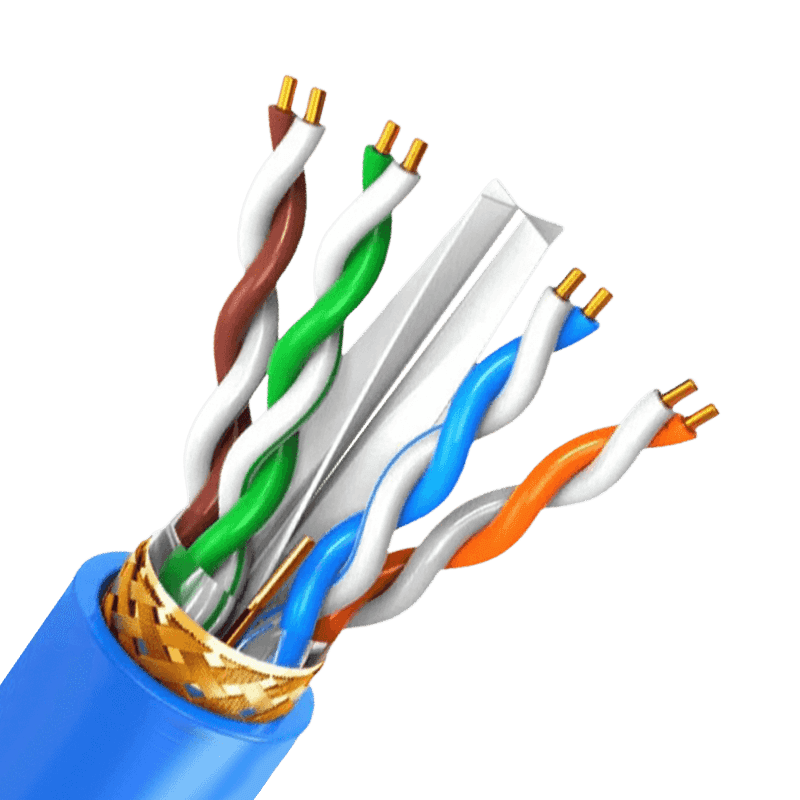
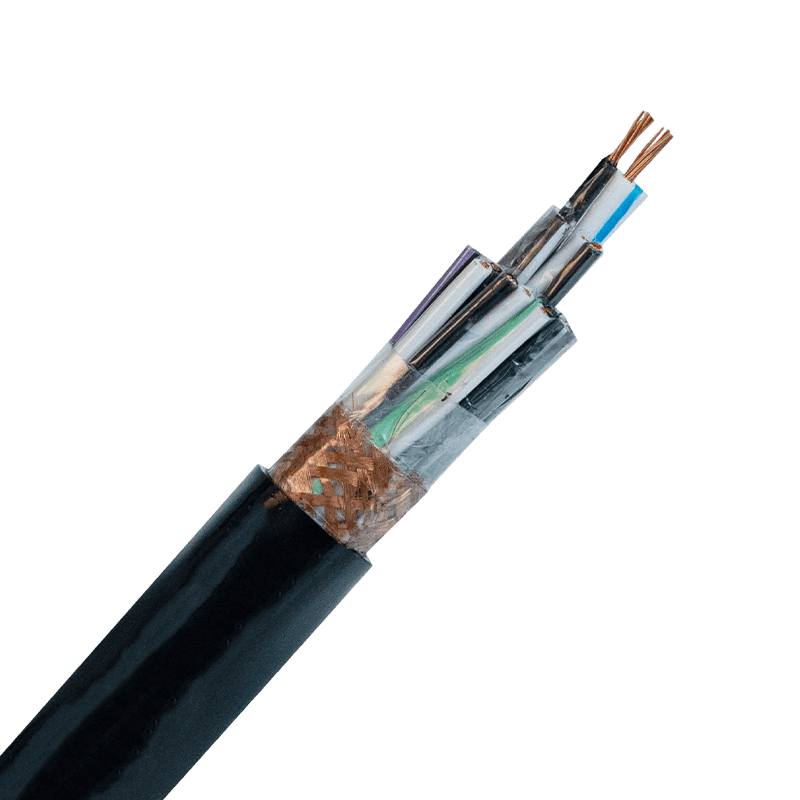
The handover from extrusion to cable making is where most specification errors begin. A cable plant buys rod by diameter and conductivity, draws it down on a multi-wire machine, anneals it, and strands it. The extrusion history is invisible by the time the conductor reaches the insulation line, yet it still sets elongation and bend fatigue life. Incoming rod is checked for surface oxide before it ever reaches a breakdown machine, and the copper drawing stage is treated as part of conductor quality rather than a separate department.
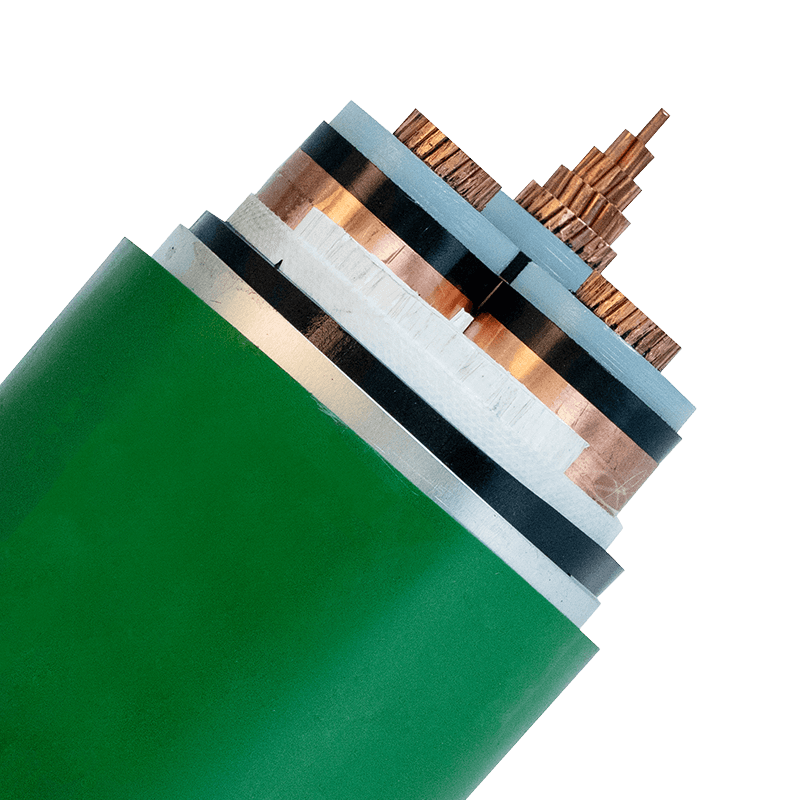
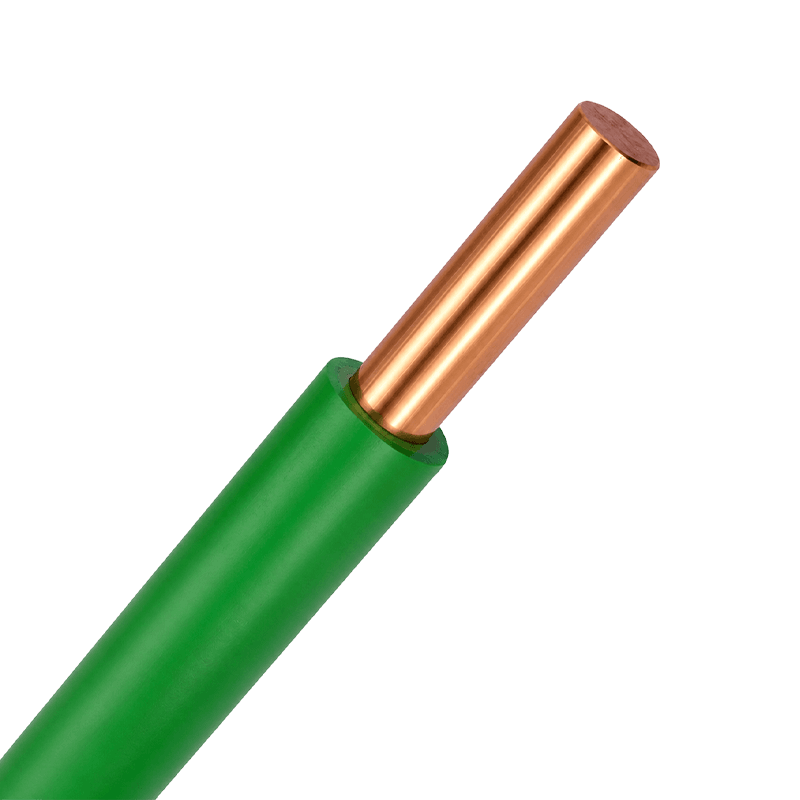 Copper Building Wire Range for Fixed Electrical WiringCopper building wire range with PVC, XLPE and rubber insulation, covering 450/750 V and 0.6/1 kV fixed wiring for buildings.View Product →
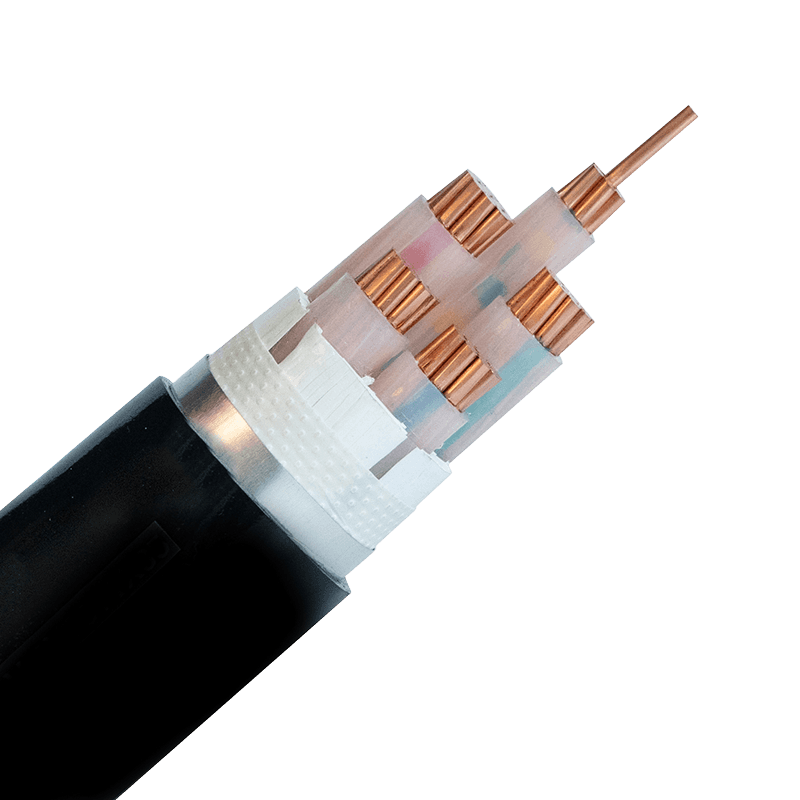 0.6/1 kV Low-Voltage Power Cable RangeCategory covering XLPE/PVC insulated, armoured, halogen-free and fire-resistant 0.6/1 kV power cables for building and equipment supply.View Product →
Conductors produced this way feed the building wire and low-voltage power ranges assembled at the Deqing production base, where rod intake, drawing, stranding, and insulation run as one sequence instead of four handoffs.
Buying Extruded Copper Without Overpaying
Three variables drive most of the price gap between quotations: temper, tolerance class, and how much charge-weld scrap the supplier books against your order.
- Fix the temper on the drawing. Hard temper on a part that will be bent forces extra annealing or produces cracks; soft temper on a part that needs stiffness forces thicker sections.
- Name the tolerance class. Commercial +/-0.10 mm and precision +/-0.05 mm are different products with different die costs and different yield on your cutting plan.
- Ask for data per heat, not per shipment. One conductivity certificate covering a month of production says nothing about the billet that ran on the night shift.
- Agree the crop length in writing. Charge-weld cropping is real material loss. If it is not priced openly, it is priced invisibly.
- Match ordered lengths to the cutting plan. Bar arrives in 3 m or 6 m lengths, and every offcut is scrap valued at copper prices.
Copper content is typically 60-80 % of the piece price. A quotation showing one blended number, with no separation between metal basis and conversion cost, hides where the risk sits, and that risk moves to the buyer the moment the metal market moves.
Frequently Asked Questions
Is copper extrusion the same as copper drawing?
No. Extrusion forms a profile from a heated billet or rod and sets the cross-section; drawing pulls existing rod through a die at room temperature to reduce diameter and refine the surface. Cable conductors are drawn, busbars and complex shapes are extruded, and many parts are extruded first and then drawn to final temper.
Can copper be extruded cold?
Only in narrow cases. Cold extrusion works for small symmetrical parts and for some cladding routes, but commercial copper profiles are hot extruded at 700-900 °C because flow stress at room temperature makes economical reduction ratios impractical.
Why do extruded copper profiles crack at the edges?
Edge and centre cracks usually point to an excessive extrusion ratio, an under-soaked billet, or a die bearing that is too short. The surface moves faster than the core, tears, and the crack follows the grain boundary. Slower ram speed and a longer soak cure most cases.
Which extrusion process matters most to a cable plant?
Continuous extrusion, because it delivers rod, flat wire, and copper-clad aluminium in long coils without charge welds. Billet extrusion matters more to panel builders and connector manufacturers buying bar and custom shapes.
Specify the process, the temper, and the test method together. Any one of them alone leaves the acceptance decision to whoever opens the crate.

- +86-13588204183
- No. 39 Zhiyuan Road, Deqing Economic Development Zone, Huzhou City, Zhejiang Province

Copyright © Zhejiang Huapu Cable Co., Ltd. All Rights Reserved.
 ISO 9001 Cable Manufacturer