
 en
en English
 中文简体
中文简体 русский
 Español
 عربى
عربى
Grid Upgrades: Policy Momentum and the Copper vs Aluminium Conductor Decision
Content
- Policy Momentum Is Now Measurable as Mandated Planning, Not Pilot Projects
- Aluminium Carries 61 Percent of Copper Conductivity, and That Ratio Drives Everything Else
- The Cost Gap Is Roughly Three to One on Bare Conductor, and Much Narrower on Insulated Cable
- The Standard Usually Settles the Metal Choice Before the Buyer Does
- Aluminium Wins Span Length and Cost, Copper Wins Terminations and Hostile Environments
- Freeze the Conductor Before the Tower and Termination Design Freezes
- Frequently Asked Questions
Reconductoring a 132 kV corridor used to be a decade-long argument about permits. In 2026 it is increasingly a procurement decision. During 2025 and 2026, nine US states advanced legislation requiring utilities to evaluate grid-enhancing technologies, the European Union kept working through a grid action plan worth hundreds of billions of euros, and interconnection queues in several markets began to clear. None of that builds a metre of line, but all of it turns into conductor orders.
What follows is a practical read on that decision: what the policy shift changes, how copper and aluminium behave as grid conductors, where the cost gap really sits, and which standard ends up making the choice for you.
Policy Momentum Is Now Measurable as Mandated Planning, Not Pilot Projects
Grid upgrade policy momentum is best measured by what utilities are now required to evaluate, and that list grew faster in 2025 and 2026 than at any point in the previous decade.
In the United States, nine states advanced grid-enhancing technology legislation during the 2025 sessions, among them Utah, Indiana, New Mexico, South Carolina, Ohio, Oregon, Louisiana, Connecticut and Delaware. The instruments differ, but the mechanism is the same: transmission planners must show that they considered advanced conductors, dynamic line ratings or comparable technologies before a conventional rebuild is approved. A planning requirement sounds soft until it changes the default answer from a new right-of-way to reconductoring an existing one.
The pattern repeats elsewhere. The EU grid action plan targets roughly EUR 584 billion of investment by 2030 against distribution networks where many assets are more than forty years old, while Asian markets run ultra-high-voltage and rural distribution programmes in parallel and consume aluminium and copper in volume.
Three things follow for anyone buying conductor. Reconductoring dominates the pipeline, and reconductoring is a conductor decision before it is a civil one. Planning mandates push specifications toward advanced conductor types, which shifts the mix of aluminium alloy, aluminium-clad steel and composite core. And capacity added inside an existing right-of-way does not wait on a permitting clock.
Aluminium Carries 61 Percent of Copper Conductivity, and That Ratio Drives Everything Else
Electrical-grade aluminium conducts at roughly 61 percent IACS against copper at 100 percent IACS, so an aluminium conductor needs about 1.6 times the cross-sectional area of a copper conductor to deliver the same DC resistance.
The consequences are not symmetric, and the second-order effects are the ones that cause trouble on site.
- Area and mass. For equal resistance, aluminium needs about 1.64 times the cross-section but weighs about half as much, which is why long overhead spans are built on aluminium.
- Sag. Aluminium expands roughly 40 percent more than copper for the same temperature rise, so a like-for-like swap changes clearance and tension behaviour, not just losses.
- Strength. Soft aluminium has low tensile strength, so overhead aluminium is used as alloy strand or reinforced with a steel or composite core.
- Interfaces. Aluminium forms an insulating oxide layer within seconds of exposure and creeps under sustained compression, so aluminium-to-copper joints need bimetallic hardware, oxide inhibitor and a documented re-torque.
| Attribute | Copper | Aluminium |
| Conductivity, IACS | 100 percent, reference | about 61 percent |
| Density, g/cm3 | 8.96 | 2.70 |
| Mass for equal DC resistance | 1.00 | about 0.49 |
| Thermal expansion | lower | roughly 40 percent higher |
| Typical overhead form | rarely specified at transmission level | AAAC, ACSR, ACSS, ACAR |
| Typical insulated form | LV and MV cores, flexible class 5 | LV and MV cores, all-aluminium designs |
| Jointing | compression or brazed | bimetallic splice, inhibitor, re-torque |
| Relative metal price | about three times aluminium | reference |
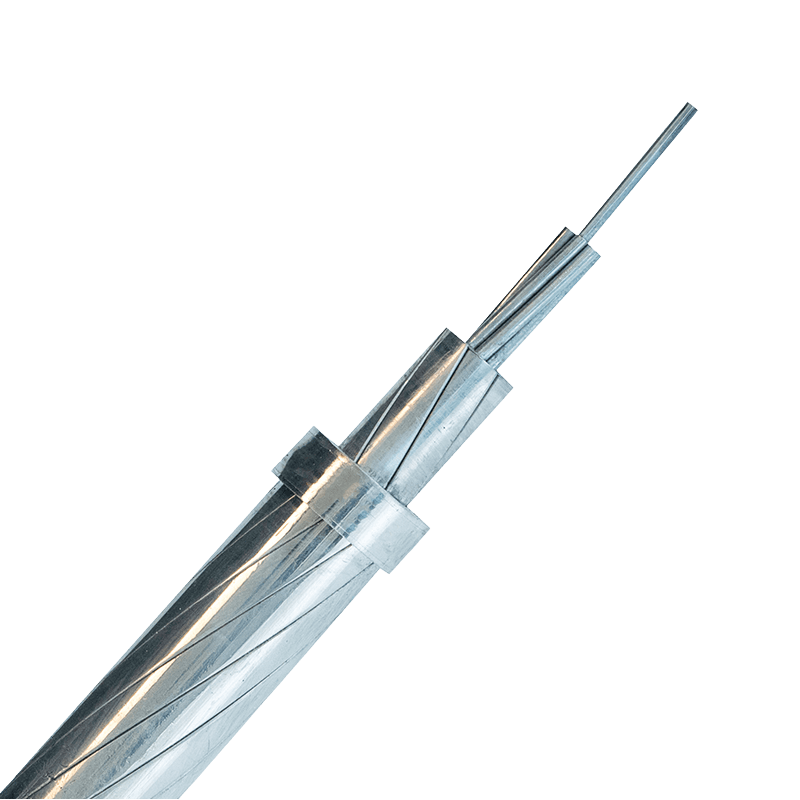 Aluminium Conductors for Overhead Transmission and DistributionCompare AAC, AAAC, ACSR and related aluminium strand options for overhead lines, with conductor types spanning 10–1000 mm².View Product →
Overhead work usually arrives as bare aluminium or aluminium alloy strand, where strand configuration and temper compliance matter more than the headline price. The same conductor question appears on the insulated side, and our comparison of copper versus aluminium wiring trade-offs covers that part in detail.
The Cost Gap Is Roughly Three to One on Bare Conductor, and Much Narrower on Insulated Cable
Per tonne, copper has traded at roughly three times the aluminium price through 2025 and 2026, but the gap per unit of delivered ampacity shrinks sharply once insulation, screening and sheathing are added.
Cost index per unit of current-carrying capability, bare aluminium overhead = 100
On a 12/20 kV three-core cable, the conductor is a modest share of the finished price, so an aluminium core costing roughly a third as much per tonne produces a cable that is perhaps 30 to 40 percent cheaper overall, not 70 percent. The overhead case is far more sensitive, because there the conductor is essentially the whole product.
Trade measures add a second layer. Through 2025 and 2026, steel, aluminium and copper products all carried elevated tariff exposure in the United States, with the aluminium rate rising sharply during 2025 and copper products drawn into scope over the same period. The exposure is asymmetric: aluminium is the more tariff-sensitive input in North America, while copper is the more import-dependent input across Europe and parts of Asia. Two projects with the same drawing set can therefore reach different economic answers in different markets. Scrap value belongs in the same calculation, because copper is worth roughly three times as much per tonne at the yard, which makes bare copper overhead conductor a theft target in some regions and adds security and replacement cost to the whole-life number.
The Standard Usually Settles the Metal Choice Before the Buyer Does
For most grid projects the applicable standard and the utility specification fix the conductor material, so the useful question is not which metal is better but which one is permitted on that line.
| Application | Governing standard | Conductor normally specified |
| Overhead distribution and transmission | IEC 61089, ASTM B232, EN 50182 | AAAC, ACSR, ACSS, ACAR |
| Low voltage power cable, 0.6/1 kV | IEC 60502-1 | Class 2 copper or aluminium |
| Medium voltage cable, 6 kV to 30 kV | IEC 60502-2 | Class 2 copper or aluminium |
| High voltage cable, 30 kV to 150 kV | IEC 60840 | Project specific, copper or aluminium |
| Conductor classes | IEC 60228 | Class 1, 2, 5 and 6 |
| Flexible equipment cable | IEC 60228 class 5 | Copper, often tinned |
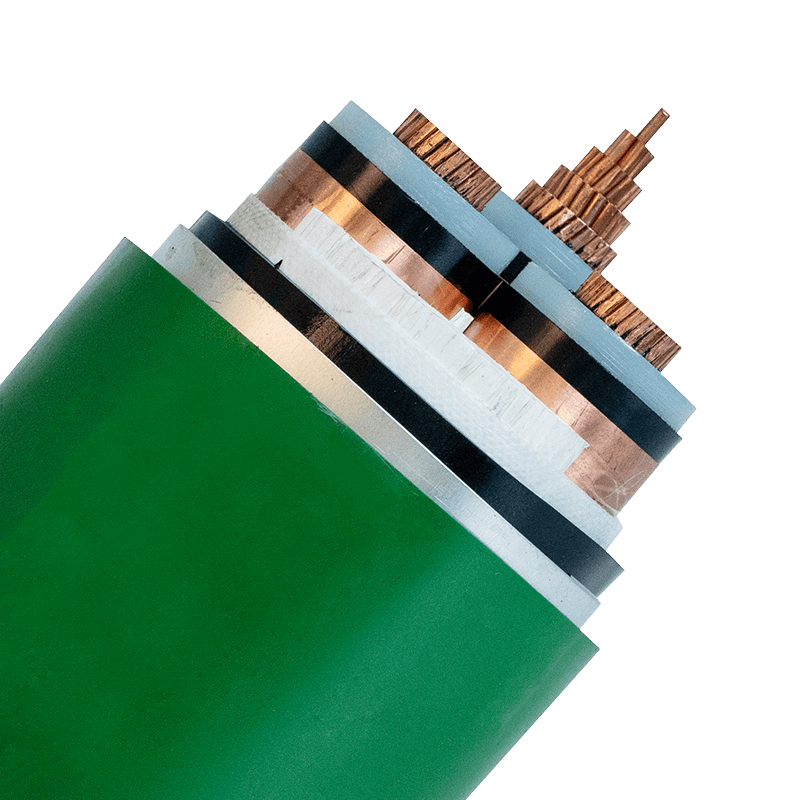 Medium-Voltage XLPE Power Cables up to 26/35 kVReview 3.6/6–26/35 kV XLPE cable options by voltage rating, conductor material, armoring, core count and cross-section for distribution networks.View Product →
Where aluminium is permitted in insulated cable, two adjustments appear in almost every design: the cross-section steps up by one or two standard sizes for the same current, and the termination schedule changes to bimetallic lugs with inhibitor compound. Neither is difficult, but both have to be in the drawing set before the cable is ordered.
Aluminium Wins Span Length and Cost, Copper Wins Terminations and Hostile Environments
Aluminium is the default for long overhead spans and cost-driven distribution, while copper stays the safer choice at terminations, in confined switchgear, in saline or sulphide environments and in flexible cable.
Specify aluminium when
- Span length and tower loading drive the design.
- An existing right-of-way is reconductored with a lighter conductor.
- Rural feeders are long and load density is low.
- Large cross-section MV or LV cable has duct space available.
Specify copper when
- Terminations, link boxes and cramped switchgear are involved.
- The route is coastal, marine, chemical or sulphide bearing.
- Flexible class 5 or class 6 cable is needed for machinery or charging equipment.
- Runs are short enough that resistance losses dominate whole-life cost.
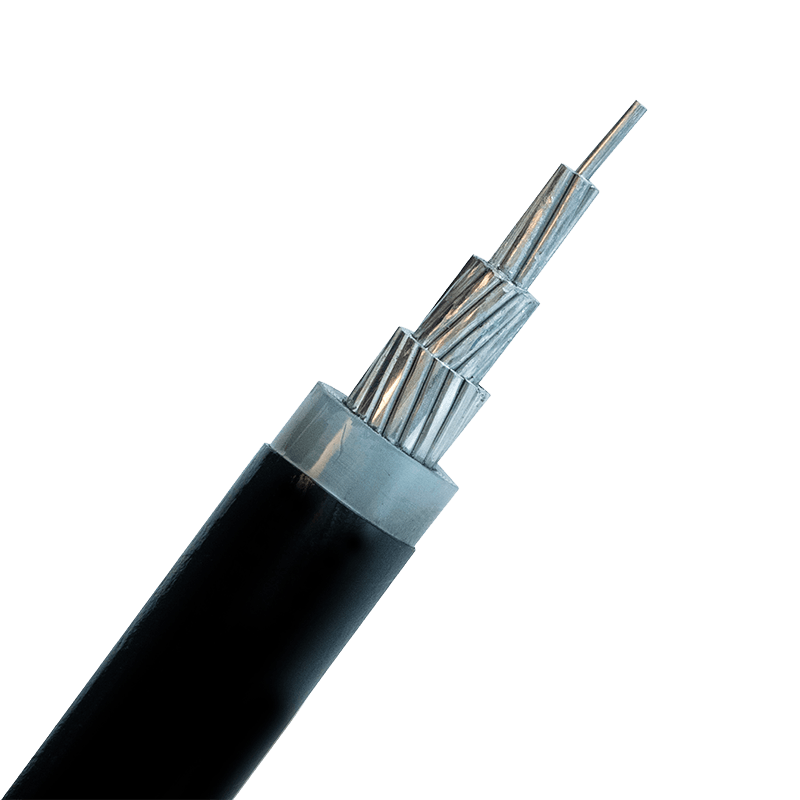 Aerial Insulated Cables for Medium- and Low-Voltage Overhead LinesCompare 1–35 kV overhead insulated cables with aluminium conductors, XLPE or HDPE insulation, and single-core or bundled ABC configurations.View Product →
The interface is where most field problems begin. A bolted aluminium-to-copper joint needs a bimetallic plate or transition splice, abrasive cleaning to remove oxide, inhibitor compound and a re-torque schedule tied to the first thermal cycles. On utility reconductoring and smart grid and distribution upgrade programmes, that procedure is normally written into the method statement rather than left to the installation crew.
Freeze the Conductor Before the Tower and Termination Design Freezes
The most expensive mistake in a grid upgrade is changing conductor material after the structure and termination design are fixed, because the metal is the cheapest part of that change.
Fix the ampacity target
State the continuous and emergency rating at the design ambient temperature before anyone discusses metal. Conductor choice is downstream of that number.
Test the existing structure
Tower loading, sag margin, clearance and foundation capacity decide whether a lighter aluminium conductor is a shortcut or a trap.
Compare landed cost per amp-kilometre
Metal price, tariff, freight, connector hardware and installation labour belong in one comparison, at the rating the line can really carry.
Freeze the termination design with the conductor
Bimetallic hardware, inhibitor compound, torque value and re-torque interval should be specified in the same package as the cable.
Confirm the supply path
Check the standard size range, strand configuration, mill lead time and whether the specification allows an equivalent alloy before the tender closes.
Frequently Asked Questions
Is aluminium a direct substitute for copper in grid conductors?
For bare overhead conductor, usually yes, provided the structure can carry the larger diameter and the sag change is checked. For insulated cable the answer is more conditional: aluminium is permitted by most low and medium voltage standards, but it needs a larger cross-section for the same current and bimetallic terminations.
Why do utilities still specify copper for medium voltage cable?
Because at medium voltage the core is a modest share of the finished cable price, while terminations, joints and installation labour are not. Copper's higher conductivity allows a smaller cross-section in the same duct or switchgear compartment, and it removes the bimetallic interface from cable trenches that are humid and hard to inspect.
How much capacity can reconductoring add without new towers?
Typically 1.5 to 2 times the original rating with advanced conductors, and less where the existing structure limits tension or ambient temperature is high. The gain comes from higher allowable operating temperature, lower sag and a higher strength-to-weight ratio, so the tower and foundation stay as they are.
How do copper and aluminium tariffs change conductor selection in 2026?
They change relative landed cost rather than engineering limits. Where the standard fixes the material, the practical response is to lock conductor orders earlier, confirm whether the specification accepts an equivalent aluminium alloy or a compacted strand, and price termination hardware in the same exercise as the conductor.

- +86-13588204183
- No. 39 Zhiyuan Road, Deqing Economic Development Zone, Huzhou City, Zhejiang Province

Copyright © Zhejiang Huapu Cable Co., Ltd. All Rights Reserved.
 ISO 9001 Cable Manufacturer