
 en
en English
 中文简体
中文简体 русский
 Español
 عربى
عربى
XLPE Insulated Power Cable for Data Centers: Selection Guide
Content
Global data center electricity consumption is projected to nearly double—from 448 TWh in 2025 to 980 TWh by 2030, according to Gartner. Behind every rack, every UPS system, and every cooling unit lies the same unglamorous truth: the power cable is the circulatory system of the entire facility. Choose the wrong one, and the consequences range from premature insulation failure to catastrophic downtime. XLPE (Cross-Linked Polyethylene) insulated cables have become the default specification for serious data center builds—but understanding why, and how to select correctly, separates a reliable installation from a liability.
Why Data Centers Demand Better Power Cables
Data centers are not ordinary commercial buildings. Power density per rack has climbed from 5–7 kW a decade ago to 20–40 kW in modern AI-compute deployments. Cables run continuously at or near rated capacity, often in tightly bundled trays with restricted airflow. The thermal environment is punishing, and any insulation that degrades under heat accelerates failure across the entire bundle.
Traditional PVC-insulated cables have a continuous operating temperature ceiling of 70°C. That headroom disappears quickly in high-density cable trays. XLPE insulation raises the continuous operating limit to 90°C, with short-circuit tolerance up to 250°C—margins that genuinely matter when cables share conduit with dozens of neighbors.
Beyond heat, data centers also demand low-smoke, low-toxicity behavior in fire conditions. A PVC cable burning in an enclosed space releases dense black smoke and hydrogen chloride gas—both immediately dangerous to personnel and corrosive to the servers themselves. This makes fire-performance specification inseparable from cable selection in any serious facility.
What Makes XLPE the Right Choice
The cross-linking process transforms the molecular structure of polyethylene from thermoplastic to thermoset. The practical result is a set of properties that stack up well against every competing insulation material for power applications:
- Higher current-carrying capacity. The elevated temperature ceiling means the same conductor cross-section can carry more current without triggering thermal derating. For a given load, engineers can sometimes step down conductor size—reducing cable weight and cost.
- Excellent dielectric properties. XLPE exhibits a low dielectric constant and low dielectric loss, which translates to stable voltage transmission and reduced risk of insulation breakdown even under sustained high-voltage stress.
- Chemical and moisture resistance. Data center environments include cleaning agents, coolant leaks, and humidity fluctuations. XLPE resists acids, alkalis, oils, and moisture ingress—properties that extend service life well beyond that of standard thermoplastic insulations.
- Mechanical durability. The thermoset structure resists deformation under sustained load, UV exposure, and abrasion. Cables routed through cable trays, conduit bends, and floor cutouts maintain their integrity without the creep or cold-flow issues seen in some softer insulation compounds.
For data center applications, these properties combine to produce a cable that performs reliably across a 30–40 year installation lifetime—relevant when the civil structure of a facility often outlasts multiple generations of IT equipment.
Key Selection Criteria for Data Center Scenarios
Selecting XLPE cable for a data center is not a single decision—it varies by position in the power chain. Three variables drive the specification: voltage level, fire performance requirement, and certification standard.
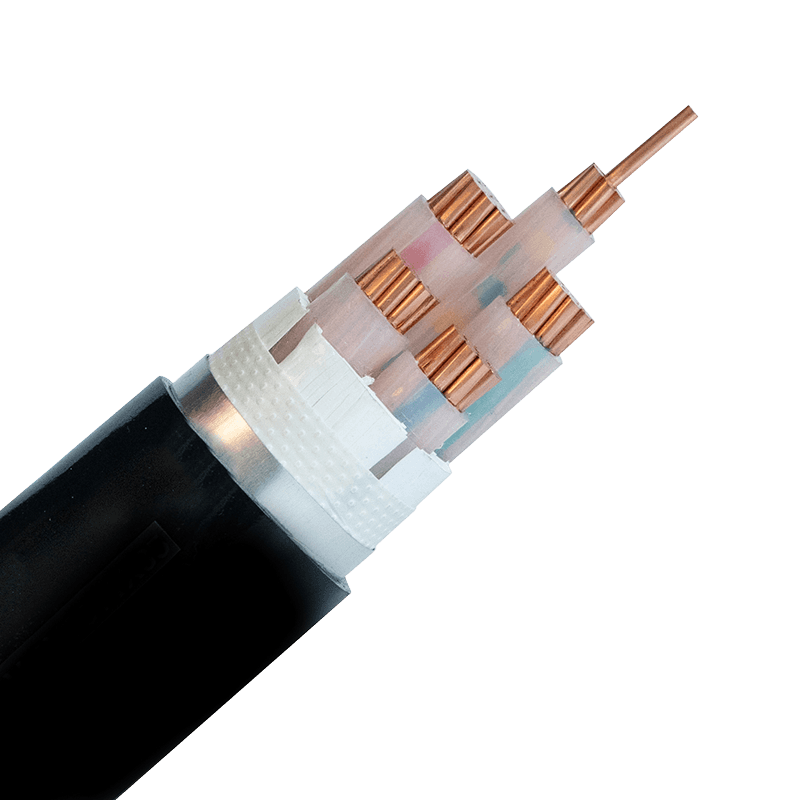
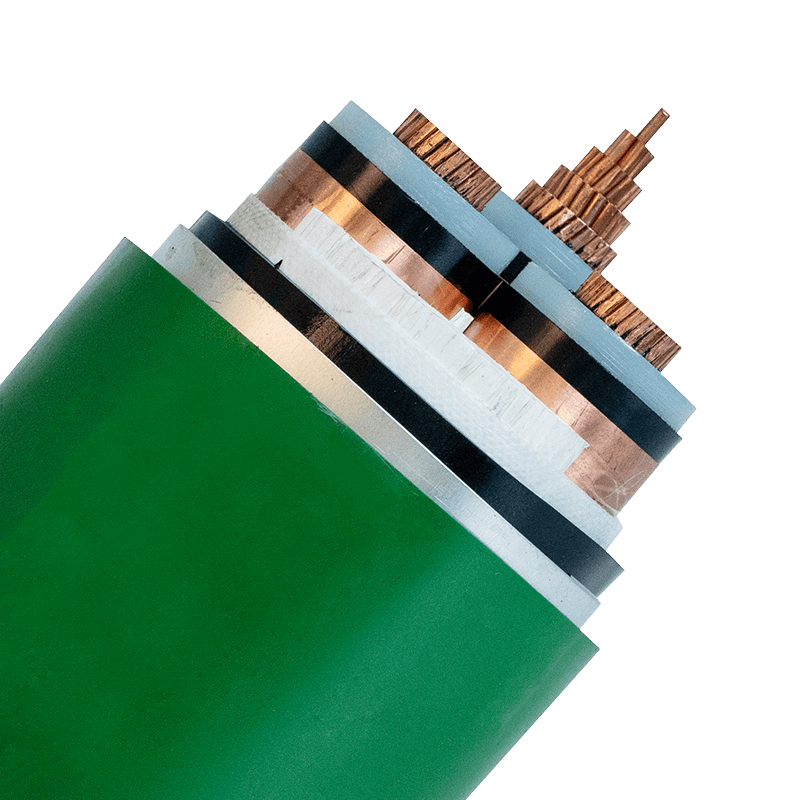
Voltage level. The utility feed into a large facility typically arrives at medium voltage (3.6/6 kV up to 26/35 kV), steps down through transformers, and distributes at low voltage (0.6/1 kV) to UPS systems, PDUs, and floor equipment. medium-voltage XLPE power cables (3.6/6kV–26/35kV) are used for the incoming feed and primary distribution ring, while low-voltage power cables for data center distribution panels cover everything from the transformer secondary through to the rack-level PDU.
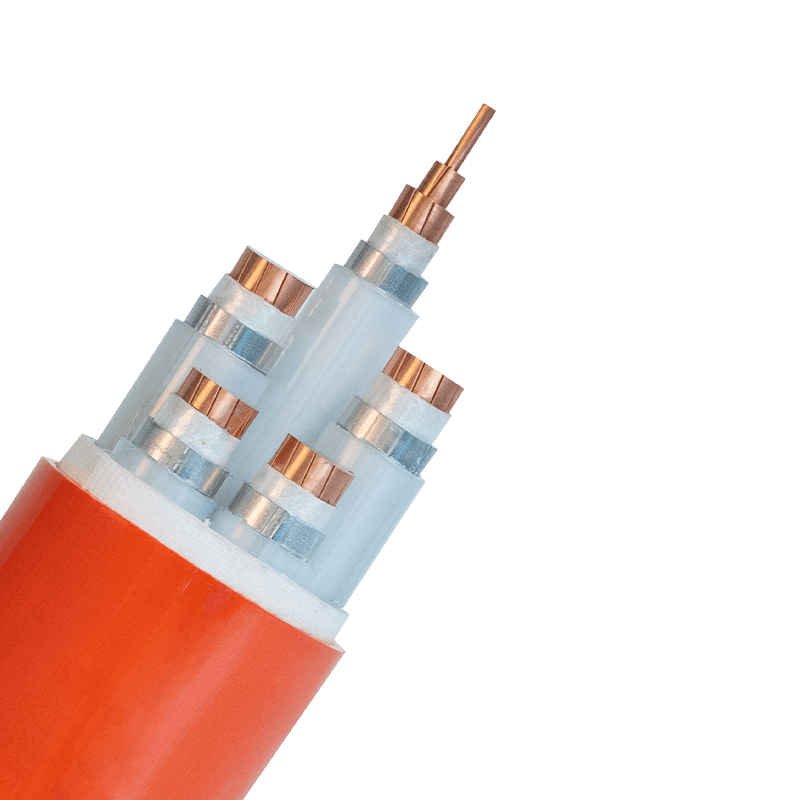
Fire performance. Most Tier III and Tier IV data centers now mandate Low Smoke Zero Halogen (LSZH) sheathing, particularly in raised-floor plenums, cable corridors, and any space classified as a confined route. LSZH compounds limit smoke obscuration to under 40% and halogen gas emission to below 0.5% hydrogen chloride—critical for both personnel safety and equipment protection. flame-retardant and high-temperature resistant cables combining XLPE insulation with LSZH outer sheathing satisfy both the thermal and fire-safety requirements simultaneously.
Certification standards. For international data center projects, IEC 60502 governs the construction and testing of XLPE power cables from 1 kV to 30 kV. Domestic Chinese installations follow GB/T 12706. Facilities with global procurement require both, along with CCC (China Compulsory Certification) for market entry. Confirm that the supplier holds the relevant certifications before finalizing specifications—not all XLPE cables on the market are manufactured to the same quality controls.
Practical Application: From UPS to Distribution
Three cable positions account for the majority of XLPE specification decisions in a typical data center build:
- Utility entry and MV switchgear feed. The run from the substation or utility demarcation point to the on-site MV switchgear requires medium-voltage XLPE cable, typically armored (SWA or AWA) for mechanical protection in underground or trench routing. Voltage rating, short-circuit current capacity, and soil thermal resistivity all feed into the final sizing calculation.
- Transformer secondary to UPS and main LV switchboard. This section carries the highest continuous current in the facility. Cable sizing must account for derating due to grouping in trays—often the most under-specified segment in value-engineered projects. Low-voltage XLPE with LSZH sheath is standard here; conductor cross-sections commonly range from 95 mm² to 400 mm² for large facilities.
- PDU feeds and final branch circuits. Runs from the LV switchboard to individual PDUs and UPS output distribution panels are shorter but numerous. Flexibility, bend radius, and ease of termination become practical priorities alongside electrical performance. Specifying consistent XLPE/LSZH construction throughout—rather than mixing cable types—simplifies maintenance and replacement planning over the facility's operating life.
For teams specifying cables across all three positions, a supplier with a complete range covering data center and communication infrastructure solutions—from MV down to control and instrumentation cables—reduces coordination risk and ensures consistent documentation for commissioning and handover.
The bottom line for specifiers: XLPE insulation is not a premium option for data centers—it is the minimum sensible specification. The variables that matter are voltage class, fire performance class, conductor material (copper for critical circuits, aluminum where weight and cost are priorities), and the supply chain's ability to demonstrate certified, traceable production. Get those four right, and the cable infrastructure will outlast multiple generations of the equipment it powers.

- +86-13588204183
- No. 39 Zhiyuan Road, Deqing Economic Development Zone, Huzhou City, Zhejiang Province

Copyright © Zhejiang Huapu Cable Co., Ltd. All Rights Reserved.
 ISO 9001 Cable Manufacturer