
 en
en English
 中文简体
中文简体 русский
 Español
 عربى
عربى
IEC 60331 Fire-Resistant Cables for Data Centers: A Selection Guide
Content
Why IEC 60331 Matters More in Data Centers Than Elsewhere
A single burned-through cable in an office building is a maintenance ticket. The same failure in a data center can take down a rack, a row, or an entire hall of compute. That difference is why circuit integrity during fire — not just resistance to catching fire — is the standard data center designers actually care about.
a dedicated technical breakdown of fire-resistant cable requirements for data center circuits lays out why emergency shutdown systems, fire suppression triggers, and backup power feeds all depend on cables that keep conducting current while everything around them is burning. IEC 60331 exists specifically to verify that capability, not to certify that a cable resists ignition in the first place.
Flame-Retardant vs. Fire-Resistant: Two Different Guarantees
These two terms get used interchangeably in procurement documents, and that mix-up causes real selection errors. A flame-retardant cable slows the spread of fire along a cable run — it limits how far flames travel and how much smoke and toxic gas the sheath releases. It says nothing about whether the cable still carries current once flames reach it.
A fire-resistant cable, by contrast, is built to maintain circuit integrity for a defined period under direct flame exposure — typically 90 to 180 minutes depending on the test class. For data center life-safety circuits (fire alarms, emergency lighting, smoke extraction), fire-resistant is the requirement. Flame-retardant is a baseline expectation for general power and data cabling, not a substitute.
Products marketed under our flame-retardant and high-temperature resistant cable range are built for the first category — general circuits where flame spread and smoke output are the risk to manage, not sustained circuit function during active fire.
What IEC 60331 Actually Tests
IEC 60331 covers several parts, each matched to a cable type and diameter. IEC 60331-1 applies to cables over 20mm in diameter with rated voltage up to 0.6/1.0 kV, tested with flame plus mechanical shock at a minimum of 830°C. IEC 60331-2 covers the same voltage class but for cables under 20mm. IEC 60331-23 is specific to data cables, and IEC 60331-25 covers optical fibre.
The test procedure is direct: a cable sample roughly 1200mm long is mounted over a gas burner, energized at its rated voltage, and exposed to flame for a fixed duration — commonly 90 minutes. The sample passes if it maintains continuity throughout, without short-circuiting or open-circuiting. This is a pass/fail circuit test, not a grading scale, which is why cable datasheets either cite IEC 60331 compliance directly or they don't.
| Standard | Cable diameter | Application |
|---|---|---|
| IEC 60331-1 | Over 20mm | Power cables, open mounting |
| IEC 60331-2 | Under 20mm | Power cables, open mounting |
| IEC 60331-23 | N/A | Electric data cables |
| IEC 60331-25 | N/A | Optical fibre cables |
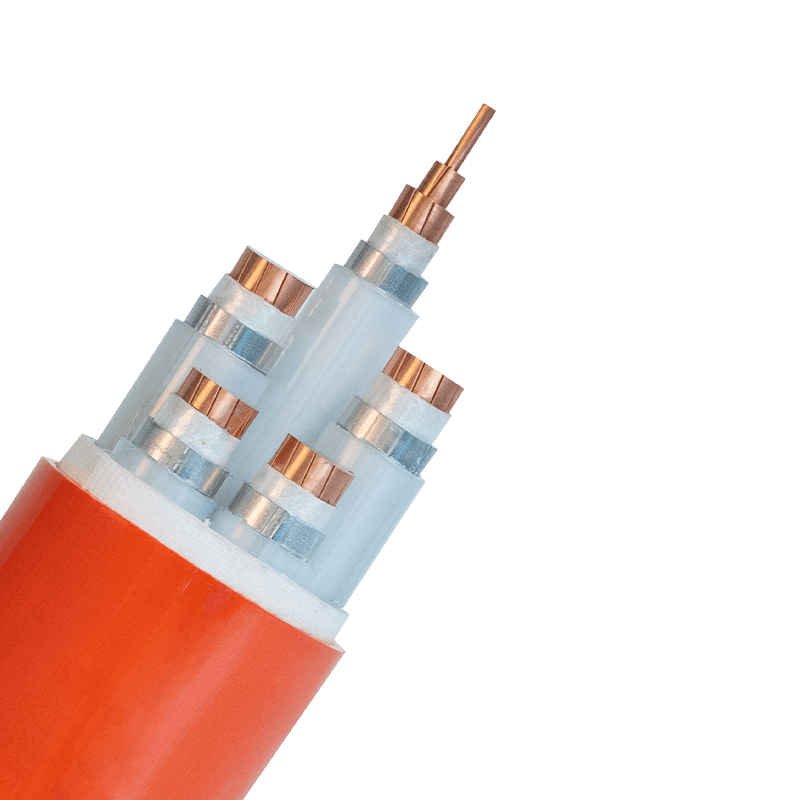
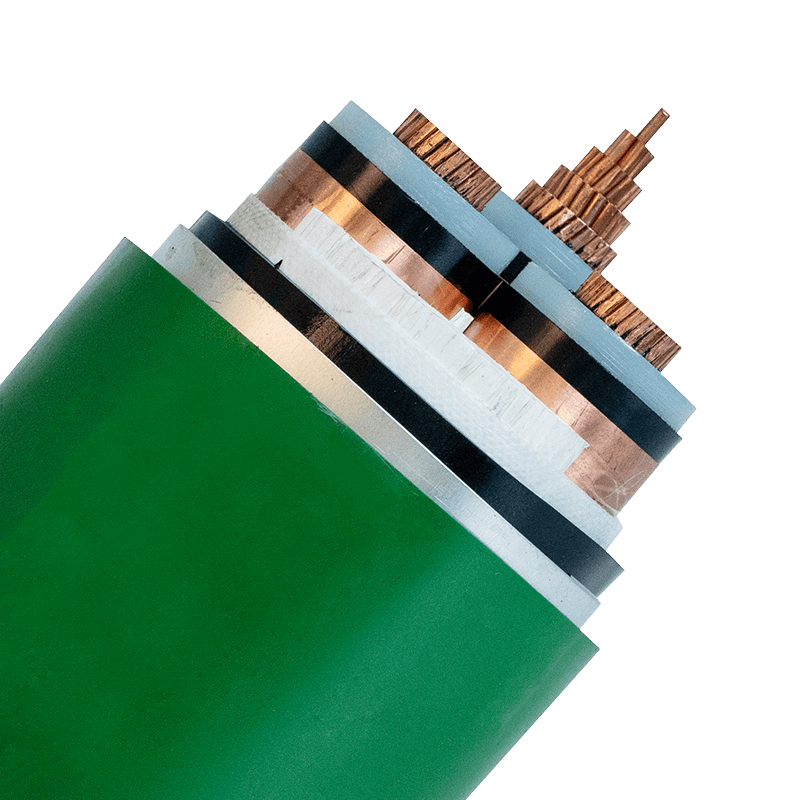
For critical infrastructure circuits, some specifiers go further and combine IEC 60331 compliance with mineral insulation, since magnesium oxide insulation and copper sheathing physically cannot support combustion. mineral-insulated fire-resistant cable options for critical circuits are the usual reference point when a project spec demands the highest available integrity rating rather than the minimum compliant one.
High-Temperature Resistance: The Overlooked Second Layer
Fire testing simulates a short, extreme event. But data centers also run cables through environments that are hot on an ordinary Tuesday — dense cable trays with poor airflow, proximity to UPS units, rooftop conduit runs in warm climates. Standard PVC-insulated cable degrades faster under continuous heat load than most people expect; insulation resistance drops, and the cable's rated lifespan shrinks well below its design figure.
High-temperature resistant cable addresses this separately from fire resistance. It's rated for continuous operation at elevated ambient temperatures — often 90°C to 105°C conductor temperature — without accelerated insulation breakdown. A cable can be high-temperature resistant without being fire-resistant, and vice versa. Specifying one does not automatically cover the other, which is why data center cable schedules typically list both ratings separately rather than assuming a single "heat-rated" label covers the requirement.
Selection Checklist for Data Center Cabling
Before finalizing a cable schedule, match the circuit function to the correct rating rather than defaulting to the highest-spec option everywhere — over-specifying adds cost without adding protection where it isn't needed.
- Life-safety and emergency circuits: require IEC 60331 fire-resistant cable with a defined integrity duration
- General power distribution in dense cable trays: prioritize flame-retardant, low-smoke halogen-free construction
- Runs near UPS, transformers, or rooftop conduit: confirm continuous high-temperature rating, not just fire test compliance
- Data and control circuits tied to fire detection systems: check IEC 60331-23 compliance specifically, not the general power-cable standard
For the power distribution layer feeding server rows, XLPE-insulated power cable selection for data center installations covers how insulation choice interacts with these same heat and load considerations at the main feeder level, which is worth reviewing alongside the fire-rating decisions above.

- +86-13588204183
- No. 39 Zhiyuan Road, Deqing Economic Development Zone, Huzhou City, Zhejiang Province

Copyright © Zhejiang Huapu Cable Co., Ltd. All Rights Reserved.
 ISO 9001 Cable Manufacturer