
 en
en English
 中文简体
中文简体 русский
 Español
 عربى
عربى
Electrical Equipment Cables: Types, Materials & Selection Guide
Content
- Not All Cables Are Created Equal — Start Here
- Five Cable Types in This Category — and Their Real-World Jobs
- Conductor and Insulation: The Two Decisions That Shape Everything Else
- Reading the Product Code — Practical Examples
- Shielding: When You Need It and What Type to Specify
- Standards: What to Verify Before You Commit to a Supplier
Not All Cables Are Created Equal — Start Here
A wrong cable choice rarely announces itself at purchase. It shows up six months later as a tripped breaker, a failed sensor loop, or a melted jacket on a production floor. The root cause is almost always the same: the buyer selected by voltage rating alone and ignored the application environment.
Electrical equipment cables are a distinct category from power transmission cables. They connect, control, and signal within devices and installations — household appliances, industrial machinery, automation panels, computer systems — and each sub-type is engineered for a specific job. This guide cuts through the confusion so you can match the right cable to your actual requirements.
Five Cable Types in This Category — and Their Real-World Jobs
The category covers five product families, each with a different structural logic:
| Cable Type | Typical Code | Primary Use | Max Conductor Temp |
|---|---|---|---|
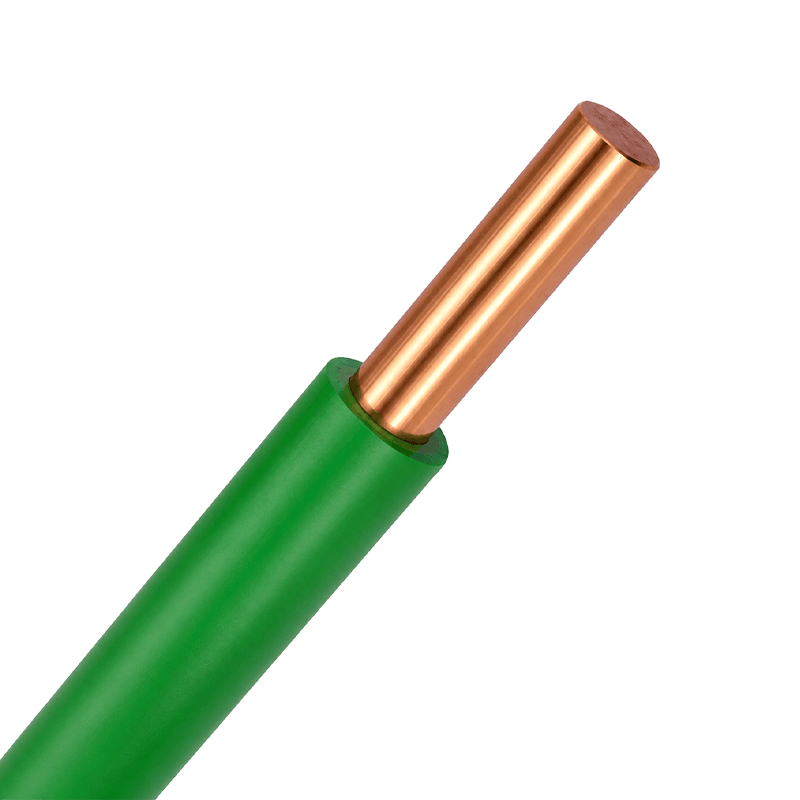
| Building wires for fixed indoor wiring | BV (60227 IEC 01) | Residential and commercial fixed wiring, lighting, outlets | 70°C |
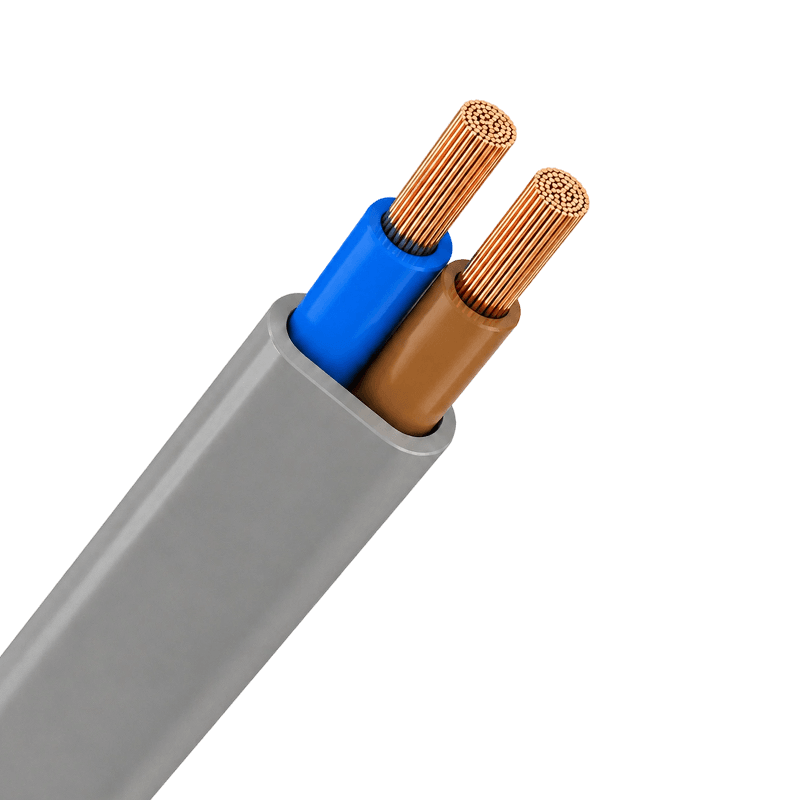
| PVC sheathed wires for flexible connections | RVV | Appliances, security systems, light-duty portable equipment | 70°C |
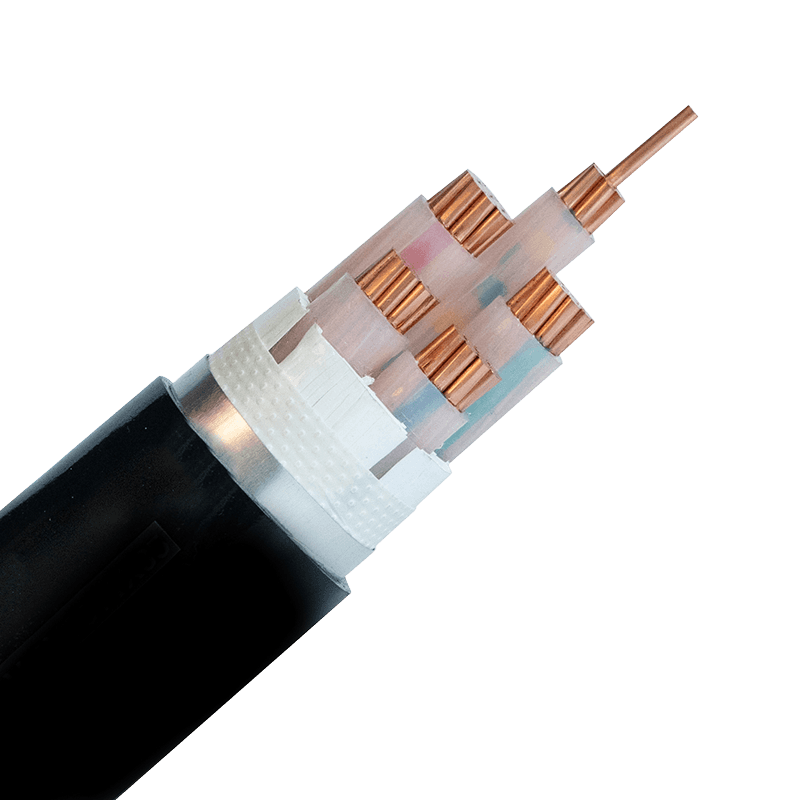
| Plastic-insulated control cables for automation panels | KVV | PLC panels, relay control, motor control circuits | 70°C |
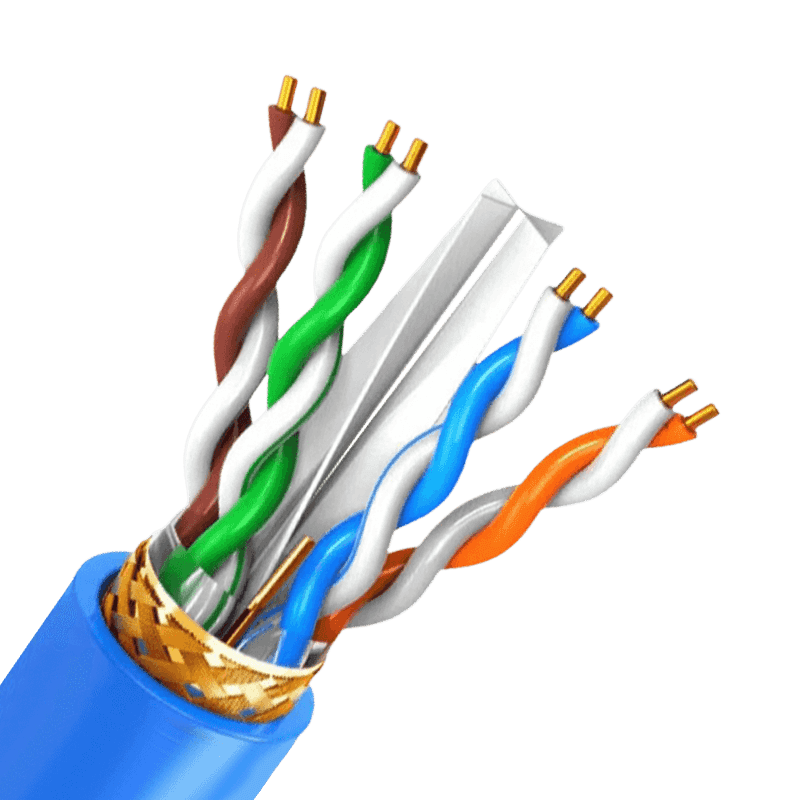
| PE-insulated computer cables for signal transmission | DJYPVPR / DJYP3VP3 | DCS/SCADA systems, instrumentation, EMI-sensitive data loops | Per system spec |
| Rubber-sheathed flexible cables for mobile equipment | YC | Construction tools, portable industrial equipment, outdoor use | Per rubber grade |
The BV building wire — single-core, copper conductor, PVC insulation — is the workhorse of fixed wiring. It bends at 6–12D minimum radius and handles the everyday demands of residential and commercial circuits. The RVV sheathed cable bundles multiple PVC-insulated cores under an outer PVC sheath, making it the standard choice wherever a multi-conductor flexible connection is needed without special environmental demands.
Conductor and Insulation: The Two Decisions That Shape Everything Else
Copper is the conductor of choice across this entire category. For electrical equipment cables used in control, instrumentation, and building wiring, the combination of high conductivity (~100% IACS), flexibility, and solderability makes aluminum a non-starter. Aluminum conductors are reserved for overhead power lines and large-span transmission — not for equipment wiring where repeated flexing and tight-radius routing are the norm.
Insulation material is where the real differentiation happens. PVC covers the majority of applications: cost-effective, widely available, rated for conductor temperatures up to 70°C, and fully compliant with standard installation environments. Rubber (ethylene propylene or synthetic elastomer) shifts the performance envelope toward mechanical resilience — the YC rubber-sheathed cable uses a Synthetic Elastomer SE4 type sheath precisely because construction and mobile industrial applications subject cables to continuous bending, abrasion, and outdoor exposure that PVC jackets cannot sustain long-term. PE insulation, used in computer cables, adds another dimension: superior dielectric properties that preserve signal integrity in multi-pair instrumentation loops.
Reading the Product Code — Practical Examples
Cable designation codes look cryptic until you understand the system. Two real examples from the product range illustrate it clearly:
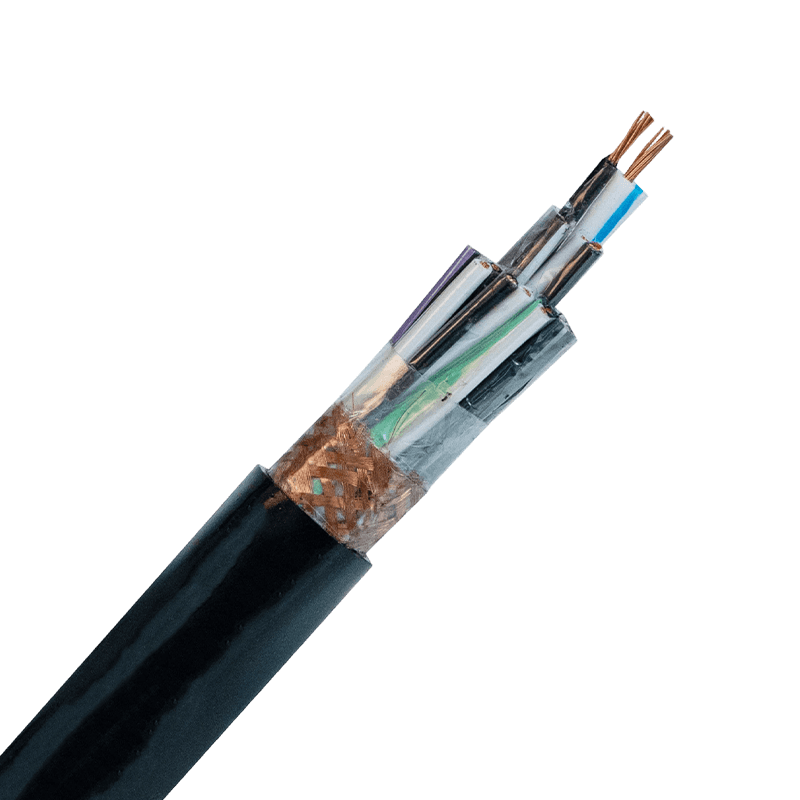
- IA-DJYPVPR 300/500V 12×2×1.5 — Intrinsically safe (IA), PE-insulated, individual bare copper wire screen (YP), overall bare copper wire shield (R), PVC sheath (V), 300/500V rated, 12 twisted pairs, 1.5 mm² conductor cross-section. This is a fully shielded computer cable built for process control environments with high EMI.
- DJYP3VP3 300/500V 8×2×2.5 — Similar structure but uses aluminum-plastic composite tape for both individual pair screening (P3) and overall shielding (P3) instead of bare copper wire. Lower cost in applications where the composite tape shielding is sufficient for the noise environment.
- KVV — Copper conductor, PVC insulation, polypropylene-filled rope, CPP tape banding, PVC sheath. Conductor temperature ceiling: 70°C. Standard plastic-insulated control cable for fixed panel wiring; bending radius 6–12D.
The voltage rating (300/500V for most computer and control cables, 450/750V for BV building wire) tells you the maximum continuous operating voltage. Always confirm your system's nominal voltage against the cable's rated Uo/U pair — the first figure is phase-to-ground, the second is phase-to-phase.
Shielding: When You Need It and What Type to Specify
Control circuits and instrumentation loops running near variable frequency drives, motors, or switching equipment pick up electromagnetic interference that corrupts signal readings and triggers false trips. Shielding is the engineering fix — but not all shield designs perform equally.
Bare copper wire braid shields (as in IA-DJYPVPR) offer higher mechanical durability and better low-frequency coverage. Aluminum-plastic composite tape (as in DJYP3VP3) provides cost-effective high-frequency shielding for less demanding environments. For the most demanding DCS/SCADA installations, individual pair screening plus overall shielding — the approach used in the 12×2×1.5 computer cable — eliminates both inter-pair crosstalk and common-mode interference simultaneously. If your signal cables share trays with power cables, individual pair shielding is not optional; it is the baseline.
Standards: What to Verify Before You Commit to a Supplier
Two standards govern the bulk of this product category. IEC 60227 covers PVC-insulated cables rated up to 450/750V, specifying conductor resistance limits, insulation thickness, voltage test methods, and marking requirements. The BV building wire (sold under the designation 60227 IEC 01) and the RVV sheathed cable both fall under this standard's scope. GB standards — China's national equivalents — align closely with IEC in most parameters but include localized test procedures; for projects requiring GB compliance, ask for GB-certified test reports, not just IEC.
ISO 9001 certification on the manufacturer side confirms process controls are in place, but it is not a product certification. The key documents to request are the product test report and the CCC certificate for cables sold into the Chinese market. For export, confirm which specific IEC part number the product complies with and request the third-party test data to support it. A supplier that hesitates on this is a supplier worth reconsidering.
Selecting the right electrical equipment cables comes down to four questions answered in sequence: What is the application (power, control, signal)? What is the operating environment (temperature, moisture, mechanical stress, EMI)? What conductor cross-section does the load current require? And which standard governs your project? Work through those four in order and the product specification largely writes itself.

- +86-13588204183
- No. 39 Zhiyuan Road, Deqing Economic Development Zone, Huzhou City, Zhejiang Province

Copyright © Zhejiang Huapu Cable Co., Ltd. All Rights Reserved.
 ISO 9001 Cable Manufacturer