
 en
en English
 中文简体
中文简体 русский
 Español
 عربى
عربى
Copper vs. Aluminum Wiring: Pros, Cons, and Best Uses
Content
Introduction
Copper vs aluminum wiring is a common comparison in electrical design because both materials are widely used, but they serve different needs. Copper is known for higher conductivity and compact sizing, while aluminum is lighter and more cost-effective for many large-scale applications. This guide explains the pros and cons of copper wiring and aluminum wiring so readers can choose the right option based on performance, budget, and installation requirements.
1. Electrical Conductivity
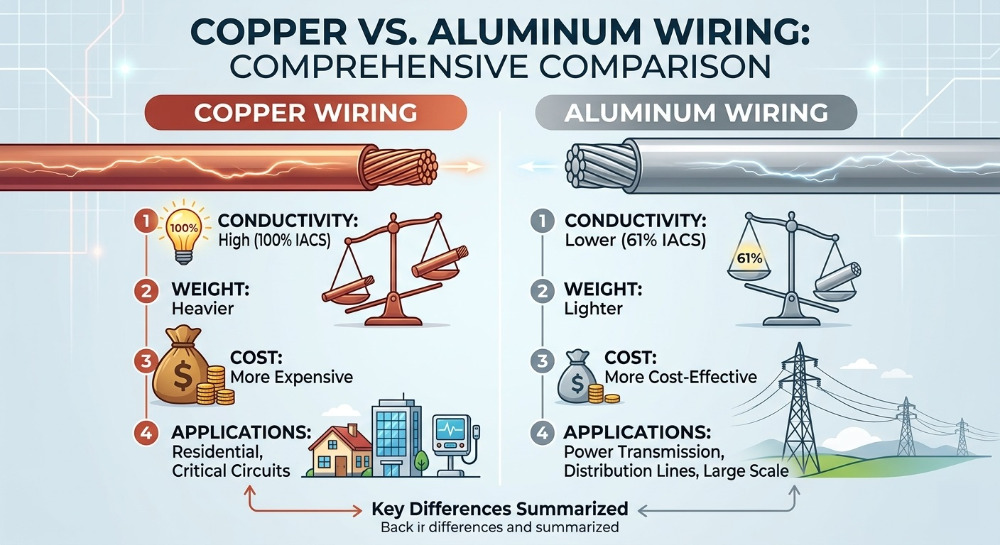
Conductivity is the most important technical difference between copper and aluminum wiring. It is commonly measured against the International Annealed Copper Standard (IACS), where copper is set at 100%.
Copper: Copper has excellent conductivity and can carry more current in a smaller wire size. That makes it a strong choice for residential wiring, commercial buildings, motors, transformers, and other space-sensitive circuits.
Aluminum: Aluminum conducts electricity well, but at about 61% of the conductivity of copper. To carry the same load, aluminum wiring must use a larger cross-sectional area, which can affect conduit fill and installation flexibility.
2. Weight and Installation
Weight matters in transport, support structure design, and installation labor. In this category, aluminum has a major advantage.
Copper: Copper is dense and significantly heavier than aluminum. That extra weight is usually manageable in short building runs, but it becomes a disadvantage in overhead transmission where stronger supports may be needed.
Aluminum: Aluminum is about one-third the density of copper, making it the preferred choice for many overhead power transmission lines and long-span applications. Its lighter weight can reduce structural load and installation cost.
3. Cost Comparison
Budget is often the deciding factor in copper vs aluminum wiring projects.
Copper: Copper is typically more expensive because of raw material price and processing costs. In return, it offers excellent performance in a smaller package and is often preferred where long-term reliability is the priority.
Aluminum: Aluminum is usually the lower-cost option and can create substantial savings in large installations. However, the total project cost should also include connector selection, termination quality, and installation practices designed for aluminum conductors.
4. Safety and Long-Term Performance
Modern aluminum cables can be safe when it is properly designed, terminated, and maintained. The key is using the right devices, torque values, and connectors rated for aluminum.
Copper: Copper is mechanically robust and less prone to connection issues caused by thermal expansion. It is widely used in critical circuits because it performs consistently over time.
Aluminum: Aluminum expands and contracts more than copper as temperature changes, so loose or incompatible terminations can create heat buildup. Properly specified connectors and modern installation methods help reduce this risk.
Quick Comparison Table
|
Feature |
Copper Wiring |
Aluminum Wiring |
|
Conductivity |
Higher (100% IACS) |
Lower (about 61% IACS) |
|
Wire Size |
Smaller for the same current |
Larger for the same current |
|
Weight |
Heavier |
Lighter |
|
Cost |
Higher material cost |
Lower material cost |
|
Common Uses |
Residential wiring, commercial wiring, motors, transformers, critical circuits |
Overhead lines, distribution, long-span and cost-sensitive projects |
Which One Should You Choose?
Copper remains the standard choice for most residential and commercial wiring applications because it offers strong conductivity, compact sizing, and dependable long-term performance.
Aluminum is an excellent option when weight and cost are the main concerns, especially in transmission and distribution projects where larger conductor sizes are acceptable.
For aluminum wiring, proper connectors, compatible devices, and correct installation practices are essential to prevent overheating, arcing, and premature failure.
Frequently Asked Questions
Is aluminum wiring safe?
Yes, modern aluminum wiring can be safe when it is installed with the correct connectors, devices, and torque settings. Older branch-circuit aluminum wiring created problems mainly because of poor connections and incompatible components.
Why is copper preferred in buildings?
Copper is preferred because it carries more current in a smaller size and is easier to terminate in many building applications. It is also less sensitive to connection issues caused by thermal expansion.
Where is aluminum wiring used most often?
Aluminum is commonly used in overhead power lines, distribution systems, and some large-scale industrial or commercial applications where reduced weight and lower cost are important.
Key Takeaways
- Copper is best when conductivity, compact size, and long-term reliability are the top priorities.
- Aluminum is best when lower cost and lighter weight matter more than conductor size.
- For aluminum wiring, safe performance depends on proper connectors, terminations, and code-compliant installation.
Conclusion
The copper vs aluminum wiring decision depends on your project goals. Choose copper when performance, compact size, and long-term reliability matter most. Choose aluminum when lower weight and lower material cost are the priority, and make sure the installation uses the correct connectors and code-compliant hardware.



- +86-13588204183
- No. 39 Zhiyuan Road, Deqing Economic Development Zone, Huzhou City, Zhejiang Province

Copyright © Zhejiang Huapu Cable Co., Ltd. All Rights Reserved.
 ISO 9001 Cable Manufacturer