
 en
en English
 中文简体
中文简体 русский
 Español
 عربى
عربى
Control Cables vs. Power Cables: Key Differences You Need to Know
Content
Pick up a control cable and a power cable side by side, and they look almost identical. Same outer jacket, similar diameter, comparable weight. But wire them incorrectly, and the consequences range from failed automation sequences to serious electrical hazards. The difference between these two cable types is not cosmetic—it's fundamental.
What They're Actually For
A power cable has one job: move electrical energy from a source to a load. Whether it's feeding a motor, supplying a transformer, or distributing current through a building, the power cable is the conduit for raw electrical force. It carries high current over long distances, and its design reflects that demand.
A control cable does something entirely different. It carries signals—commands, feedback, measurements—between a control system and the devices it manages. Think of a PLC sending an open/close instruction to a solenoid valve, or a sensor reporting temperature back to a monitoring panel. The current is minimal; the accuracy is everything.
In practice, both cables often run through the same conduit or cable tray. A power cable energizes the motor; a control cable tells it when to start and stop. They're complementary, not interchangeable.
How They're Built Differently
Voltage rating is the most immediate structural difference. Power cables are rated at 0.6/1kV and above—medium-voltage types reach 10kV, 35kV, and beyond, governed by standards such as IEC 60502 for extruded-insulation cables. Control cables operate in a much lower range: typically 300/450V to 450/750V, because signal transmission doesn't require high-voltage infrastructure.
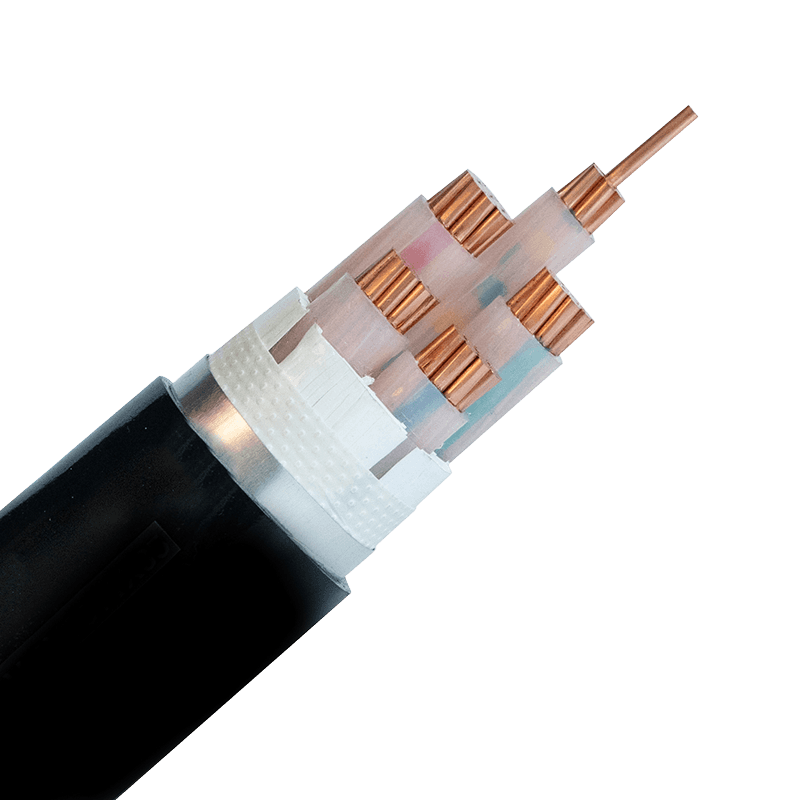
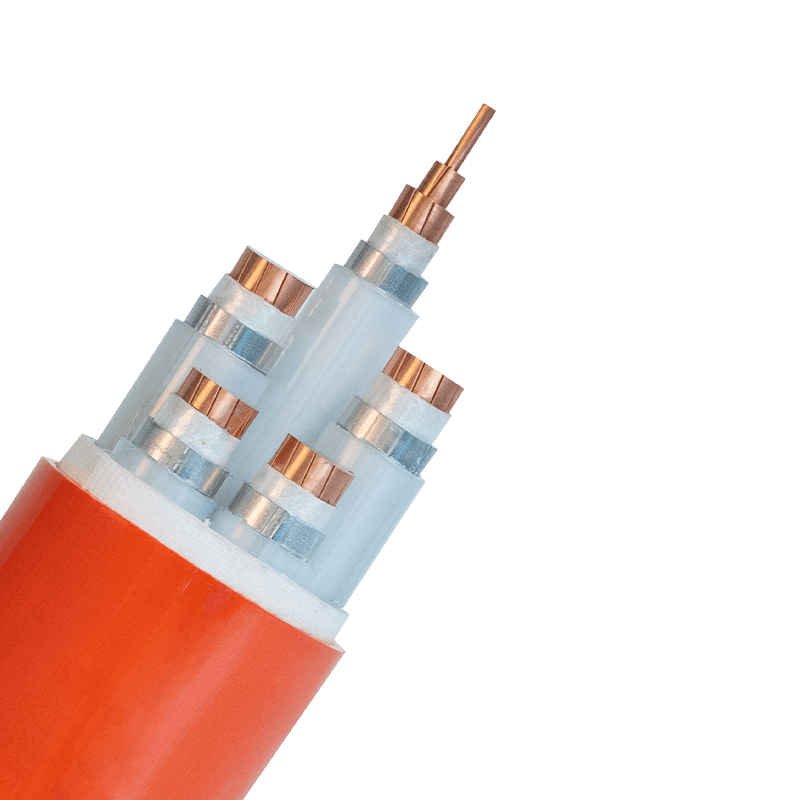
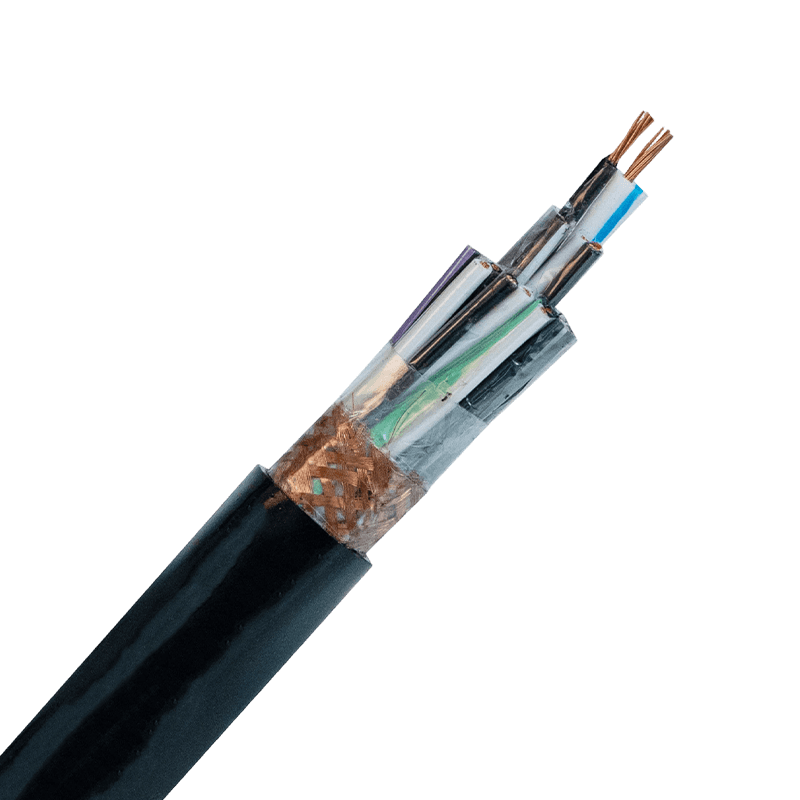
Conductor cross-section and core count tell the rest of the story. Power cables prioritize current-carrying capacity, so conductors are large—commonly 16mm², 50mm², 120mm², or larger, in copper or aluminum. Core count stays low: 1 to 5 cores per cable is standard. Control cables invert this logic entirely. Conductors are small (0.5mm² to 10mm²), but core counts are high—anywhere from 2 cores up to 61 cores in a single cable—because a complex control circuit needs many independent signal paths bundled efficiently.
Insulation and sheathing follow the same pattern. Power cables demand thick, robust jacketing to handle high voltages, mechanical stress, heat, and moisture. Control cables use lighter PVC or XLPE insulation, sufficient for low-voltage signals. When both cable types share an industrial environment, the power cable's jacket is noticeably heavier.
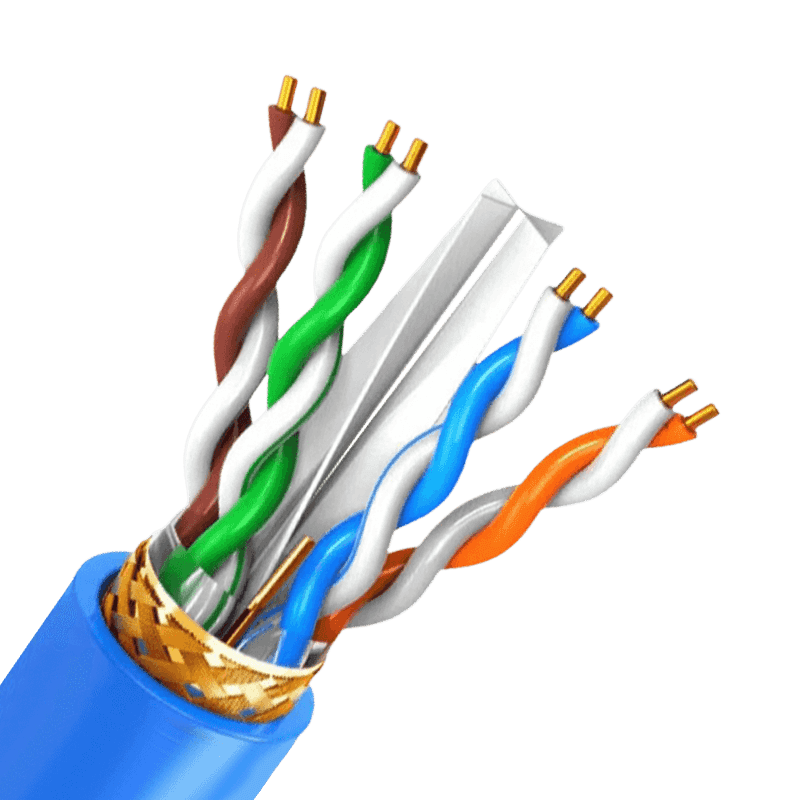
Shielding is optional on power cables but often critical on control cables. In environments with strong electromagnetic interference—near large motors, variable frequency drives, or switching equipment—an unshielded control cable will pick up noise that corrupts signals. A copper tape or braided shield around the control cable blocks this interference and preserves signal integrity.
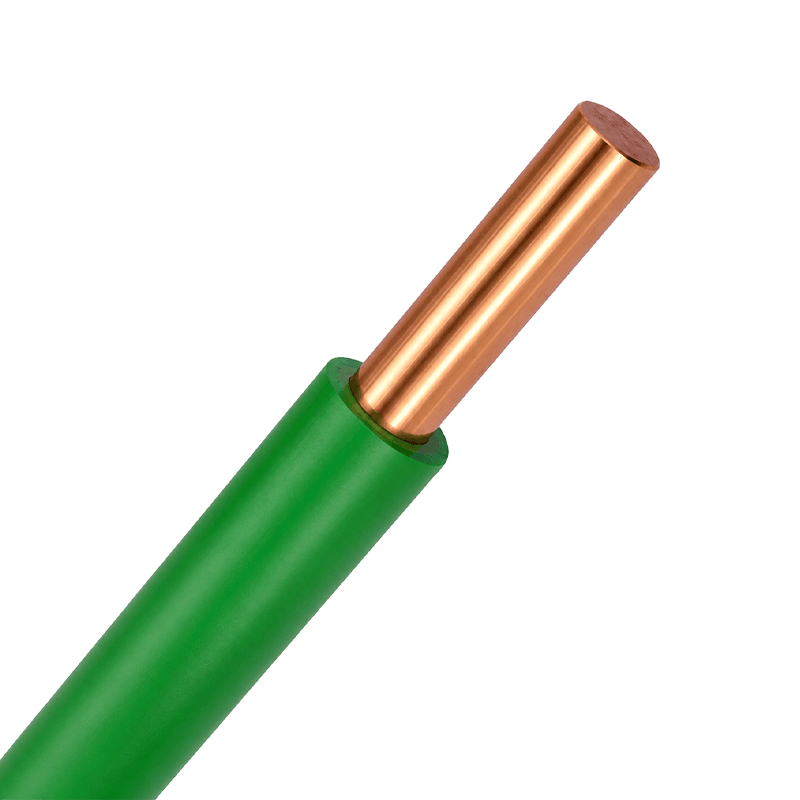
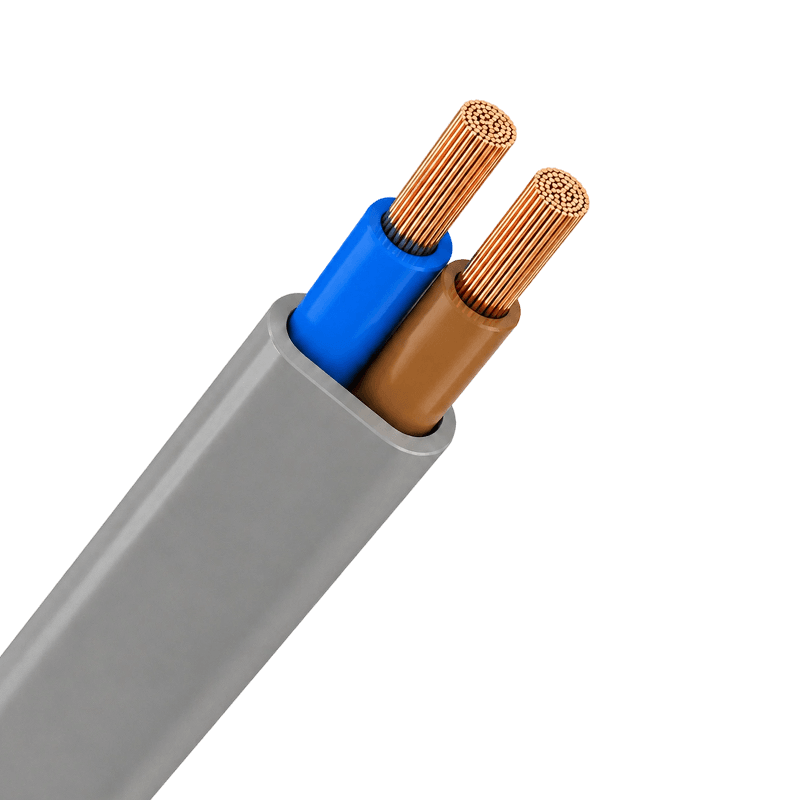
Color coding also differs. Power cable cores use standard phase colors (brown, black, grey for phases; blue for neutral; green/yellow for earth) to support safe installation and maintenance. Control cable cores are typically black with white numerical markings, since individual circuit identification matters more than phase convention.
Where Each Cable Belongs
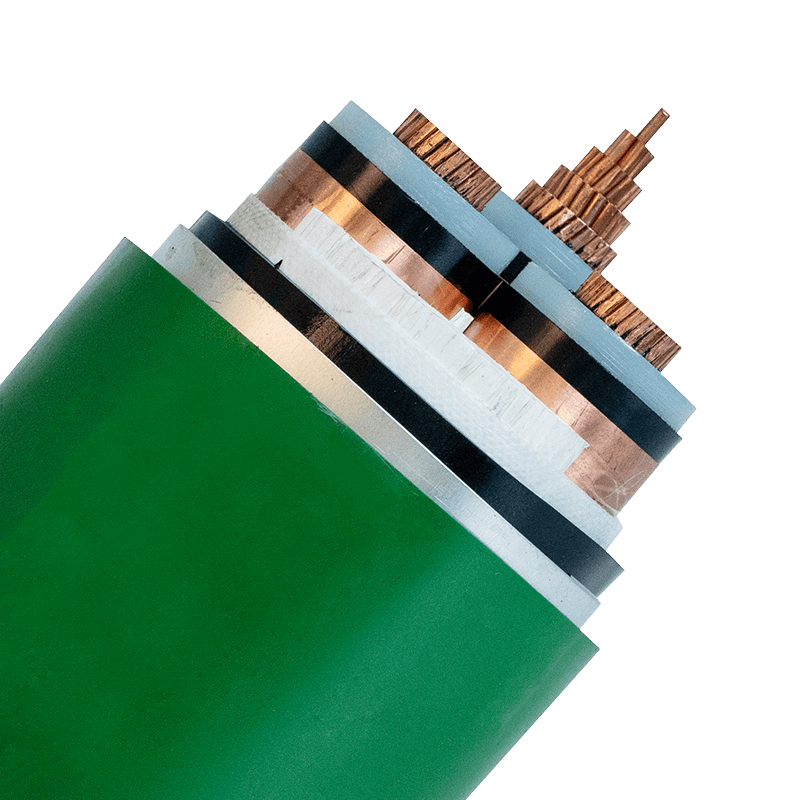
Power cables operate wherever electrical energy needs to move at scale. Underground distribution networks, overhead transmission lines, industrial machinery feeds, and building power risers all rely on power cables. For facility wiring and distribution, low-voltage power cables for building and industrial distribution handle the vast majority of commercial and light-industrial loads. For grid infrastructure, substations, and utility connections, medium-voltage power cables for grid and substation applications carry power at the voltages required for efficient long-distance transmission.
Control cables are the backbone of every automated process. Automotive assembly lines, chemical plant DCS systems, building management systems (HVAC, lighting, access control), railway signaling, and power plant protection relay circuits all depend on control cables to transmit the signals that keep operations synchronized and safe. Control cables for industrial automation and equipment wiring are designed specifically to meet the precision and flexibility demands of these environments.
Quick-Reference Comparison
| Parameter | Power Cable | Control Cable |
|---|---|---|
| Primary function | Transmit electrical energy | Transmit control signals / data |
| Voltage rating | 0.6/1kV and above (up to 500kV+) | 300/450V – 450/750V |
| Conductor cross-section | Large (16mm² – 500mm²+) | Small (0.5mm² – 10mm²) |
| Number of cores | 1 – 5 cores | 2 – 61 cores |
| Insulation thickness | Thick (high-voltage rated) | Lighter (low-voltage rated) |
| Shielding | Rarely required | Often required (EMI environments) |
| Core color coding | Phase colors (brown / black / grey) | Black with white numbering |
| Conductor material | Copper or aluminum | Copper (standard) |
How to Choose the Right One
Three questions resolve most selection decisions. First: what is the cable carrying? If it's delivering current to power a load—motor, lighting circuit, HVAC unit—it's a power cable application. If it's carrying a command, a measurement, or a feedback signal, it's a control cable application.
Second: what voltage does the system operate at? Systems running above 1kV require power cables rated accordingly. Signal and control circuits running at 24VDC, 120VAC, or 230VAC fall within control cable territory.
Third: what is the electromagnetic environment? If the cable runs near high-power switching equipment, variable frequency drives, or large motors, a shielded control cable is necessary to prevent signal degradation. In harsh or high-temperature environments, flame-retardant and high-temperature resistant wires provide additional protection for both power and control applications.
Substituting one cable type for the other is never a workaround. Using a control cable in a power application risks insulation failure and fire. Running a power cable where a control cable belongs wastes cost and space, and may still introduce interference. The right cable, sized and specified correctly, is what keeps systems running safely and reliably over their full service life.

- +86-13588204183
- No. 39 Zhiyuan Road, Deqing Economic Development Zone, Huzhou City, Zhejiang Province

Copyright © Zhejiang Huapu Cable Co., Ltd. All Rights Reserved.
 ISO 9001 Cable Manufacturer