
 en
en English
 中文简体
中文简体 русский
 Español
 عربى
عربى
What Is the Difference Between MCS and CCS for EV Charging?
Content
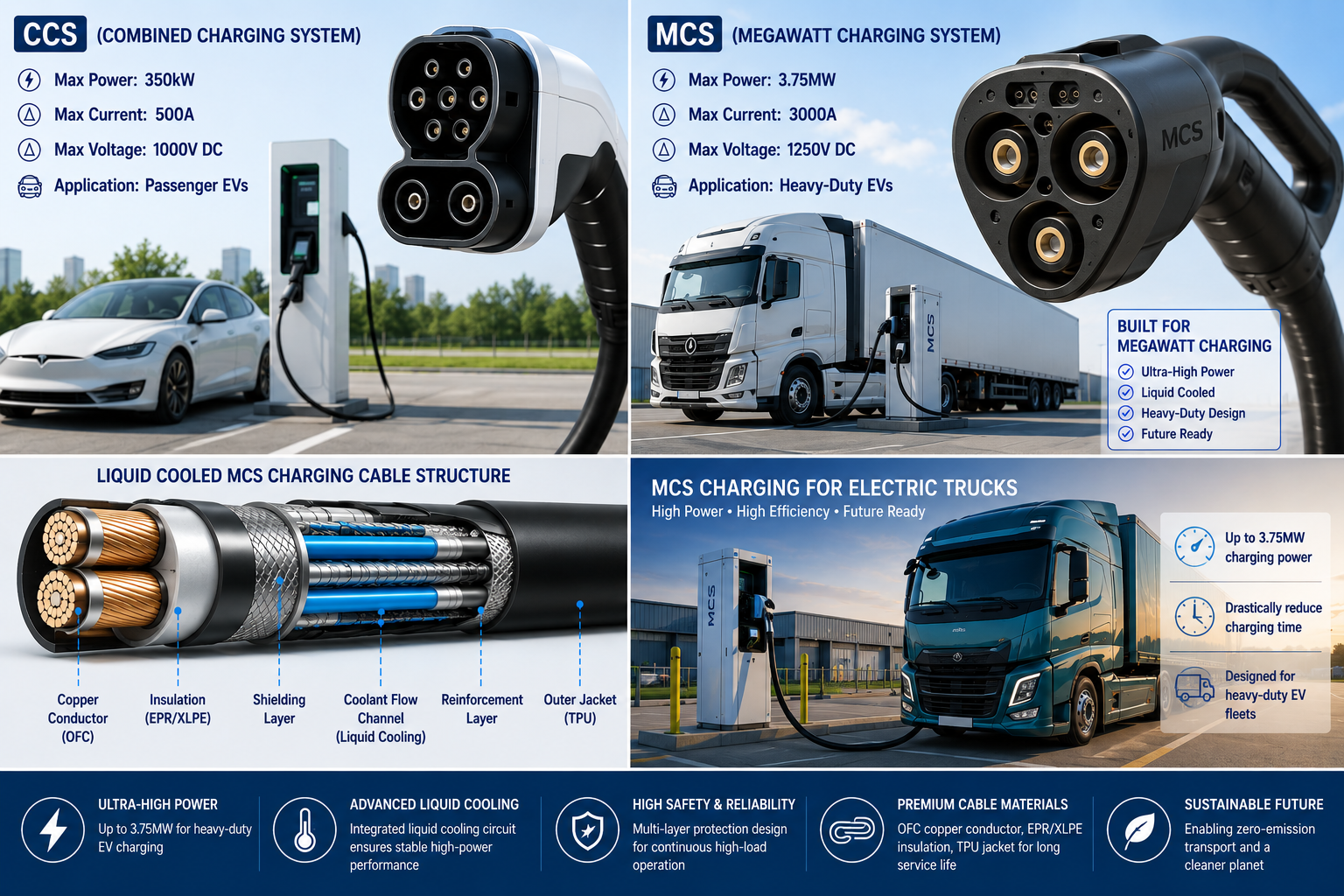
As electric vehicles (EVs) continue to evolve, charging technology is advancing rapidly to meet the growing demand for faster charging times and higher power delivery. Two charging standards attracting significant industry attention are the Combined Charging System (CCS) and the newer Megawatt Charging System (MCS).
While CCS has become the dominant charging standard for passenger electric vehicles worldwide, MCS is designed to support the next generation of heavy-duty electric transportation, including electric trucks, buses, mining vehicles, and industrial fleets.
In this article, we compare MCS and CCS charging systems, explain their technical differences, and discuss what these developments mean for EV charging cables, power distribution infrastructure, and the future of electric mobility.
What Is CCS (Combined Charging System)?
CCS is currently one of the most widely adopted DC fast-charging standards for electric vehicles.
The CCS connector combines AC charging capability, DC fast charging capability, communication protocols, and global interoperability standards into a single charging interface.
CCS charging is commonly used by passenger EVs, electric SUVs, electric vans, and light commercial vehicles. Major automotive manufacturers supporting CCS include BMW, Mercedes-Benz, Volkswagen, Ford, General Motors, Hyundai, and Kia.
CCS Charging Specifications
- Maximum Voltage: Up to 1000V DC
- Maximum Current: Up to 500A
- Maximum Power: Up to 350kW
- Primary Application: Passenger EVs
- Connector Size: Relatively Compact
CCS charging stations are now widely deployed across Europe, North America, the Middle East, and many emerging EV markets.
What Is MCS (Megawatt Charging System)?
The Megawatt Charging System (MCS) is a new ultra-high-power charging standard developed specifically for heavy-duty electric transportation.
Unlike CCS, which primarily targets passenger vehicles, MCS is engineered to support electric trucks, long-haul freight vehicles, electric buses, construction equipment, mining machinery, and industrial fleet vehicles.
The primary goal of MCS is to dramatically reduce charging times for large battery packs that may exceed 600 kWh or even 1 MWh in capacity.
MCS Charging Specifications
- Maximum Voltage: Up to 1250V DC
- Maximum Current: Up to 3000A
- Maximum Power: Up to 3.75MW
- Primary Application: Heavy-Duty EVs
- Connector Size: Significantly Larger
- Cooling Requirement: Advanced Liquid Cooling
MCS can theoretically deliver more than ten times the charging power available through current CCS systems.
MCS vs CCS: Key Differences
1. Charging Power
The most significant difference between MCS and CCS is power capacity.
Typical CCS chargers deliver between 50kW and 350kW, making them suitable for passenger vehicles and daily charging needs.
MCS chargers are designed to provide 750kW, 1MW, 2MW, and potentially up to 3.75MW. This level of power allows large commercial vehicles to recharge during mandatory driver rest periods, significantly improving fleet efficiency and reducing operational downtime.
2. Target Vehicle Types
CCS is ideal for:
- Passenger electric cars
- Residential EV charging
- Public charging stations
- Light commercial vehicles
MCS is designed for:
- Electric trucks
- Commercial transportation fleets
- Electric buses
- Port operations
- Mining vehicles
- Industrial equipment
As commercial electrification accelerates worldwide, MCS is expected to become the preferred charging standard for heavy-duty transportation.
3. Cable Design Requirements
Higher charging power creates significant engineering challenges.
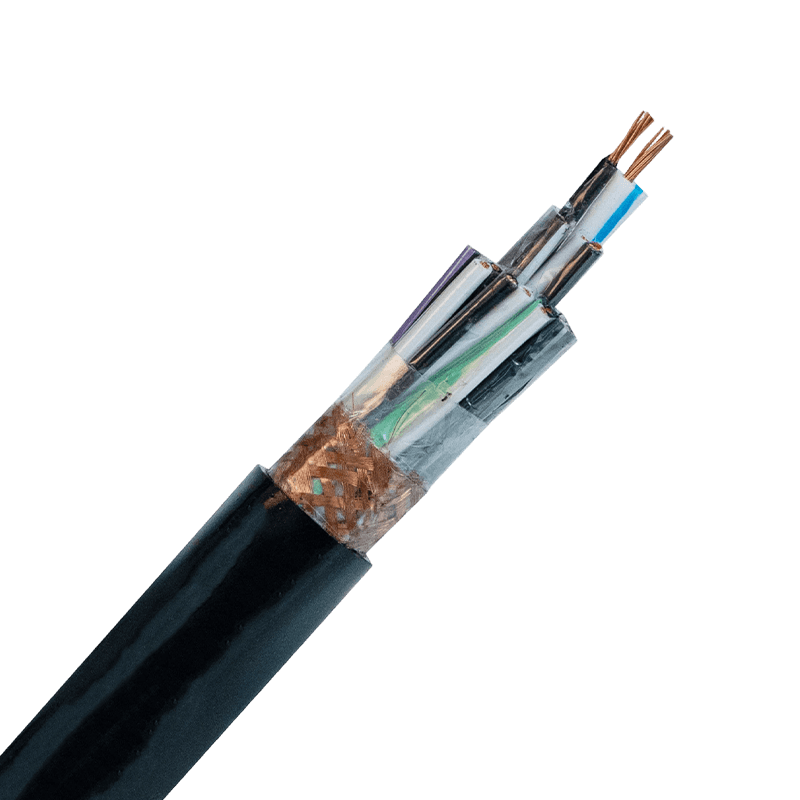
Compared with CCS charging cables, MCS charging cables require:
- Larger conductor cross-sections
- Higher current-carrying capacity
- Enhanced thermal management
- Liquid cooling systems
- Superior insulation materials
- Advanced electromagnetic shielding
This makes charging cable design one of the most critical factors in successful MCS deployment.
4. Infrastructure Requirements
MCS installations require substantially more robust electrical infrastructure.
Key considerations include:
- High-voltage power distribution systems
- Heavy-duty power cables
- Transformer upgrades
- Smart energy management systems
- Industrial-grade switchgear
- Grid capacity expansion
Utilities and charging operators must prepare for significantly higher electrical loads than those associated with traditional CCS charging networks.
Impact on the Cable Industry
The transition from CCS to MCS represents a major opportunity for cable manufacturers and suppliers.
Demand is increasing for:
- EV charging cables
- Electric vehicle charging cables
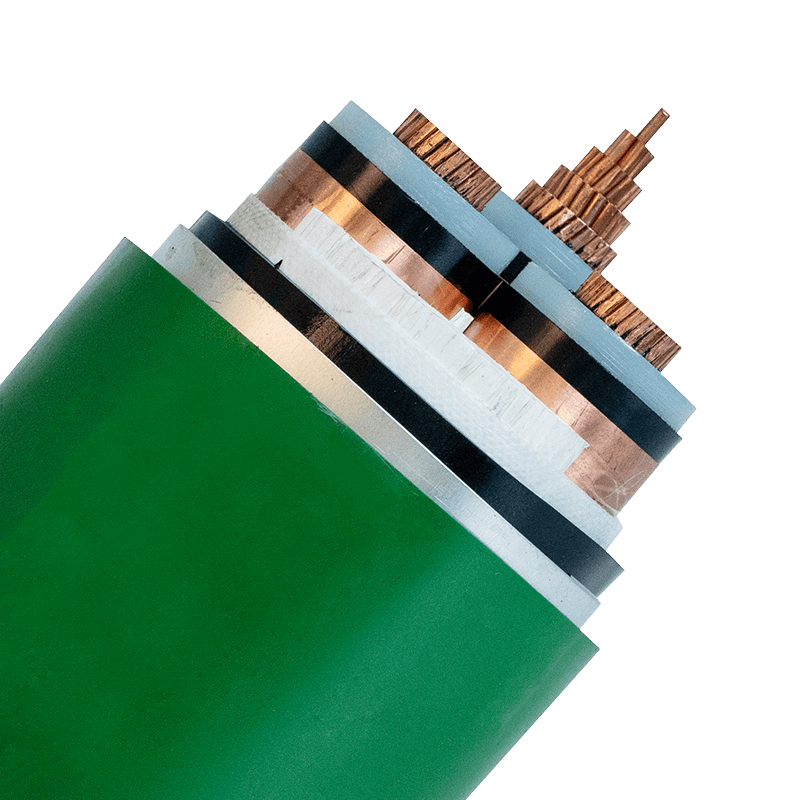
- High-voltage power cables
- Flexible charging cables
- Liquid-cooled charging cables
- XLPE insulated cables
- Low-voltage power cables
- Medium-voltage cables
- Copper conductor cables
- Industrial power cables
Manufacturers capable of producing high-performance charging cable solutions will play a crucial role in supporting future EV infrastructure projects.
Key Cable Performance Requirements
For MCS applications, charging cables must provide:
- High current-carrying capacity
- Low electrical resistance
- Superior flexibility
- UV resistance
- Flame retardancy
- Oil resistance
- Long service life
- Reliable performance under continuous high-load operation
These requirements are driving innovation throughout the global cable manufacturing industry.
Will MCS Replace CCS?
Not entirely.
Both standards are expected to coexist for many years because they serve different market segments.
CCS will remain the preferred solution for:
- Passenger EV charging
- Residential charging
- Public charging infrastructure
- Urban mobility applications
MCS will dominate:
- Commercial trucking
- Freight transportation
- Industrial electrification
- Heavy-duty fleet charging
Rather than replacing CCS, MCS expands the EV charging ecosystem to accommodate larger vehicles and significantly higher energy demands.
Future Outlook
Global EV adoption continues to accelerate, and charging infrastructure must evolve accordingly.
Industry experts expect rapid growth in:
- EV charging stations
- Fast charging infrastructure
- Megawatt charging networks
- High-voltage cable systems
- Electric truck charging hubs
- Smart power distribution solutions
- Renewable energy integration
As governments and industries pursue decarbonization goals, both CCS and MCS technologies will play critical roles in supporting the future of electric mobility.
Conclusion
The difference between MCS and CCS comes down to scale and application.
CCS remains the standard solution for passenger electric vehicles, offering fast and reliable charging up to 350kW. MCS, on the other hand, is designed for heavy-duty transportation, enabling megawatt-level charging that dramatically reduces charging times for large battery systems.
For cable manufacturers, charging infrastructure providers, and energy system integrators, the rise of MCS presents significant opportunities in the rapidly expanding EV charging market. Companies investing in advanced EV charging cables, high-voltage power cables, flexible cables, XLPE cables, and innovative power distribution solutions will be well-positioned to support the future of sustainable transportation.



- +86-13588204183
- No. 39 Zhiyuan Road, Deqing Economic Development Zone, Huzhou City, Zhejiang Province

Copyright © Zhejiang Huapu Cable Co., Ltd. All Rights Reserved.
 ISO 9001 Cable Manufacturer