
 en
en English
 中文简体
中文简体 русский
 Español
 عربى
عربى
Are Biodegradable Cable Jackets Durable?
Content
- What Are Biodegradable Cable Jackets?
- How Durable Are Biodegradable Cable Jackets?
- Advantages of Biodegradable Cable Jackets
- Limitations to Consider
- Where Are Biodegradable Cable Jackets Most Suitable?
- Future Development of Eco-Friendly Cable Materials
- Final Verdict: Are Biodegradable Cable Jackets Durable?
- Frequently Asked Questions
- Keywords
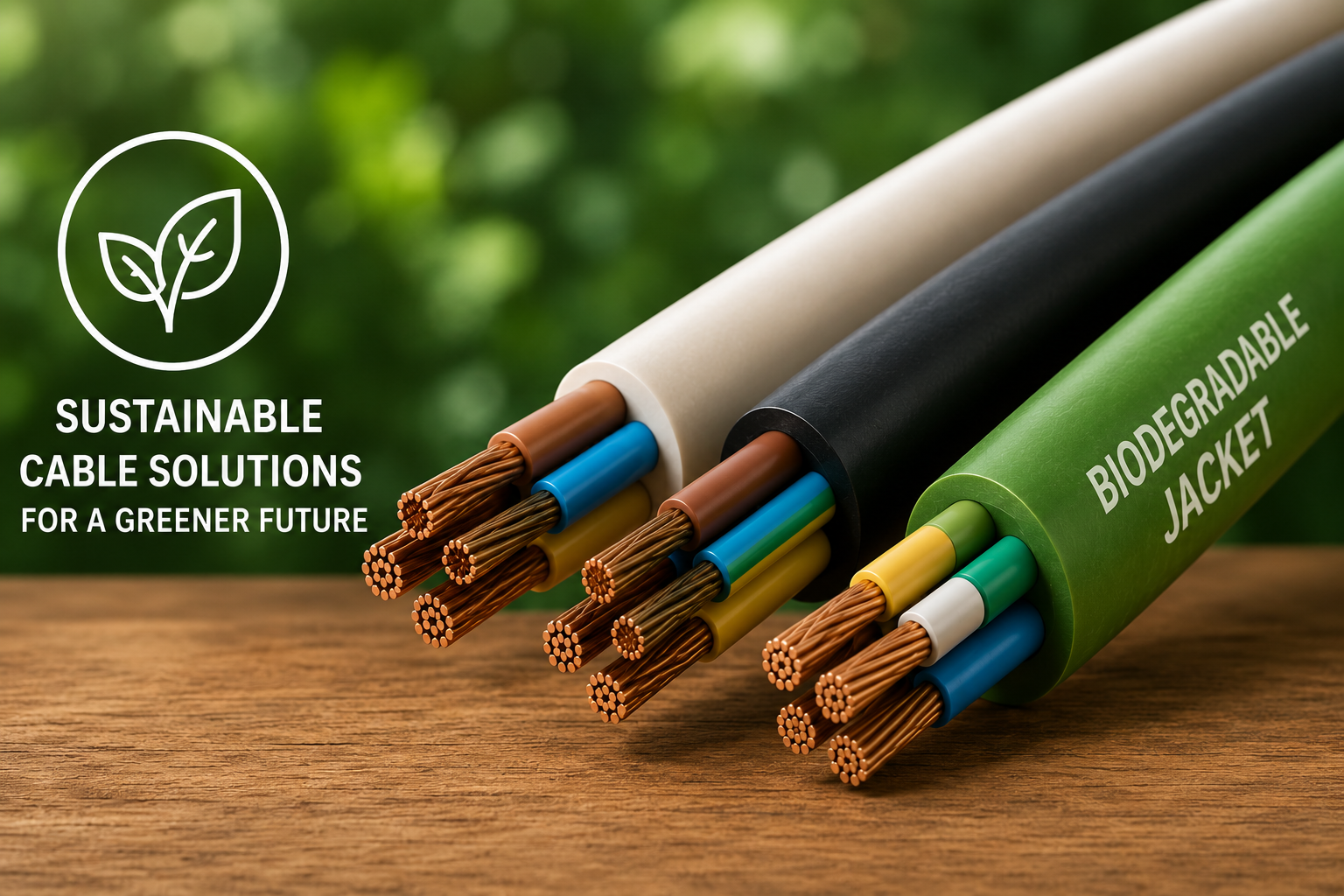
As sustainability becomes a major focus across industries, biodegradable cable jackets are gaining attention in the wire and cable market. Manufacturers, contractors, and project owners are increasingly looking for environmentally friendly alternatives to traditional PVC and PE cable insulation materials.
However, one critical question remains:
Are biodegradable cable jackets durable enough for real-world applications?
The short answer is yes — but it depends on the material formulation, operating environment, and application requirements. In this article, we explore the durability, performance, advantages, and limitations of biodegradable cable jackets in modern cable systems.
What Are Biodegradable Cable Jackets?
Biodegradable cable jackets are protective outer layers made from eco-friendly polymer materials that can decompose naturally under specific environmental conditions. Unlike conventional petroleum-based plastics, these materials are designed to reduce long-term environmental impact.
Common biodegradable or bio-based jacket materials include:
- PLA (Polylactic Acid)
- PHA (Polyhydroxyalkanoates)
- Bio-based TPU
- Modified starch composites
- Biodegradable elastomers
These materials are increasingly used in:
- Consumer electronics cables
- Temporary installation cables
- Low-voltage communication cables
- Smart home wiring
- Sustainable infrastructure projects
How Durable Are Biodegradable Cable Jackets?
Durability depends heavily on the cable’s intended environment and the specific biodegradable compound used.
Modern biodegradable cable jackets can offer:
Mechanical Strength
High-quality biodegradable compounds can provide good:
- Tensile strength
- Flexibility
- Abrasion resistance
- Bend performance
Some advanced bio-based TPU materials even approach the mechanical performance of traditional PVC jackets.
However, lower-grade biodegradable materials may become brittle under repeated mechanical stress.
Temperature Resistance
Traditional cable jackets such as XLPE or PVC typically operate across wide temperature ranges. Biodegradable jackets are improving rapidly, but thermal resistance still varies significantly.
Typical performance ranges include:
|
Material |
Operating Temperature |
|
PLA |
0°C to 60°C |
|
Bio-TPU |
-20°C to 90°C |
|
Modified Biopolymers |
Depends on formulation |
For high-temperature industrial environments, conventional materials may still provide superior long-term stability.
UV and Weather Resistance
Outdoor durability remains one of the biggest challenges for biodegradable cable jackets.
Without proper additives, some biodegradable materials can degrade faster when exposed to:
- UV radiation
- Moisture
- Salt spray
- Extreme weather
To improve weatherability, manufacturers often add:
- UV stabilizers
- Antioxidants
- Moisture barriers
As a result, premium biodegradable cable jackets can achieve acceptable outdoor service life for selected applications.
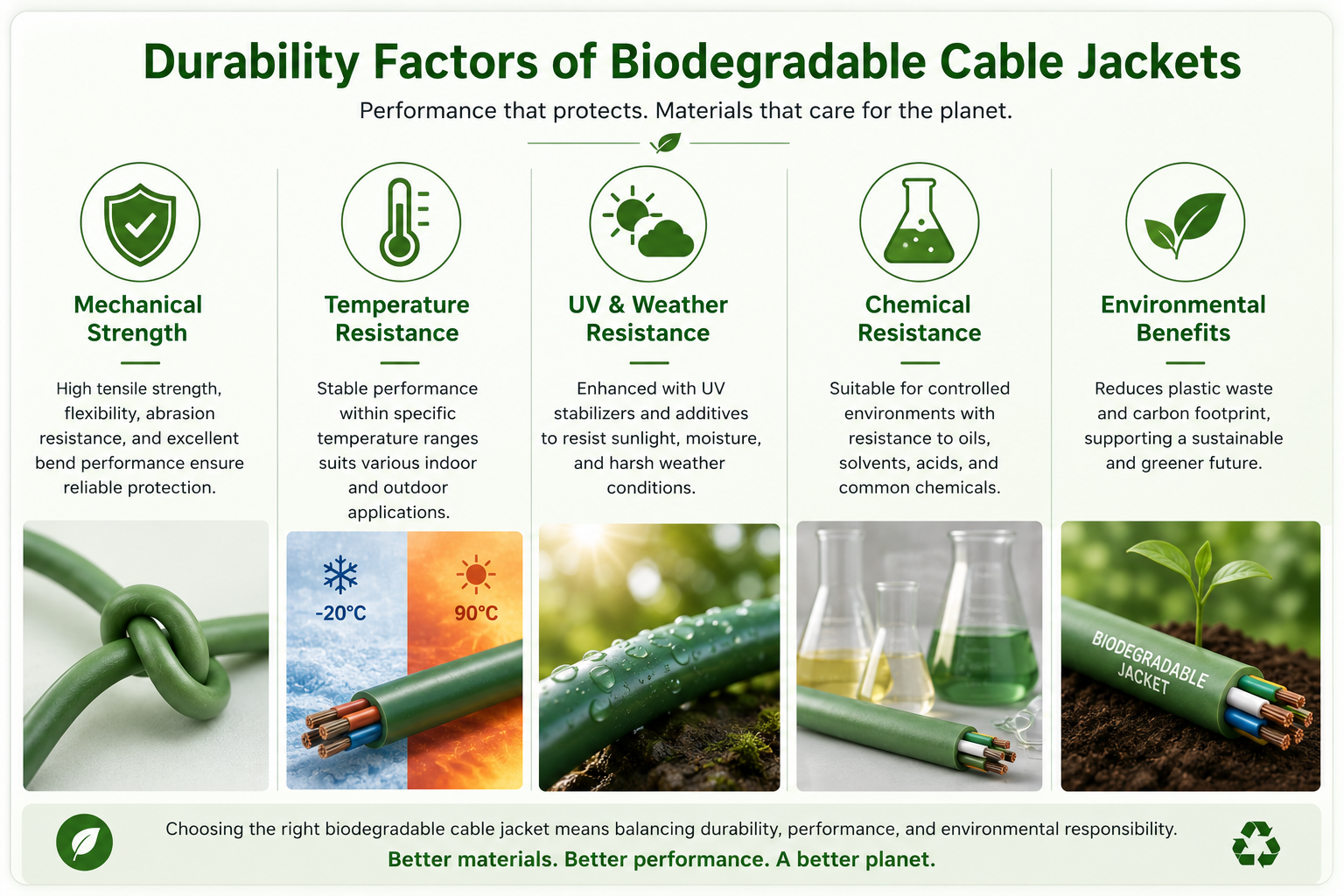
Chemical Resistance
Biodegradable materials generally have lower chemical resistance than conventional industrial polymers.
Exposure to:
- Oils
- Solvents
- Acids
- Industrial chemicals
may accelerate material degradation.
Therefore, biodegradable jackets are more suitable for controlled environments rather than heavy chemical industries.
Advantages of Biodegradable Cable Jackets
Reduced Environmental Impact
One of the primary benefits is sustainability.
Biodegradable jackets help reduce:
- Plastic waste accumulation
- Carbon footprint
- Dependence on fossil-based plastics
This supports global environmental initiatives and ESG compliance goals.
Compliance With Green Regulations
Many governments and organizations are strengthening environmental requirements for cable products.
Biodegradable cable materials may help support compliance with:
- RoHS
- REACH
- Green building certifications
- Sustainable procurement standards
Market Differentiation
For manufacturers and distributors, eco-friendly cable products can create strong market differentiation, especially in:
- European markets
- Renewable energy projects
- Smart city infrastructure
- Consumer electronics
Sustainability is increasingly becoming a purchasing factor.
Limitations to Consider
Despite their advantages, biodegradable cable jackets are not yet ideal for every application.
Potential limitations include:
- Higher material cost
- Shorter lifespan in harsh environments
- Lower chemical resistance
- Limited high-voltage applications
- Performance variation between suppliers
Careful material selection and testing remain essential.
Where Are Biodegradable Cable Jackets Most Suitable?
Biodegradable cable jackets are particularly suitable for:
Indoor Communication Cables
- LAN cables
- Fiber optic patch cords
- Data transmission cables
Consumer Electronics
- Charging cables
- USB cables
- Audio cables
Temporary Installations
- Event wiring
- Construction temporary power
- Exhibition systems
Green Building Projects
Projects targeting environmental certifications increasingly favor sustainable cable materials.
Future Development of Eco-Friendly Cable Materials
The biodegradable cable market is evolving rapidly.
Ongoing R&D focuses on improving:
- Heat resistance
- Flame retardancy
- Outdoor durability
- Flexibility
- Long-term aging performance
In the coming years, bio-based cable materials are expected to become more competitive with traditional polymers in industrial applications.
Final Verdict: Are Biodegradable Cable Jackets Durable?
Yes, biodegradable cable jackets can be durable enough for many modern applications — especially indoor, low-voltage, and environmentally conscious projects.
However, they are not yet a complete replacement for traditional cable jacket materials in extreme industrial environments.
The key is selecting the right biodegradable compound for the intended operating conditions.
As material technology continues to advance, biodegradable cable jackets are likely to play a much larger role in the future of sustainable cable manufacturing.
Frequently Asked Questions
Are biodegradable cable jackets waterproof?
Some biodegradable materials offer good moisture resistance, but waterproof performance depends on the material formulation and cable design.
Can biodegradable cable jackets be used outdoors?
Yes, but outdoor use typically requires UV-resistant additives and weatherproof formulations.
Are biodegradable cable jackets flame retardant?
Certain biodegradable compounds can be formulated with flame-retardant properties to meet industry standards.
Do biodegradable cable jackets decompose during normal use?
No. Properly engineered biodegradable cable jackets are designed to remain stable during service life and only biodegrade under specific disposal conditions.
Keywords
biodegradable cable jackets, eco friendly cable insulation, sustainable cable materials, biodegradable wire coating, green cable manufacturing, environmentally friendly cables, bio-based cable jacket, durable biodegradable cables

- +86-13588204183
- No. 39 Zhiyuan Road, Deqing Economic Development Zone, Huzhou City, Zhejiang Province

Copyright © Zhejiang Huapu Cable Co., Ltd. All Rights Reserved.
 ISO 9001 Cable Manufacturer